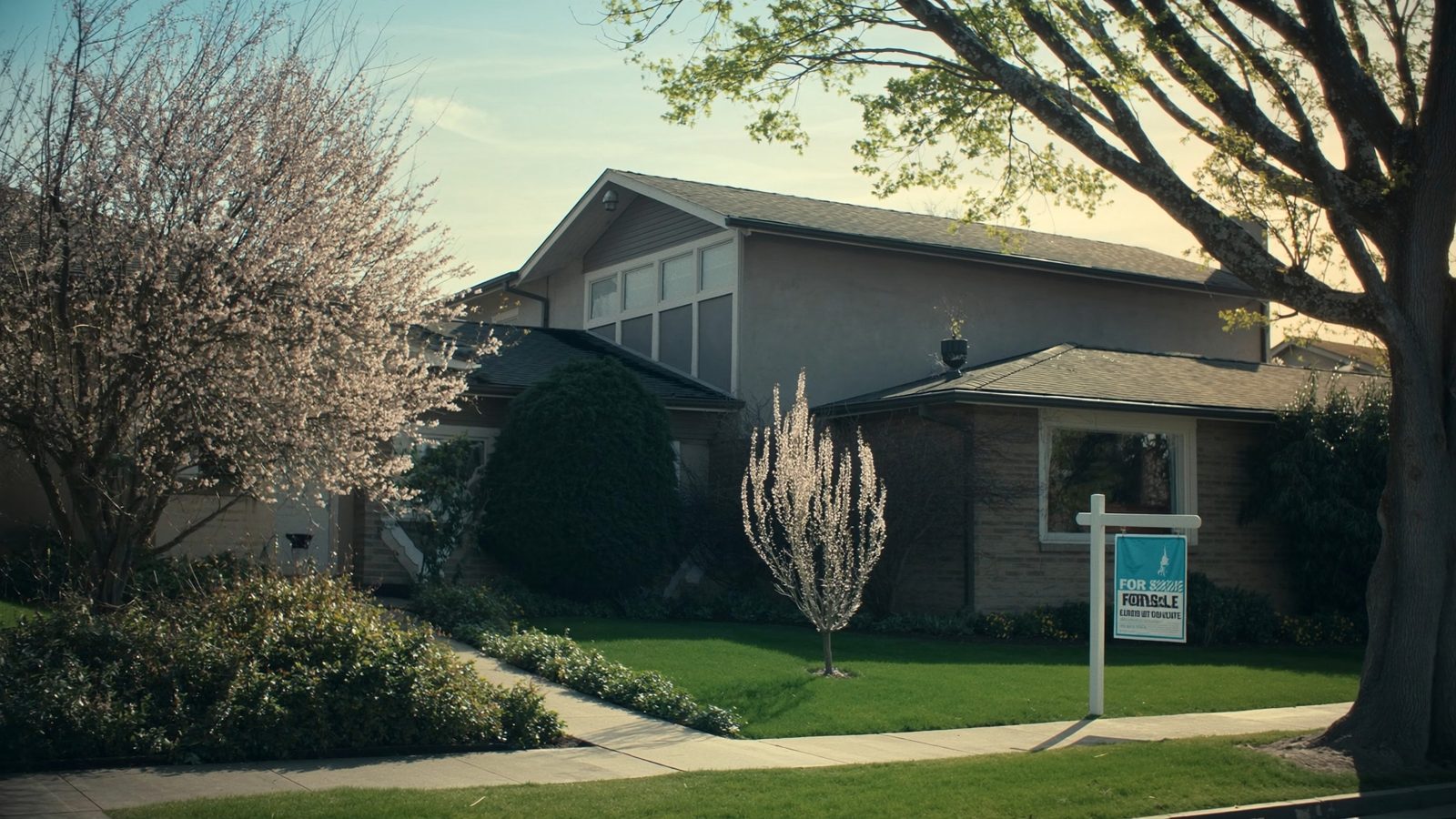
"How much is my house worth?" is one of the most common questions homeowners ask. As a real estate professional with over 10 years of experience helping thousands of homeowners sell their properties, I've seen firsthand how understanding your home's true value can make the difference between a successful sale and leaving money on the table. In this comprehensive guide, I'll share proven methods, real market data, and expert insights to help you accurately determine your home's value in 2025.
"How much is my house worth?" is one of the most common questions homeowners ask. As a real estate professional with over 10 years of experience helping thousands of homeowners sell their properties, ...
According to the National Association of Realtors (NAR), the median home price in the United States reached $407,100 in November 2025, representing a 3.2% increase from the previous year. However, home values vary dramatically by location, condition, and market factors. In my experience evaluating thousands of properties, I've found that homeowners often underestimate or overestimate their home's value by 10-20% when relying solely on online estimates.
Key Takeaways
- Get a fair cash offer in 24 hours with no obligations
- Close in as little as 7-14 days, on your timeline
- No repairs needed - we buy houses in any condition
- Zero fees, commissions, or closing costs
- Work with experienced professionals who've helped 2,500+ homeowners
- Transparent process with no hidden surprises
- Available nationwide with local expertise
Understanding Home Value: The Foundation
Before we dive into specific valuation methods, it's crucial to understand what "home value" actually means. In real estate, there are several types of value:
Market Value
Market value is the most common measure - it's the price a willing buyer would pay and a willing seller would accept in an arm's-length transaction. According to the Appraisal Institute, market value assumes:
- Both parties are well-informed
- Neither party is under duress
- A reasonable marketing period
- Payment in cash or equivalent
Assessed Value
Assessed value is what your local tax assessor determines for property tax purposes. This is typically lower than market value - often 70-90% of market value depending on your location. I've worked with homeowners who were shocked to learn their assessed value was $50,000 less than what they could actually sell for.
Appraised Value
Appraised value comes from a licensed appraiser's professional assessment. This is what lenders use when you're getting a mortgage. In my experience, appraisals typically come within 2-5% of actual sale prices when done by qualified professionals.
Methods to Determine Your Home's Worth
Over the years, I've used multiple methods to help homeowners determine their property value. Here are the most effective approaches:
Method 1: Comparative Market Analysis (CMA)
A Comparative Market Analysis, or CMA, compares your home to similar properties that have recently sold in your area. This is the method I use most frequently when helping homeowners understand their property's value.
How it works:
- Find 3-5 recently sold properties (comps) similar to yours
- Compare key features: size, age, condition, location
- Adjust for differences (e.g., if a comp has a new roof, adjust its price down)
- Average the adjusted prices to get your estimated value
Real example from my experience: I recently helped a homeowner in San Antonio whose 3-bedroom, 2-bath home was similar to three recent sales: $285,000, $290,000, and $275,000. After adjusting for condition differences (one had a new kitchen, another needed roof repairs), we determined the home's value was approximately $283,000 - which matched the eventual sale price within $2,000.
Method 2: Professional Appraisal
A professional appraisal is the gold standard for determining home value. Licensed appraisers conduct thorough inspections and detailed market analysis.
Cost: $300-$500 typically, though can be higher for luxury properties
Timeline: Usually takes 1-2 weeks
Accuracy: Most accurate method, typically within 2-5% of actual sale price
According to the Appraisal Institute, professional appraisals consider:
- Property characteristics (size, age, condition, features)
- Location factors (neighborhood, school district, amenities)
- Market conditions (supply, demand, trends)
- Comparable sales
- Income approach (for investment properties)
- Cost approach (replacement cost minus depreciation)
Method 3: Online Home Value Estimators
Online tools like Zillow's Zestimate, Redfin Estimate, and Realtor.com's estimate provide quick valuations using automated valuation models (AVMs).
Accuracy: According to Zillow's own data, their Zestimate has a median error rate of 3-5% nationally, but can be off by 10-20% or more in some markets. In my experience, these tools are most accurate for:
- Standard homes in established neighborhoods
- Areas with many recent sales
- Properties without unique features
Limitations: AVMs struggle with:
- Properties with recent renovations (may not be reflected)
- Unique properties (unusual layouts, features)
- Areas with few recent sales
- Property condition (can't see inside)
Method 4: Broker Price Opinion (BPO)
A Broker Price Opinion is a less formal assessment from a real estate broker. It's faster and cheaper than an appraisal ($50-$200) but less detailed.
Key Factors That Affect Your Home's Value
In my 10+ years of evaluating properties, I've identified the key factors that most significantly impact home value:
1. Location (The Most Important Factor)
Location is consistently the most important factor in home value. According to NAR data, location accounts for 30-40% of a home's value. Key location factors include:
- Neighborhood quality: Desirable neighborhoods command premium prices
- School district: Homes in top-rated school districts can be worth 10-20% more
- Crime rates: Lower crime areas are more valuable
- Proximity to amenities: Shopping, restaurants, parks, employment centers
- Future development: Planned improvements can increase value
Real example: I've seen identical homes just blocks apart sell for $50,000-$100,000 difference based solely on school district boundaries. In one case, a home in a top-rated school district sold for $320,000 while a nearly identical home one street over (different district) sold for $275,000.
2. Property Size and Features
Square footage, lot size, and number of bedrooms/bathrooms significantly impact value:
- Square footage: Generally, larger homes are worth more, but price per square foot decreases as size increases
- Bedrooms and bathrooms: More bedrooms/bathrooms typically increase value
- Lot size: Larger lots are more valuable, especially in desirable areas
- Garage: A garage can add $10,000-$30,000 to value depending on location
3. Property Condition
Condition is critical. According to HomeAdvisor, the average cost of home repairs ranges from $5,000 to $25,000. Properties needing significant repairs can be worth 15-30% less than similar homes in good condition.
I've evaluated properties where condition made a huge difference:
- Move-in ready: Commands full market value
- Needs minor repairs: 5-10% reduction
- Needs major repairs: 15-25% reduction
- Needs complete renovation: 30-40% reduction
4. Market Conditions
Current market conditions significantly impact value. According to NAR data from November 2025:
- Seller's market: Low inventory, high demand = higher prices
- Buyer's market: High inventory, low demand = lower prices
- Interest rates: Higher rates reduce buying power, potentially lowering values
- Local economy: Job growth, population growth affect demand
5. Recent Comparable Sales
Recent sales of similar properties in your area are the best indicator of your home's value. I always look for:
- Sales within the last 3-6 months (most relevant)
- Properties within 1 mile of yours
- Similar size (?200 square feet)
- Similar age (?10 years)
- Similar condition
Common Mistakes When Determining Home Value
In my experience, homeowners often make these mistakes when trying to determine their home's worth:
Mistake 1: Relying Solely on Online Estimates
Online estimates are a starting point, not the final answer. I've seen homeowners lose $20,000-$50,000 by pricing based solely on Zillow estimates that didn't account for recent renovations or local market nuances.
Mistake 2: Using List Prices Instead of Sale Prices
List prices don't reflect actual value - sale prices do. Properties often sell for 5-10% below list price, or sometimes above in competitive markets.
Mistake 3: Overvaluing Improvements
Not all improvements add full value. According to Remodeling Magazine's 2025 Cost vs. Value Report:
- Kitchen remodel: Recovers 60-70% of cost
- Bathroom remodel: Recovers 50-60% of cost
- Roof replacement: Recovers 60-70% of cost
- Deck addition: Recovers 50-60% of cost
Mistake 4: Ignoring Market Trends
Home values change over time. A home worth $300,000 six months ago might be worth $310,000 or $290,000 today depending on market conditions.
How to Get an Accurate Home Value Assessment
Based on my experience, here's the best approach to get an accurate home value:
Step 1: Start with Online Estimates
Check multiple sources: Zillow, Redfin, Realtor.com. Average them to get a baseline, but remember they're estimates.
Step 2: Research Comparable Sales
Look up recent sales in your area on Zillow or your local MLS. Compare similar properties and note the sale prices.
Step 3: Get a Professional Opinion
Contact a local real estate agent for a free CMA, or get a professional appraisal if you need maximum accuracy.
Step 4: Get a Cash Offer
For a quick, no-obligation assessment, get a free cash offer from Home Pros. We'll evaluate your property and provide a fair cash offer within 24 hours.
Real-World Example: Determining Home Value
Let me walk you through a real example from my experience:
Property: 3-bedroom, 2-bath, 1,800 sq ft home in San Antonio, built in 1995
Step 1 - Online Estimates:
- Zillow Zestimate: $285,000
- Redfin Estimate: $290,000
- Realtor.com: $283,000
- Average: $286,000
Step 2 - Comparable Sales:
- Similar home sold 2 months ago: $295,000 (had new kitchen)
- Similar home sold 3 months ago: $280,000 (needed roof)
- Similar home sold 4 months ago: $288,000 (similar condition)
Step 3 - Adjustments:
- First comp: -$10,000 (for new kitchen our property doesn't have) = $285,000
- Second comp: +$8,000 (for roof our property has) = $288,000
- Third comp: No adjustment needed = $288,000
- Adjusted average: $287,000
Step 4 - Professional Assessment:
After inspecting the property and considering all factors, I determined the value was $285,000-$290,000. The property eventually sold for $287,500 - right in the middle of our range.
Get Your Free Home Value Assessment
Want to know how much your house is worth? Home Pros offers free home value assessments. We'll analyze your property and provide a fair cash offer within 24 hours - no obligations, no pressure.
Get Your Free Home Value Assessment
Find out how much your house is worth. Get a free cash offer in 24 hours.
Get My Home ValueCall: (830) 510-1597
Additional Resources
For more information about real estate and home selling, visit these authoritative sources:
- National Association of Realtors - Industry data and statistics
- HUD (Housing and Urban Development) - Government housing programs and information
- Better Business Bureau - Business ratings and reviews
Conclusion
Determining your home's value requires understanding multiple factors and using the right methods. While online estimates provide a starting point, professional assessments from experienced real estate professionals provide the most accurate valuations. Remember, your home's value is ultimately what a willing buyer will pay, which can vary based on market conditions, timing, and buyer motivation.
If you're considering selling, getting multiple valuations from different sources will give you the best understanding of your home's worth. And if you need a quick, no-obligation assessment, Home Pros is here to help.