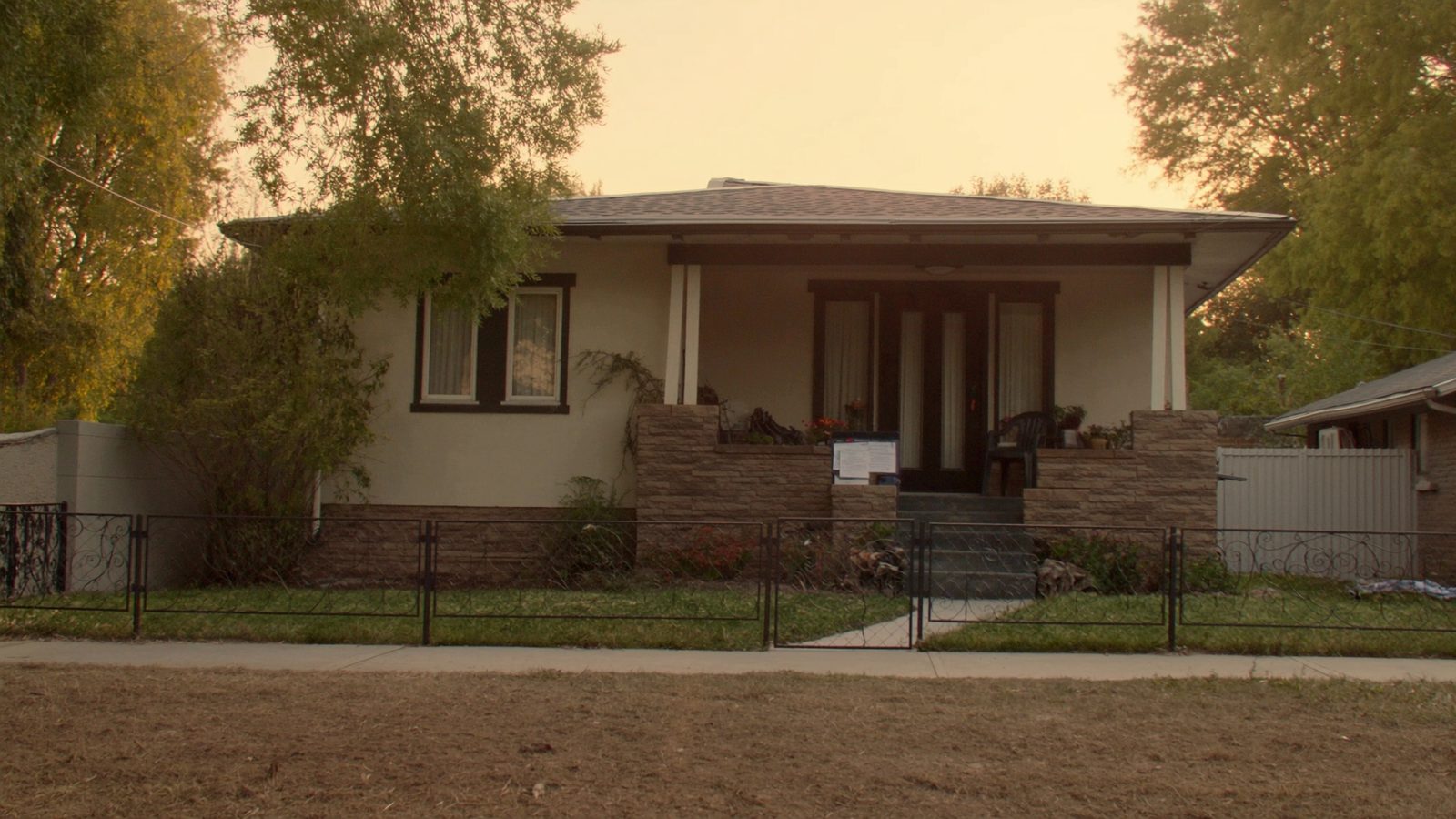
You found a deal. A three-bedroom ranch in San Antonio listed at $165,000. The seller wants out fast. Your phone is ringing and your wholesaler says there are two other investors looking at it.
You have 10 minutes to figure out if this deal makes money or loses it.
That is what underwriting is. It is the math between "this looks like a good deal" and "this actually is a good deal." Most new investors get it wrong because they rely on gut feelings or shortcuts that skip critical expenses. We are going to fix that right now.
This guide walks you through a 10-step underwriting process you can run on any rental property in any market. No spreadsheet wizardry required, just a calculator and the discipline to run every number honestly. If you would rather have the income side modelled for you, Compr pulls market rent, then prices a rental and a BRRRR exit against your own cap-rate and DSCR floors.
What Does "Underwriting" Actually Mean for Rental Properties?
Underwriting is the process of analyzing whether an investment property will generate the returns you need. In residential real estate, that means projecting income, subtracting every realistic expense, and measuring what is left against your investment.
The National Association of Realtors tracks rental demand and vacancy data that forms the baseline for most investor underwriting. But the real work happens at the property level.
Here is the 10-step framework.
Step 1: Estimate Gross Rental Income
Start with what the property can actually rent for. Not what you hope it rents for, not what the seller claims, but what the market says.
Check three sources:
- Zillow Rent Zestimates for the specific address
- Rentometer for comparable rents within a half-mile radius
- Active rental listings on Craigslist and Facebook Marketplace in the same zip code
For a 3-bed/2-bath in San Antonio's 78207 zip code, you might see rents ranging from $1,100 to $1,350 per month. Use the middle of that range, not the top. If you are underwriting at the top of the market, you are already lying to yourself.
Gross monthly rent estimate: $1,250
Gross annual rent: $15,000
Step 2: Apply a Vacancy Rate
No property stays rented 365 days a year, every year. Tenants move. Evictions happen. Turns take time.
A conservative vacancy rate for most markets is 8 percent. In high-demand areas like parts of Dallas or Charlotte, you might use 5 percent. In softer markets, use 10 percent.
The U.S. Census Bureau publishes quarterly rental vacancy rates by region. As of early 2026, the national average sits around 6.6 percent, but local conditions vary significantly.
Vacancy loss at 8%: $1,200/year
Effective gross income: $13,800/year
Step 3: Calculate Total Operating Expenses
This is where most investors underwrite poorly. They forget expenses or underestimate them. Here is the full list:
Property taxes: Check the county appraisal district. In Bexar County, Texas, you can look this up at the Bexar County Appraisal District website. For a $165,000 property, expect roughly $3,600 to $4,200 per year depending on exemptions.
Insurance: Landlord policies for SFR rentals in Texas typically run $1,200 to $1,800 per year. Get an actual quote from your insurance agent before closing.
Property management: Even if you self-manage, underwrite at 8 to 10 percent of collected rents. If you ever decide to hand it off, the numbers still work. That is $1,104 to $1,380 per year.
Maintenance and repairs: Budget 5 to 10 percent of gross rent annually. Older properties skew higher. A property built in the 1970s in San Antonio needs more than one built in 2010. Use 8 percent: $1,200 per year.
Capital expenditures (CapEx): This covers big-ticket replacements like roofs, HVAC systems, water heaters, and flooring. Budget $100 to $150 per month. Use $1,500 per year.
HOA fees: If applicable. Many SFR rentals in investor-friendly markets have zero HOA, but always verify.
Utilities (owner-paid): If you cover water, trash, or lawn care, include those costs. For this example, assume tenants pay all utilities.
| Expense | Annual Cost |
|---|---|
| Property taxes | $3,900 |
| Insurance | $1,500 |
| Property management (8%) | $1,104 |
| Maintenance (8%) | $1,200 |
| CapEx reserve | $1,500 |
| Total operating expenses | $9,204 |
Step 4: Calculate Net Operating Income (NOI)
NOI is the income left after all operating expenses but before debt service. It is the most important number in real estate investing because it measures the property's ability to generate income regardless of how you finance it.
NOI = Effective Gross Income - Operating Expenses
NOI = $13,800 - $9,204 = $4,596/year
Step 5: Calculate Cap Rate
Cap rate measures unlevered return - what the property earns as a percentage of its purchase price, ignoring financing.
Cap Rate = NOI / Purchase Price
Cap Rate = $4,596 / $165,000 = 2.79%
That is a low cap rate. Most buy-and-hold investors in markets like San Antonio or Dallas want to see cap rates between 5 and 7 percent for SFR rentals. According to Investopedia's cap rate guide, cap rates vary widely by market, property class, and risk profile.
A 2.79 percent cap rate tells you one of two things: the purchase price is too high, or the rent estimate is too low. Time to renegotiate or pass on the deal.
Step 6: Factor in Debt Service
If you are financing the property, you need to subtract your mortgage payment from NOI to see what actually hits your bank account each month.
Assume:
- Purchase price: $165,000
- Down payment: 25% ($41,250)
- Loan amount: $123,750
- Interest rate: 7.25% (typical for investment properties in 2026, per Freddie Mac rate data)
- 30-year fixed
Monthly mortgage payment (principal + interest): approximately $844
Annual debt service: $10,128
Cash flow = NOI - Debt Service
Cash flow = $4,596 - $10,128 = -$5,532/year
Negative cash flow. This deal does not work at this price with this financing. That is the entire point of underwriting - you found out in 10 minutes instead of finding out six months into ownership.
Step 7: Calculate Cash-on-Cash Return
Cash-on-cash return measures the annual return on your actual cash invested. This is the number that tells you how hard your money is working.
Cash-on-Cash Return = Annual Cash Flow / Total Cash Invested
Total cash invested includes:
- Down payment: $41,250
- Closing costs (estimate 3%): $4,950
- Immediate repairs (if any): $5,000
- Total cash in: $51,200
Since our cash flow is negative here, the cash-on-cash return is negative. You would be paying money every month to own this property. Some investors accept negative cash flow for appreciation plays, but that is speculation, not underwriting.
Step 8: Run the 1% Test (Quick Sanity Check)
The 1% rule says monthly rent should equal at least 1 percent of the purchase price. It is not a replacement for full underwriting, but it is a fast filter.
$1,250 rent / $165,000 price = 0.76%
This property fails the 1% test. In many Texas markets, you can still find properties that hit 0.8 to 1.0 percent, but 1% is increasingly hard outside of value-add plays.
The rule works best as a screening tool. If a property fails this test badly, skip the full underwriting and move on to the next deal.
Step 9: Stress Test Your Assumptions
Good underwriting means testing what happens when things go wrong:
- What if vacancy hits 15%? Recalculate with $2,250 in vacancy loss instead of $1,200.
- What if you need a $6,000 roof in year two? Does your CapEx reserve cover it?
- What if rents drop 5%? In a softening market (San Antonio's days-on-market recently climbed to 98 days according to local MLS data), this is not hypothetical.
- What if interest rates are higher when you refinance? BRRRR investors need to model the refi rate, not just the initial rate.
If the deal only works when everything goes perfectly, it does not actually work.
Step 10: Make Your Decision
After 10 minutes of honest math, you know:
- What the property earns (NOI)
- What it costs to own (expenses + debt)
- What your money returns (cash-on-cash)
- Whether it survives a bad month
In our example, this deal does not work at $165,000. But what if you could buy it for $130,000? Run the numbers again:
- NOI: $4,596
- Debt service on $97,500 loan: ~$665/month = $7,980/year
- Cash flow: $4,596 - $7,980 = -$3,384 (still negative, but closer)
- Needed price for breakeven cash flow: roughly $105,000-$110,000
Now you know your max offer. That is the power of underwriting.
The 10-Step Quick Reference Checklist
1. Estimate gross rent from three sources
2. Subtract vacancy (8% default)
3. List all operating expenses honestly
4. Calculate NOI
5. Calculate cap rate
6. Add debt service
7. Calculate cash-on-cash return
8. Run the 1% sanity check
9. Stress test with worst-case scenarios
10. Decide: buy, negotiate, or walk
Why Most Investors Get This Wrong
Three common mistakes destroy rental property underwriting:
Underestimating expenses. Skipping CapEx reserves or using 5 percent for management when the real cost is 8 to 10 percent. According to the Bureau of Labor Statistics, maintenance and repair costs have risen 4.2 percent annually over the past three years.
Using asking price instead of offer price. Your underwriting should reflect what you will actually pay, not the list price. Negotiate based on what the numbers tell you.
Ignoring local conditions. A 6 percent cap rate in Charlotte means something different than a 6 percent cap rate in rural Oklahoma. Market context matters. Check Redfin's Data Center for current market-specific trends.
How Home Pros Helps Investors Find Deals That Actually Underwrite
Most properties on the MLS do not pencil for investors. The margins are too thin after retail pricing, agent commissions, and competition from homeowners.
Off-market properties are where the math works. Home Pros sources distressed, inherited, and motivated-seller properties across San Antonio, Dallas, Charlotte, and 45 other markets - before they ever hit the MLS.
Want access to deals that actually underwrite? Join the Home Pros Marketplace to see off-market opportunities with real numbers, not wishful thinking.
Frequently Asked Questions
What is the 1% rule for rental properties and does it still work in 2026?
The 1% rule says your monthly rent should be at least 1 percent of the purchase price. In 2026, hitting the full 1% is difficult in most markets due to price appreciation. Many investors now target 0.8% or higher and supplement returns with value-add strategies. Use it as a quick screen, not a definitive test.
How do you calculate cash-on-cash return on a rental property?
Divide your annual pre-tax cash flow by the total cash you invested (down payment, closing costs, and initial repairs). A 8 to 12 percent cash-on-cash return is generally considered strong for SFR rentals, though this varies by market and risk tolerance.
What expenses should I include when underwriting a rental deal?
Include property taxes, insurance, property management (even if self-managing), maintenance, CapEx reserves, HOA fees if applicable, and any owner-paid utilities. Missing even one category can turn a positive deal into a money pit.
How do you estimate vacancy rate when analyzing a rental property?
Start with your market's historical vacancy rate from Census Bureau data. Adjust upward for older properties, less desirable locations, or higher rent price points. Most investors use 5 to 10 percent, with 8 percent as a safe default for most markets.
What is a good cap rate for a rental property in 2026?
Cap rates between 5 and 7 percent are generally considered acceptable for SFR rentals in growing Sun Belt markets. Lower cap rates (3-5%) may be tolerable in high-appreciation areas, while higher cap rates (7-10%) are typical in markets with less price growth but stronger cash flow.
Home Pros buys and sells investment properties across 48 markets nationwide. Our team has closed hundreds of transactions and provides real market data to help investors make smarter decisions. This content is for educational purposes and does not constitute financial or investment advice. Consult a licensed professional before making investment decisions.