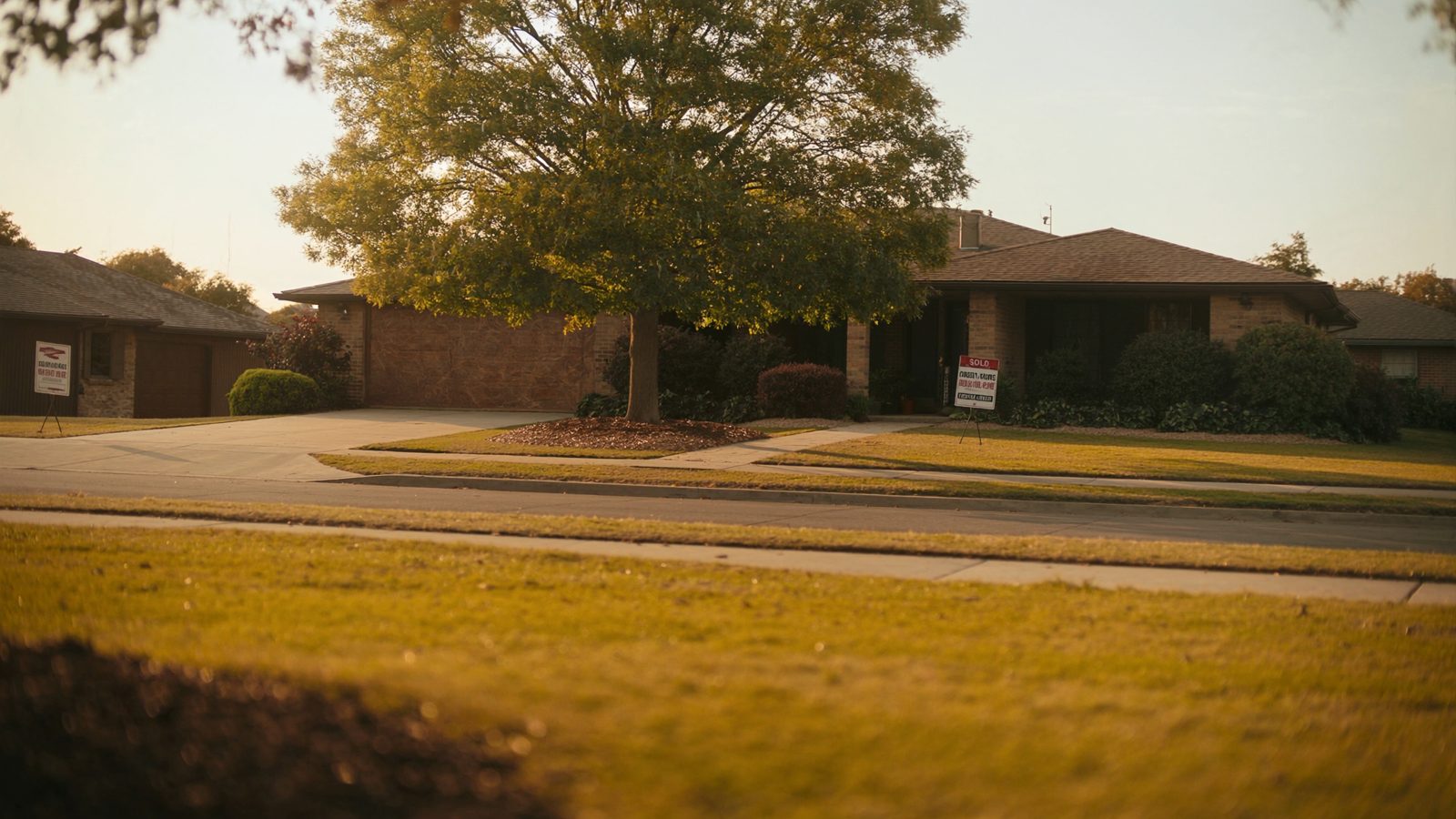
Inheriting a house sounds like a windfall until you're the one dealing with it. There's the emotional weight of losing someone, and then there's the practical reality: a property you might not live near, didn't budget for, and may not even want. If the house is in Oklahoma City, you're also looking at Oklahoma's probate process, which has its own timeline and rules that differ from neighboring Texas.
The good news: selling an inherited house in OKC doesn't have to drag on for a year. Depending on your situation, you can get through the process and close a sale in a few months or less.
How Oklahoma Probate Works (The Quick Version)
When someone dies owning real property in Oklahoma, that property usually has to go through probate before it can legally transfer to the heirs. Probate is the court-supervised process of settling the deceased person's estate, paying creditors, and distributing assets.
In Oklahoma County, probate is handled by the Oklahoma County District Court. Here's the typical path:
Step 1: File a petition. Someone (usually a family member named in the will, or the closest relative if there's no will) files a petition for probate with the court. This asks the court to appoint a personal representative (executor) to manage the estate.
Step 2: Notice to creditors. Oklahoma law requires a notice to creditors published in a local newspaper. Creditors have two months from the date of the first publication to file claims against the estate.
Step 3: Inventory and appraisal. The personal representative files an inventory of the estate's assets, including the inherited house. The court may require a formal appraisal.
Step 4: Settle debts and distribute. After the creditor period expires and debts are paid, the personal representative can petition the court to distribute assets, which includes selling real property if the heirs want cash instead of keeping the house.
Standard probate in Oklahoma County takes roughly 4-8 months. Oklahoma also offers a summary administration process for less complicated estates, which can cut the timeline to 2-4 months. And if the property was held in a living trust or had a transfer-on-death deed, you may skip probate entirely.
When You Can Start Selling
You don't have to wait until probate is completely finished to begin the sale process. Once the personal representative is appointed by the court (which typically happens 2-4 weeks after filing), they have the legal authority to manage estate assets, including marketing the property and negotiating with buyers.
The court still needs to approve the actual sale before closing, but this is usually a formality if all heirs agree and the price is reasonable. In practice, you can have a buyer lined up and a purchase agreement signed well before the court gives final approval.
This is where selling to a cash buyer has a real advantage. A cash buyer can wait for court approval without the deal falling apart. Traditional buyers with mortgage contingencies often can't (or won't) wait through the probate timeline.
What Happens When Multiple Heirs Are Involved
Inherited properties in Oklahoma City frequently involve multiple heirs, and that's where things get complicated. Maybe three siblings inherited the house. One wants to sell, one wants to keep it, and the third lives out of state and just wants their share.
Oklahoma law requires all heirs to agree on the sale terms, or the personal representative needs specific court authority to sell. If heirs can't agree, any co-heir can file a partition action in Oklahoma County District Court, which essentially forces a sale. Partition sales can work, but they add time and legal costs.
Cash buyers often help break these deadlocks. When you can present a clean, no-contingency offer with a fast closing timeline, reluctant heirs are more likely to agree because the process becomes simple and predictable. Nobody has to manage the property for months while a listing agent tries to find a buyer.
Common Situations With Inherited Houses in OKC
The house needs significant repairs
Many inherited properties in Oklahoma City are older homes. OKC's housing stock includes a lot of properties built before 1970, and when a homeowner passes away, deferred maintenance is almost always an issue. Roof problems, outdated plumbing, foundation settling (Oklahoma has its own clay soil issues), and cosmetic wear are common.
With OKC's median home value at $249,363, the most affordable entry in the group of metros Home Pros covers, repair costs can quickly eat into whatever equity the property has. A $15,000 roof replacement on a $180,000 house is a big percentage. Cash buyers purchase the house as-is, so you don't need to spend money you might not have on a property you're trying to unload.
The house has delinquent property taxes
If the deceased homeowner fell behind on Oklahoma County property taxes, those taxes become the estate's responsibility. Oklahoma County charges penalties and interest on delinquent taxes, and eventually, the county can sell the property at a tax sale. Spring is when tax delinquency notices go out, so if you've inherited a property with unpaid taxes, this is the time to deal with it.
A cash buyer can work with the title company to pay off delinquent taxes from the sale proceeds at closing. You don't have to come out of pocket to clear the taxes before selling.
You live out of state
Many people who inherit property in Oklahoma City don't actually live there. Managing a vacant house from another state means paying for utilities, insurance, lawn care, and security while you figure out what to do with it. Each month you hold onto the house costs money.
Oklahoma's relatively landlord-friendly laws (no rent control, straightforward eviction process) make the state attractive for rental investors, but that only helps if you want to be a landlord. If you just want to convert the inherited property to cash, a direct sale to a buyer in the OKC market is usually the fastest path.
Tax Implications for Inherited Property in Oklahoma
Here's the one piece of genuinely good news in this whole process: Oklahoma does not have a state estate tax or inheritance tax. And at the federal level, you receive what's called a "stepped-up basis" on the property.
The stepped-up basis means your cost basis for capital gains purposes is the property's fair market value on the date of death, not what the deceased originally paid for it. If your parent bought the house in 1990 for $65,000 and it's worth $230,000 when they pass, your basis is $230,000. If you sell for $225,000, you actually have a capital loss for tax purposes.
This makes selling soon after inheriting tax-efficient. The longer you wait, the more the property might appreciate (or depreciate), and your gain or loss is measured from that stepped-up basis date.
Note: This is general information, not tax advice. Talk to a CPA familiar with Oklahoma estate matters for your specific situation.
The OKC Market in Early 2026
Oklahoma City is one of the more stable markets in the country right now. The median home value is $249,363 with 1.46% appreciation over the past year. The latest quarter showed strong momentum at 9.50% annualized, which means the market is heating up.
For sellers of inherited property, this is actually encouraging. A strengthening market means more buyer interest, better offers, and less time holding a property you don't want. The energy sector is stabilizing, military bases (Tinker Air Force Base is a major employer) continue to drive housing demand, and OKC remains one of the most affordable metros in the country.
If you've been sitting on an inherited house in Oklahoma City waiting for the right time, the spring 2026 market is about as favorable as it's been in the past couple of years.
How Home Pros Can Help
Home Pros buys inherited properties in Oklahoma City in any condition. We understand the probate process, work with title companies experienced in estate sales, and can structure closing timelines around court approval schedules.
If you've inherited a house in OKC and want to explore your options, reach out for a no-obligation cash offer. We'll give you a number, you decide if it makes sense, and there's no pressure either way.
Inherited a House in Oklahoma City?
Skip the months of uncertainty. Get a cash offer from Home Pros and sell on your schedule, even during probate.
Get Your Cash OfferFrequently Asked Questions
Do I have to go through probate to sell an inherited house in Oklahoma?
Usually yes, unless the property was in a trust or had a transfer-on-death deed. Oklahoma requires probate to transfer real property from a deceased owner. Small estates may qualify for simplified procedures, but real property almost always involves court oversight.
How long does probate take in Oklahoma County?
Standard probate runs 4-8 months. Summary administration can cut that to 2-4 months. Contested estates with heir disputes or creditor claims can extend beyond a year.
Can I sell the inherited house before probate is finished?
You can market the property and accept offers once the personal representative is appointed. The court must approve the final sale, which is typically a formality if the price is fair and heirs agree.
What taxes do I owe when selling an inherited house in Oklahoma?
Oklahoma has no state estate or inheritance tax. Federally, you get a stepped-up cost basis to the property's value at the date of death. Selling soon after inheriting usually means minimal or zero capital gains tax. Consult a CPA for your specific situation.
How do multiple heirs agree to sell in Oklahoma City?
All heirs need to consent, or the personal representative needs court authority. If one heir blocks the sale, any co-heir can file a partition action in Oklahoma County District Court to force a sale. Cash offers with quick timelines often help reluctant heirs agree.
Who pays property taxes on an inherited house during probate?
The estate is responsible. If the estate lacks funds, heirs typically split the cost. Oklahoma County charges penalties on delinquent taxes, and extended non-payment can lead to a tax sale. A cash buyer can pay off back taxes from sale proceeds at closing.