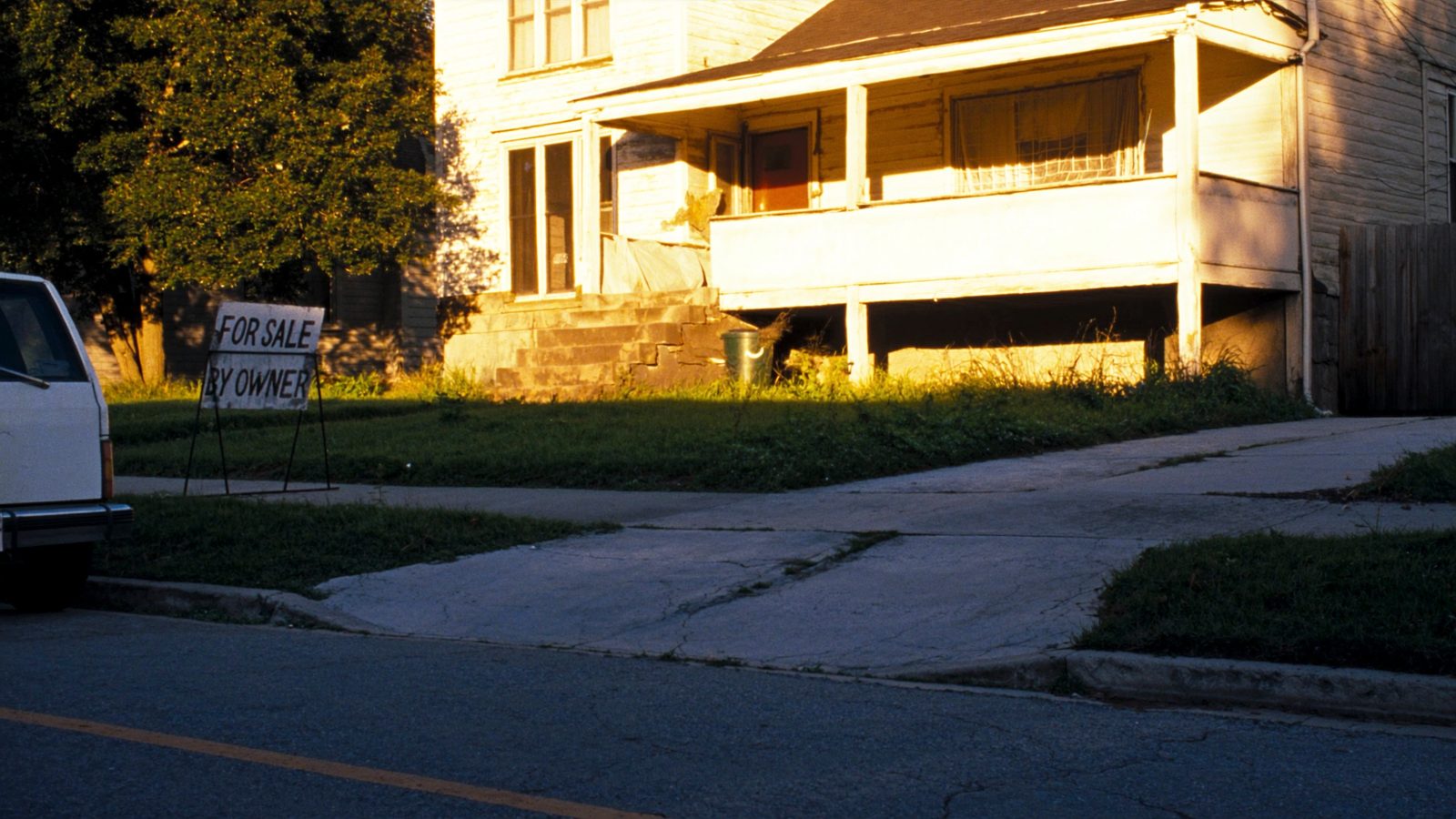
The median wholesale assignment fee in Cleveland runs $8,000–$14,000 per deal in 2026, roughly 8–12% of the purchase price. Fees climb with deeper discounts, heavy-rehab properties, and institutional buyers paying a premium for vetted inventory. Fees are typically paid at closing via double-close or assignment-of-contract, disclosed under Ohio HB 532 (2022).
How much do wholesalers make per deal in Cleveland?
The median wholesale assignment fee in Cleveland ranges from $8,000 to $14,000 per single-family deal in 2026. This translates to 8–12% of the purchase price, depending on property condition, rehab scope, and buyer profile. Multifamily deals (duplexes, triplexes, 4-plexes) carry slightly lower percentage fees, typically 6–9%, because the higher absolute purchase price distributes the wholesaler's profit over more units.
Heavier rehab deals support wider spreads. A property requiring $80,000 in repairs might command a $18,000–$25,000 assignment fee because the buyer is assuming substantial execution risk. Conversely, turnkey or light-rehab properties (under $15,000 in work) may see assignment fees of $5,000–$10,000 because the buyer's downside is lower.
Institutional buyers, cash-backed investment funds, REITs, and portfolio operators like Home Pros, often pay 10–15% premium assignment fees per deal because they value pipeline consistency and vetted due diligence. A wholesaler sourcing 8–10 deals per month to an institutional buyer may negotiate $12,000–$18,000 per deal versus $8,000–$10,000 to a one-off retail investor.
According to Redfin Data Center (Q1 2026), Cleveland's median single-family home sale price is approximately $148,000. A typical wholesale deal at 70% ARV ($103,600 purchase) with $48,000 in rehab costs nets the wholesaler roughly $9,000–$12,000 in assignment fees at the 8–10% range.
Is wholesaling real estate legal in Ohio?
Yes, wholesaling is legal in Ohio. However, the state passed Ohio HB 532 (House Bill 532) in 2022, which added significant disclosure requirements. Under Ohio Revised Code §4735.022, a wholesaler must disclose to both the seller and the buyer that they are a wholesaler (or that they are acquiring the property for the purpose of reselling it quickly without material improvements) before the seller or buyer signs the purchase agreement.
The disclosure must be clear and written. Failing to disclose wholesaler status is a violation of ORC §4735.022 and can result in:
- Cancellation of the contract at the buyer's or seller's election
- Forfeiture of earnest money to the non-disclosing party
- Civil liability for damages
- License suspension or revocation if the wholesaler holds a real estate license
In practice, this means wholesalers must use a clearly labeled assignment-of-contract or include a specific disclosure clause in the purchase agreement. A simple statement like, "Buyer acknowledges that Seller is a real estate wholesaler and is assigning this contract to an end buyer," satisfies the statute if included before signing.
Many wholesalers now use standardized disclosure addenda prepared by Ohio real estate attorneys to ensure compliance. The Cuyahoga County Bar Association and the Ohio Division of Real Estate provide model language.
What is a typical assignment fee in Ohio?
Typical assignment fees in Ohio range from $5,000 to $20,000 per deal, with the Cleveland market sitting in the upper-middle to upper range. This variation depends on five key factors.
1. Property Type and Purchase Price. Single-family homes dominate the wholesale market in Cleveland; a median-priced SFH ($100,000–$140,000 purchase) commands fees of $8,000–$12,000. Multifamily (2–4 unit) and smaller commercial (5–20 unit apartment buildings) see lower percentage fees (6–9%) but higher absolute fees due to larger purchase prices, often $12,000–$25,000.
2. Rehab Scope. Light-rehab properties (under $15,000 work, cosmetics and minor repairs) support assignment fees of $5,000–$8,000. Medium-rehab ($15,000–$50,000) support $8,000–$14,000. Heavy-rehab ($50,000+) support $14,000–$25,000 because the buyer is taking on substantial execution risk and timeline uncertainty.
3. Buyer Profile. Retail fix-and-flip investors (one-off buyers, part-time investors) typically negotiate $8,000–$12,000 fees. Portfolio operators and institutional buyers ($3,000–$5,000 premium) pay $12,000–$18,000+ per deal because they value consistent sourcing and reduced due diligence burden.
4. Market Conditions. In a buyer's market (excess inventory, slower sales), wholesalers compress fees to $6,000–$9,000 to remain competitive. In a seller's or investor's market (limited inventory), fees expand to $12,000–$18,000 because demand for sourced deals outpaces supply.
5. Wholesaler Reputation. Established wholesalers with a track record of clean due diligence and accurate after-repair-value estimates can command 15–20% premiums. New wholesalers or those with a history of misrepresented properties may see fees reduced by 10–20% until trust is built.
In Cleveland specifically, the typical assignment fee sits at the upper range of Ohio because the city has a large population of cash investors, institutional buyers, and active wholesalers competing for inventory. This drives prices up relative to smaller Ohio markets like Columbus or Cincinnati.
Do you need a real estate license to wholesale in Ohio?
No. You do not need a real estate license to wholesale real estate in Ohio. The assignment-of-contract structure allows unlicensed wholesalers to assign their contractual rights without holding a real estate license. The actual sale transaction (between the licensed real estate agent and the cash buyer) occurs between two licensed or institutional parties.
However, there are important caveats under Ohio law.
If you hold a real estate license and wholesale: You must disclose that you are wholesaling. Failing to disclose while licensed puts you in violation of ORC §4735.022 and the Ohio Division of Real Estate's rules of conduct. License suspension or revocation is possible.
If you're unlicensed: You still must comply with ORC §4735.022's disclosure requirement. Being unlicensed does not exempt you from the wholesaler disclosure rule.
Direct mail and absentee sourcing: You may send direct-mail or cold-call offers without a license. However, once you enter into a purchase contract, the disclosure must be included or referenced before the owner signs.
The practical advantage of remaining unlicensed is avoiding the licensing fees, continuing education, and regulatory scrutiny. The disadvantage is that you cannot represent yourself as a licensed agent or buyer's agent, which limits your ability to negotiate directly with MLS-listed properties or earn traditional commission splits.
Most active Cleveland wholesalers remain unlicensed and use assignment-of-contract exclusively, paying title companies or closing attorneys to handle the transactional infrastructure.
How do wholesalers get paid at closing?
Wholesalers get paid at closing via one of two primary mechanisms: assignment of contract or double close. Each has distinct cash flow, disclosure, and tax implications.
Assignment of Contract (Most Common). The wholesaler enters into a purchase agreement with the seller and assigns their contractual rights to the cash buyer (usually for a flat assignment fee, e.g., $10,000). At closing, the assignment fee is deducted from the buyer's down payment or wire, and the wholesaler walks away with cash. Example: A wholesaler signs a contract to buy a property for $95,000. The actual cash buyer closes on the same property for $95,000 purchase + $10,000 assignment fee. The fee is paid by the buyer's wire at closing, directed to the wholesaler's title account.
Double Close (Used for Larger or Institutional Deals). A transactional funding company facilitates two simultaneous closings: (1) the wholesaler buys from the original seller at the agreed price, and (2) the wholesaler immediately sells to the cash buyer at a higher price. The wholesaler's profit (the spread) is funded by the buyer's wire and the transactional funding lender. Transactional funding costs 1.5–3% of the purchase price. Example: Wholesaler buys at $95,000; cash buyer buys at $105,000. Transactional funding pays $95,000 to the seller. Cash buyer's $105,000 wire covers the $95,000 principal + $1,500 transactional fee (1.5%) + $8,500 wholesaler profit.
Assignment is preferred because it's simpler, cheaper, and faster (no funding fees). Double closes are used when the contract with the seller prohibits assignment or when the wholesaler wants to keep their profit entirely hidden from the seller (less common in Cleveland due to HB 532 disclosure requirements).
Payment timing: both methods close in 10–30 days. The wholesaler receives cash at closing (same day as the buyer's wire). There is no extended payment plan or contingency, payment is immediate upon closing.
What's the difference between an assignment and a double close in Cleveland?
An assignment and a double close are two distinct wholesale structures that differ in complexity, cost, transparency, and cash flow timing.
Assignment of Contract. The wholesaler signs a purchase agreement with the seller, then assigns their contractual rights to a cash buyer. The wholesaler appears on the contract; their name is simply crossed out and the cash buyer's name is substituted. At closing, one closing table exists, one set of documents, and one deed transfer. The wholesaler's fee is paid directly from the buyer's wire as a line item on the closing statement. Cost to wholesaler: $0–$500 (title company assignment fee, if any). Speed: 10–20 days to close. Disclosure: The seller knows a wholesaler is involved because the assignment language is on the contract.
Double Close. The wholesaler buys from the seller, then immediately sells to the cash buyer via two separate transactions (two contracts, two closings, two deeds). A transactional funding lender bridges the purchase price between the two closings. Two closing tables occur sequentially (sometimes on the same day, in back-to-back 15-minute windows). The seller only knows the wholesaler is involved; the wholesaler's actual profit is hidden because the two closing prices are separate. Cost to wholesaler: 1.5–3% of purchase price (transactional funding fee). Speed: 14–30 days (slower because two closings must be coordinated). Disclosure: The seller knows the wholesaler is involved, but does not see the spread between the two purchase prices unless the wholesaler chooses to disclose it (not required under HB 532, but often done).
In Cleveland, assignment dominates because it's simpler, complies with HB 532 (disclosure is visible), and saves the wholesaler the transactional funding cost. Double closes are used when:
- The seller's contract explicitly prohibits assignment.
- The wholesaler wants to keep the spread completely hidden (rare in Cleveland post-HB 532).
- The deal size is large ($300,000+) and transactional funding is easily available.
- The cash buyer insists on a double close to obscure their acquisition price to competing investors or appraisers.
For most Cleveland deals under $150,000, assignment is the default. For larger portfolio or institutional deals, double close is negotiated.
Why do institutional buyers pay higher wholesale fees?
Institutional buyers, cash-backed investment funds, portfolio operators, and REITs, typically pay $3,000–$5,000 higher assignment fees per deal (or 10–15% of purchase price) than retail fix-and-flip investors. This premium exists for five reasons.
1. Deal Consistency and Volume. Institutional buyers value wholesalers who can provide 5–15 deals per month, month after month. A wholesaler who commits to this consistency deserves a premium because they reduce the buyer's sourcing costs and allow the buyer to build infrastructure (in-house rehab teams, predictable cash flow forecasts, portfolio scaling). A retail investor may only buy 1–2 deals per month, so the wholesaler's value is lower.
2. Reduced Due Diligence Burden. Institutional buyers trust wholesalers with clean track records to have already conducted title, structural, and permit inspections. A wholesaler who provides a 20-page due diligence package (title abstract, structural photos, rehab estimate, comps) saves the buyer $1,000–$3,000 in internal review costs. That savings is reflected in a higher assignment fee the buyer is willing to pay. That is the whole argument for underwriting every deal you send rather than the ones you feel good about: Compr turns an address and a photo set into that packet in about a minute, so the review work is already done when the buyer opens it.
3. Accurate After-Repair-Value Estimates. Wholesalers with historical data on their ARV accuracy get paid premiums. An institutional buyer budgeting $50,000 in rehab and a $150,000 sale price relies on the wholesaler's estimate being within 2–3%. Wholesalers with track records of misrepresented ARVs (consistently 10–20% low or high) lose deals or see fees cut by 20–30%.
4. Risk Transfer. An institutional buyer closing in 14 days assumes less market risk (prices holding steady) than a retail investor closing in 30+ days. The wholesaler is absorbing some of that risk by keeping the deal under contract. For deals with tight rehab margins (70% rule deals), institutional buyers pay premiums to wholesalers who can guarantee price certainty.
5. Relationship Lock-In. Institutional buyers often negotiate exclusive wholesale relationships with top-performing wholesalers ("You send us first dibs on your deals; we commit to a minimum purchase volume"). These exclusive agreements support higher per-deal fees because the wholesaler's deal-flow is predictable and the buyer's capital is committed. A wholesaler with an institutional exclusive worth 5 deals/month at $12,000/deal = $60,000/month gross is incentivized to prioritize that buyer's deals over retail opportunities.
Home Pros, as an institutional cash buyer across 48 markets, typically pays wholesalers in the 10–15% range for sourced deals, compared to 8–10% for retail investors. This premium accelerates sourcing, improves deal quality, and builds long-term partnerships.
How are Cleveland wholesale fees negotiated?
Cleveland wholesale fees are negotiated in three stages: upfront discussion with the cash buyer, post-inspection renegotiation, and at-closing adjustment.
Stage 1: Upfront Fee Proposal. The wholesaler, having identified an off-market deal, estimates the property's after-repair value (ARV) and rehab costs, then calculates the maximum purchase price using the 70% rule or the investor's specific criteria. The wholesaler proposes an assignment fee to the cash buyer. Example: "I have a Slavic Village SFH, ARV $155,000, needs $55,000 rehab. I'm offering it at $95,000 with a $10,000 assignment fee. Your all-in cost is $160,000." The buyer accepts, declines, or counters.
Stage 2: Post-Inspection Renegotiation. Once the buyer inspects the property (typically 5–10 days into the assignment period), the buyer's contractor may revise the rehab estimate up or down. If rehab costs increase by $10,000, the buyer will renegotiate the assignment fee down by $5,000–$7,000 to maintain their target all-in investment and profit margin. Wholesalers expect this and often pad their initial fee estimate by 10–15% to cushion for renegotiation.
Stage 3: At-Closing Adjustment. Sometimes a lender's appraisal comes in lower than the wholesaler's ARV estimate, or a title issue surfaces. The buyer may request a closing-day fee reduction. Wholesalers who have built goodwill by maintaining accuracy on previous deals can hold firm; those with a history of misrepresentation have little leverage and often accept reductions to preserve the relationship.
Fee negotiation is heavily anchored to the 70% rule. If the wholesaler's proposed fee + buyer's all-in cost exceeds 70% of ARV by more than 3–5%, the deal is dead. Cleveland buyers are sophisticated and have multiple sourcing options, so wholesalers must respect the math or lose the deal.
For institutional buyers, fees are often pre-negotiated in a term sheet. Home Pros, for example, may commit to a minimum assignment fee range ($10,000–$15,000) for sourced deals meeting underwriting criteria, simplifying negotiations for high-volume wholesalers. This predictability incentivizes wholesalers to prioritize that buyer's pipeline.
| Deal Profile | Typical Fee | % of Purchase Price | Payment Structure |
|---|---|---|---|
| Turnkey SFH, light rehab | $6K–$10K | 7–10% | Assignment at closing |
| Heavy rehab SFH | $10K–$18K | 10–13% | Assignment or Double Close |
| Multifamily 2–4 unit | $12K–$25K | 6–9% | Double Close (common) |
| Institutional buyer route | $15K–$30K | 10–15% | Assignment with vetting fee included |
Frequently Asked Questions
How much do wholesalers make per deal in Cleveland?
The median wholesale assignment fee in Cleveland runs $8,000–$14,000 per single-family deal in 2026, roughly 8–12% of the purchase price. Fees climb with deeper discounts, heavy-rehab properties, and institutional buyers paying a premium for vetted inventory.
Is wholesaling real estate legal in Ohio?
Yes. Wholesaling is legal in Ohio. However, Ohio HB 532 requires wholesalers to disclose their status as wholesalers under ORC §4735.022 to buyers and sellers. Failure to disclose can result in penalties and loss of earnest money.
What is a typical assignment fee in Ohio?
In Ohio, typical assignment fees range from $5,000–$20,000 per deal, depending on property type, purchase price, and rehab scope. Single-family homes run 8–12% of purchase price; multifamily runs 6–9%. Cleveland's market is in the middle to upper range of Ohio due to cash-buyer competition.
Do you need a real estate license to wholesale in Ohio?
No. You do not need a real estate license to wholesale in Ohio. However, you must disclose your status as a wholesaler under ORC §4735.022. If you're licensed and hide your wholesaler status, you risk license suspension or revocation.
How do wholesalers get paid at closing?
Wholesalers get paid via an assignment of contract (direct transfer of rights to a cash buyer) or a double close (separate buy and sell transactions). In an assignment, the fee is paid at the buyer's closing. In a double close, the wholesaler's fee is funded by transactional closing funds, typically 1.5–3% of the purchase price.
How is Ohio HB 532 enforced?
Ohio HB 532 is enforced by the Ohio Division of Real Estate and local prosecutors. Penalties include cancellation of the contract, forfeiture of earnest money, and civil liability. Buyers can sue wholesalers for damages if disclosure is omitted before signing.

Founder of Home Pros, operator across 48 markets, closed 300+ investor transactions since 2021. Trevor writes for investors and sellers navigating cash-buyer transactions, distressed property deals, and wholesale fundamentals. More about Trevor →