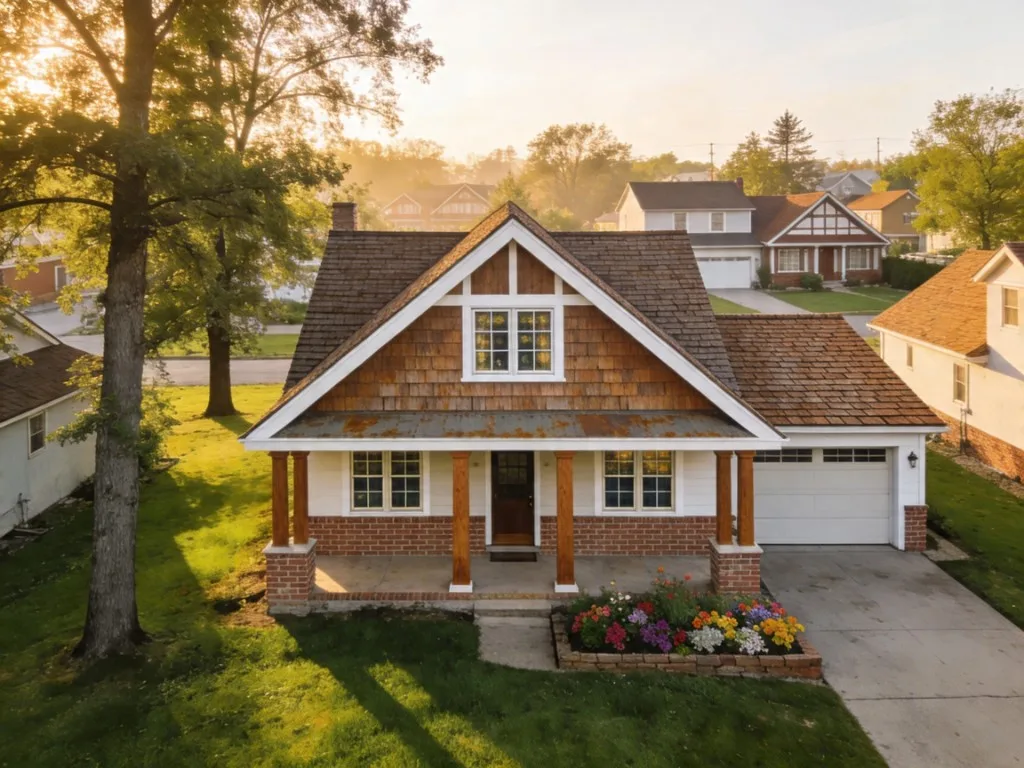
A Florida senior can sell a paid-off house as-is for cash in as little as 7 days, with no repairs, no showings, and no commission. Florida has no state capital gains tax at all, most sellers also clear the federal exclusion on the first $250,000 to $500,000 of gain, a Save Our Homes tax benefit does not automatically move with you unless you port it within three years, and a fair-value cash sale is the opposite of the kind of transfer Medicaid's look-back rule is built to catch.
This article is published by Home Pros (Balint Holdings, LLC), a veteran-owned cash home buyer based in San Antonio that buys houses directly from sellers, covers standard closing costs, and never charges a commission. The legal and tax figures below are drawn from the Florida Constitution, the Florida Statutes, the IRS, CMS, the Agency for Health Care Administration's 2026 asset limits, and Redfin's Florida market data, gathered September 16, 2026. Every Home Pros figure traces back to content/proof.json, the company's single internal source for its own numbers.
How does a Florida senior sell a paid-off house without repairs or showings?
The part of downsizing that stops most sellers cold is the physical work: sorting through a house full of decades of belongings, patching whatever an inspector will flag, and keeping the place presentable through weeks of showings in Florida's heat and humidity. Selling to a cash buyer skips that entirely, because the offer is written against the house as it sits today, condition, contents, and all, with nothing to repair and nothing to stage first.
That difference carries more weight for an older seller than a younger one, since the same to-do list, getting on a ladder, coordinating a contractor, vacating for a showing, gets harder with each passing year, and hurricane-related repair items (roof age, impact windows, a four-point inspection) can slow a financed buyer's approval in ways a cash sale never touches. Home Pros sends a written cash offer within 24 hours of a walkthrough or virtual assessment, and the seller sets the closing date, anywhere from 7 days out to whatever timeline fits a move into a smaller home, a senior community, or a family member's spare room.
What happens to my Save Our Homes tax benefit when I sell and downsize?
Florida's Save Our Homes amendment caps how much a homesteaded property's assessed value can rise each year, so a long-time owner's tax bill is often based on an assessed value far below what the house would sell for today. That gap, the accumulated Save Our Homes benefit, does not travel with you automatically when you sell; the buyer of your old home is reassessed at full market value the following year.
Portability, under Florida Statute 193.155(8), is the separate step that carries your savings forward: you can transfer up to $500,000 of your accumulated benefit to a new Florida homestead, but only if you establish that new homestead within three tax years of giving up the old one, a window that was extended from two years by a 2020 constitutional amendment. You apply by filing Form DR-501T with your new county property appraiser between January 1 and March 1 of the year you claim the new homestead. Downsize into a smaller Florida house within that window and most of your accumulated savings can move with you; wait longer, or move out of state, and the benefit is lost.
| Rule | Detail | Source |
|---|---|---|
| Maximum benefit transferable | Up to $500,000 | Florida Statute 193.155(8) |
| Deadline to establish new homestead | Within 3 tax years of giving up the old one | Florida Statute 193.155(8), extended from 2 years by 2020 Amendment 5 |
| Filing form | Form DR-501T | Florida Department of Revenue |
| Filing window | January 1 to March 1 of the claim year | Florida county property appraiser offices |
Will I owe capital gains tax when I sell my Florida home?
Almost certainly not at the state level, and Florida is one of the more durable no-tax states on this point. Article VII, Section 5 of the Florida Constitution, in place since 1924 and reinforced by later amendment, caps any state income tax on individuals at whatever amount could be credited against a similar federal tax; since the federal government offers no such credit, the effective state rate on a Florida senior's home-sale gain is zero.
The lack of a state tax stacks on top of the federal Section 121 exclusion, which shelters up to $250,000 of home-sale gain for a single filer and up to $500,000 for a married couple filing jointly, provided the home was owned and used as a primary residence for at least two of the five years before the sale (IRS Topic No. 701). For a Florida senior who has owned a paid-off house for years, the practical result is that the sale is very likely untaxed at both the state and federal level, whether the buyer is a financed buyer or a cash buyer like Home Pros.
How does selling my house affect Medicaid eligibility if I need long-term care later?
Florida's Medicaid program follows the same federal look-back rule every state uses: the 60 months before a long-term care application are reviewed for transfers made as gifts or sold for less than fair market value (CMS, Transfer of Assets in the Medicaid Program). A sale priced at fair market value and documented with a closing statement is treated differently than a gift, because the seller receives full value in return even though a house turned into cash.
Florida's Institutional Care Program caps countable assets at $2,000 for a single applicant, and a home is not counted toward that limit at all when a qualifying spouse, minor child, or blind or disabled child still lives there. For an applicant with no qualifying relative in the home, Florida applies a home equity limit of $752,000 as of 2026, the federal floor the state has adopted; equity above that figure can disqualify an applicant for nursing-facility coverage. Selling before an application, at a documented fair price, moves an asset out of the home-equity category and into cash that is easier to track and, when spent down properly, easier to plan around than an illiquid house. None of this is legal or financial advice; a Florida elder law attorney should review timing if Medicaid planning is part of why you are selling.
Can downsizing now make things simpler for my family's estate later?
Florida's summary administration process, at Florida Statute 735.201, only works for a modest estate, and the threshold just changed. For anyone who dies on or after July 1, 2026, the value of the estate subject to administration, after subtracting property exempt from creditor claims, can run up to $150,000, double the old $75,000 cap, under CS/HB 1337 (Chapter 2026-57, Laws of Florida). Estates of people who died before that date still use the older $75,000 threshold.
One detail matters more in Florida than in many states: protected homestead property does not count toward that cap at all, because Article X, Section 4 of the Florida Constitution exempts a homestead that passes to a surviving spouse or heirs from most creditor claims regardless of its value. That protection is a benefit for the house itself, but it also means the house still needs its own title-clearing step, typically a summary administration filing limited to determining homestead status, separate from settling the rest of the estate. Selling the house while you are still able to sign for yourself, and converting it to cash that fits cleanly inside the $150,000 threshold alongside other assets, can let heirs use the simpler summary administration process for the whole estate instead of navigating the homestead carve-out after the fact. Anyone already dealing with an inherited Florida house can read more about selling a probate or inherited property.
| Date of Death | Threshold | Source |
|---|---|---|
| Before July 1, 2026 | $75,000 | Florida Statute 735.201 (prior version) |
| On or after July 1, 2026 | $150,000 | Florida Statute 735.201, as amended by CS/HB 1337, Chapter 2026-57, Laws of Florida |
| Homestead property | Excluded from the cap entirely | Florida Constitution, Article X, Section 4 |
What does a cash sale actually look like for a downsizing senior?
The process starts with a walkthrough, in person or virtual, after which Home Pros sends a written cash offer within 24 hours. There is no obligation to sign, and sellers are encouraged to have a family member, financial advisor, or attorney look over the offer first. Once accepted, closing can happen in as little as 7 days, or later, commonly 14 to 30 days out, timed to a move into a smaller home, a senior living community, or a relative's property.
Home Pros covers standard closing costs, charges no commission, and does not require the house to be cleared out before closing, which removes one of the more physically demanding steps of a move for an older seller. Anyone who wants to see the math behind a number before making a call can start with the cash offer calculator, and sellers weighing a traditional listing against a direct sale can compare the two on our sell as-is and sell without a realtor pages.
| Downsizing Timeline | Cash Sale to Home Pros | Traditional Listing |
|---|---|---|
| Repairs required before an offer | None; sold as-is | Often needed for showings, inspection, or four-point/wind mitigation reports |
| Showings or open houses | None | Multiple, typically over several weeks |
| Time to a signed offer | Within 24 hours of a walkthrough (content/proof.json) | Statewide median 73 days on market before contract, August 2026 (Redfin) |
| Time to close | As fast as 7 days, typically 14 to 30 (content/proof.json) | Additional weeks for a financed buyer's underwriting, appraisal, and insurance approval after contract |
| Commission | None | Paid by the seller under most listing agreements |
Frequently Asked Questions
Does Florida tax the capital gain when a senior sells a paid-off house?
No. Florida has no state income tax under Article VII, Section 5 of the Florida Constitution, so there is no state-level capital gains tax on a home sale. Most sellers also clear the federal Section 121 exclusion, up to $250,000 of gain for a single filer and $500,000 for a married couple filing jointly who owned and used the home as a primary residence for two of the last five years, which leaves the sale untaxed at both levels for most long-time owners.
What happens to my Save Our Homes tax benefit when I sell and downsize?
It does not automatically follow you. Florida Statute 193.155(8) lets you port up to $500,000 of your accumulated Save Our Homes assessment cap to a new Florida homestead, but only if you establish the new homestead within three tax years of giving up the old one and file Form DR-501T with your new county property appraiser between January 1 and March 1. Wait longer than three years and the accumulated benefit is lost.
Do I have to fix anything before Home Pros will buy my house?
No. Home Pros buys the house in its current condition, deferred maintenance, dated finishes, and all, so there is no punch list, no contractor bids, and no inspection renegotiation to manage before closing.
Can a Florida estate skip formal probate court entirely after I downsize?
Only if what is left is small enough. Florida Statute 735.201 sets the summary administration threshold at $150,000 for anyone who dies on or after July 1, 2026 (up from $75,000), and protected homestead property does not count toward that cap at all. A house that has already been sold and converted into ordinary cash is far easier to fit under the threshold than the house itself, which is excluded from the cap but still requires its own title-clearing steps.
How does selling my Florida house interact with Medicaid nursing home eligibility?
Federal Medicaid rules apply a five-year look-back on transfers before a long-term care application, and a penalty attaches to gifts or below-market sales, not to a documented arm's-length sale at fair market value. Florida's Institutional Care Program also caps countable assets at $2,000 for a single applicant and, as of 2026, exempts home equity up to $752,000 for anyone still living in the home or with a qualifying relative there, so selling at a fair price and keeping the closing statement works against you far less than an outright gift would.
How fast can I close compared to a traditional Florida listing?
Home Pros gives a cash offer within 24 hours of a walkthrough and can close in as little as 7 days, with most sellers landing between 14 and 30 days on a date they pick. Florida homes statewide spent a median of 73 days on the market before going under contract in August 2026, per Redfin, before a financed buyer's underwriting and appraisal even start.
Sources
- Florida Constitution, Article VII, Section 5: the constitutional cap on state income tax that leaves individuals with no state capital gains tax. (WebSearch retrieval; direct fetch of leg.state.fl.us blocked by network egress this run.)
- IRS, Topic No. 701, Sale of Your Home: the Section 121 exclusion amounts and the two-of-five-years ownership and use test. (WebSearch retrieval; direct fetch of irs.gov blocked by network egress this run.)
- Florida Department of Revenue, Portability: the $500,000 Save Our Homes portability cap, the three-year window, and Form DR-501T. (WebSearch retrieval; direct fetch of floridarevenue.com blocked by network egress this run.)
- Florida Statute 735.201: the summary administration threshold, its increase to $150,000 for deaths on or after July 1, 2026, and the exclusion of exempt property from the cap. (WebSearch retrieval; direct fetch of flsenate.gov blocked by network egress this run.)
- Florida Constitution, Article X, Section 4: homestead exemption from forced sale and its continuation to a surviving spouse or heirs. (WebSearch retrieval; direct fetch of leg.state.fl.us blocked by network egress this run.)
- CMS, Transfer of Assets in the Medicaid Program: the federal 60-month look-back period and the treatment of below-fair-market-value transfers. (WebSearch retrieval; direct fetch of cms.gov blocked by network egress this run.)
- Florida Medicaid Eligibility, 2026 Income and Asset Limits: the $2,000 countable asset limit and the $752,000 home equity limit adopted by Florida's Institutional Care Program in 2026, citing AHCA guidance. (WebSearch retrieval this run.)
- Redfin, Florida Housing Market: the statewide 73-day median days-on-market figure and $383,403 median sale price for August 2026. (WebSearch retrieval this run.)
Tax exemption rules, portability deadlines, and probate thresholds can change by legislative session; confirm current figures with your county property appraiser, the Florida Department of Revenue, or a Florida attorney before relying on the illustrative figures above. This article is educational and not financial, tax, or legal advice.

Co-founder and COO of Home Pros (Balint Holdings, LLC) and a licensed Texas real estate agent. Trevor runs the acquisitions side of the business, pricing and closing offers directly with sellers. More about Trevor →