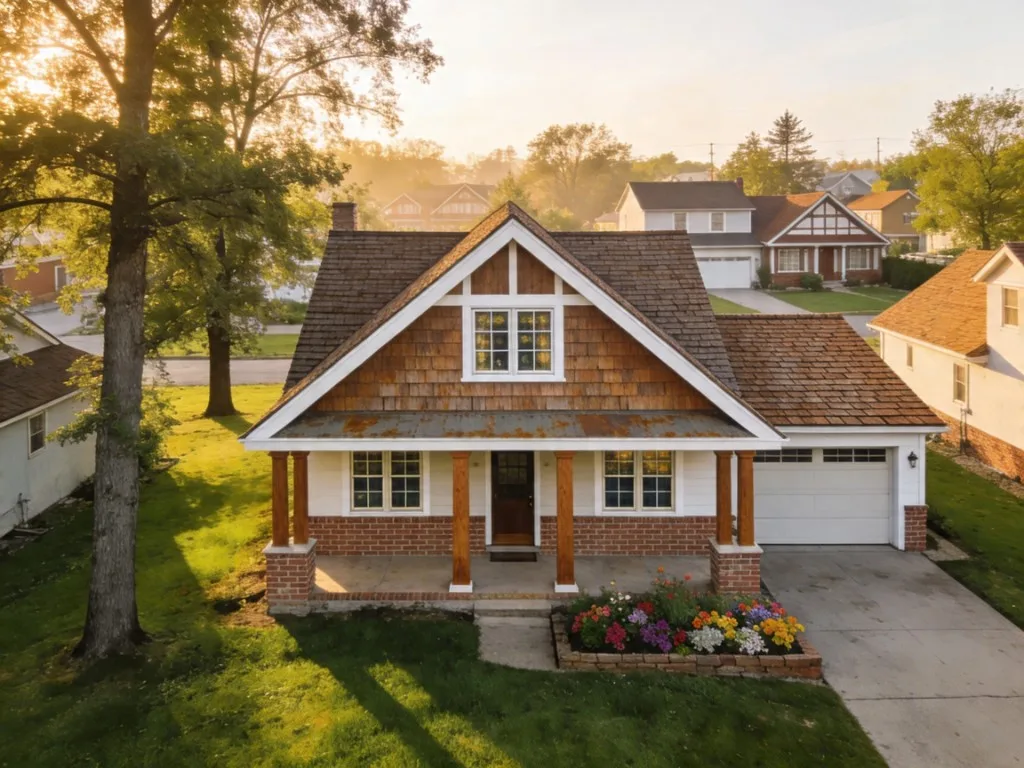
A New York senior can sell a paid-off house as-is for cash in as little as 7 days, with no repairs, no showings, and no commission. The Enhanced STAR exemption stays with the home, most gains are sheltered by the federal $250,000 to $500,000 exclusion, and a fair-market sale generally will not create a Medicaid problem.
This guide is maintained by Home Pros (Balint Holdings, LLC), a veteran-owned cash home buyer headquartered in San Antonio that purchases houses directly from sellers, covers standard closing costs, and never charges a commission. Every legal and tax figure below comes from the New York State Department of Taxation and Finance, the New York State Senate's codified statutes, the New York State Department of Health, and the IRS, retrieved by web search on September 23, 2026 (direct fetch of tax.ny.gov, nysenate.gov, and health.ny.gov was blocked by network egress this run, so citations are verified against the statute and guidance text summarized in the search results rather than pasted verbatim). Every Home Pros figure comes from content/proof.json, the company's single source of truth for its own numbers.
How can a New York senior sell a paid-off house without repairs or showings?
The physical work of getting a house market-ready is usually the biggest reason downsizing stalls: clearing out decades of belongings, patching a roof or an aging boiler, then keeping the house presentable for a string of showings and open houses. A cash buyer removes that step entirely by purchasing the home in its current condition, repairs, clutter, and all, so there is nothing to fix and nothing to stage before an offer can be made.
That matters more for a senior than for a typical seller, because the same tasks that are an inconvenience at 40 can be a genuine physical and financial burden at 70 or 80: climbing a ladder to clear a gutter, coordinating contractors through a New York winter, or vacating the house for back-to-back showings. Home Pros gives an initial cash offer within 24 hours of a walkthrough or virtual assessment, and the seller decides the closing date, which can be as fast as 7 days or pushed out to fit a move to a smaller home, an apartment, or a family member's property.
What happens to my Enhanced STAR exemption when I sell my New York home?
STAR (School Tax Relief) exempts part of a home's assessed value from school district taxes, and Enhanced STAR gives seniors a larger exemption than Basic STAR, typically producing a two to three times bigger reduction in the school tax bill. The exemption belongs to the property and the owner's enrollment on it, so it ends when you sell; it does not turn into a cash credit or transfer automatically to a new address.
To qualify for Enhanced STAR for the 2026 benefit year, every owner (or the owner and resident spouse together) must be 65 or older, and combined 2024 adjusted gross income must be at or below $110,750. A change that starts in 2026 removes some of the paperwork burden going forward: instead of requiring a fresh application to the local assessor when a Basic STAR recipient turns 65, the state Tax Department now identifies eligible owners and notifies the assessor directly to upgrade them to Enhanced STAR. If you downsize into a new New York primary residence, you still need to enroll that new home in STAR and confirm you meet the age and income rules there.
| Item | Basic STAR | Enhanced STAR |
|---|---|---|
| Age requirement | None | All owners 65 or older by December 31, 2026 (or one spouse if married) |
| Combined income limit | Higher, non-senior threshold | 2024 AGI at or below $110,750 for all owners and resident spouses |
| School tax reduction | Standard exemption amount | Roughly 2 to 3 times the Basic STAR reduction |
| Annual verification | Not required | Mandatory Income Verification Program, checked against IRS data each year |
| Applies to the sold home after closing | No | No; the buyer or a new owner must enroll separately |
Will I owe capital gains tax when I sell my primary home in New York?
Unlike Texas or Florida, New York taxes personal income, and that includes whatever gain federal law does not shelter on a home sale. The federal side comes first: under IRC Section 121, a single filer can exclude up to $250,000 of gain, and a married couple filing jointly can exclude up to $500,000, as long as the home was owned and used as a primary residence for at least two of the five years before the sale (IRS Topic No. 701). Most seniors who have owned a home for decades clear both tests easily, and the exclusion applies regardless of whether the buyer is a financed buyer or a cash buyer like Home Pros.
New York does not layer a separate home-sale exclusion on top of the federal one. Any gain the federal exclusion does not cover is taxed as ordinary income under the state's regular brackets, which for 2025 taxable income run from 4% at the bottom up to 10.9% at the top, with no reduced rate for long-term gains the way the federal system offers. On top of that, New York's real estate transfer tax applies to the transaction itself at 0.4% of the price statewide under Tax Law Article 31, separate from any additional New York City transfer or mansion tax on higher-value sales.
How does selling my home affect Medicaid eligibility if I need long-term care later?
Medicaid's look-back rules exist to catch people who gave away assets, or sold them for less than fair value, shortly before applying for benefits. A sale priced at fair market value and documented with a closing statement is not that pattern, because the seller receives full value in exchange, even though the asset changes from a house to cash.
New York's rules here are unusually unsettled. The state enacted a 30-month look-back for community-based, in-home long-term care Medicaid back in 2020, but as of this run it still has not taken effect statewide, because New York needs approval from the federal Centers for Medicare and Medicaid Services that it has not yet received; local social services districts are not currently applying a transfer review to community Medicaid applications. That pause is separate from nursing-home Medicaid, where the standard federal 60-month look-back already applies and is not affected by New York's stalled community-care rule. This is general information, not legal advice; a New York elder law attorney can review timing before a sale if long-term care planning is part of the decision.
Does selling now help my family avoid a New York probate later?
New York's small-estate shortcut, called voluntary administration, only reaches personal property, not real estate. Under SCPA Section 1301, an estate can use voluntary administration if the gross value of the decedent's personal property is $50,000 or less, a threshold raised from $30,000; but if the decedent owned real property such as a house in their own name, the estate does not qualify as a small estate for that property no matter how modest its value is. A house still titled to a deceased owner requires a full Surrogate's Court probate or administration proceeding before anyone can sell it, which typically means appointing an executor or administrator, notifying beneficiaries and creditors, and waiting on the court's calendar.
Selling while the owner is alive and able to sign removes the house from that process entirely. Cash proceeds are simpler for an estate to distribute than a house, can be gifted, spent, or placed with a fiduciary during the owner's lifetime, and do not require a Surrogate's Court filing to change hands after death. Sellers who are already helping settle a spouse's or parent's estate, or who want to simplify what they leave behind, can read more about selling an inherited or probate property before deciding on timing.
What does a cash sale actually look like for a downsizing New York senior?
The process starts with a walkthrough or a virtual assessment of the home, after which Home Pros sends a written cash offer within 24 hours. There is no obligation to accept, and sellers are encouraged to review the offer with a trusted family member, financial advisor, or attorney before signing anything, which is standard practice in New York's attorney-review real estate market anyway. Once accepted, closing can happen in as little as 7 days, or the seller can set a later date, commonly 14 to 30 days out, to line up a move to a smaller home, a senior community, or a family member's property.
Home Pros covers standard closing costs, charges no commission, and does not require the home to be cleaned out before closing, which removes one of the more physically demanding parts of a move for an older seller. Sellers who want to see the math behind an offer before contacting anyone can start with the cash offer calculator, and sellers who are not ready to sell but want to understand what "as-is" actually covers can read selling a house as-is first.
| Downsizing Timeline | Cash Sale to Home Pros | Traditional Listing |
|---|---|---|
| Repairs required before an offer | None; sold as-is | Often needed for showings or after inspection |
| Showings or open houses | None | Multiple, typically over several weeks |
| Time to a signed offer | Within 24 hours of a walkthrough (content/proof.json) | Attorney review and negotiation typically add 1 to 2 weeks after an accepted bid |
| Time to close | As fast as 7 days, typically 14 to 30 (content/proof.json) | Additional weeks for a financed buyer's underwriting, appraisal, and title work |
| Commission | None | Paid by the seller under most listing agreements |
Sellers who want New York-specific context on other seller programs can also see selling without a realtor, and investors or family members researching how New York's court-driven process compares can read the upstate New York tax foreclosure guide, which covers the state's much longer involuntary timeline.
Frequently Asked Questions
Do I have to make repairs before selling my paid-off house in New York?
No. A cash buyer purchases the home in its current condition, so there is no repair list, no inspection renegotiation, and no contractor to schedule. A traditional New York listing usually needs at least cosmetic work, and often a round of inspection-driven repairs, before it can close.
Will selling my home affect my New York Enhanced STAR exemption?
The Enhanced STAR exemption belongs to the home, not to you, so it ends when you sell and does not follow you as cash. If you buy another New York primary residence and meet the age-65 and income rules, you reapply for STAR on the new home; starting in 2026 the state Tax Department automatically upgrades an enrolled owner from Basic to Enhanced STAR once it confirms age and income, rather than requiring a new application with the local assessor.
Do I pay capital gains tax when I sell my primary home in New York?
You may owe both federal and state tax. Federally, IRC Section 121 excludes up to $250,000 of gain for a single filer and up to $500,000 for a married couple filing jointly, if the home was owned and used as a primary residence for two of the last five years. New York does not offer a separate home-sale exclusion; any gain not sheltered by the federal exclusion is taxed as ordinary income under the state's regular brackets, which run from 4% to 10.9% for 2025 taxable income.
Can selling my house hurt my Medicaid eligibility later?
Selling at fair market value generally does not trigger a Medicaid penalty, because you received full value for the asset rather than giving it away. New York's 30-month look-back for community-based, in-home Medicaid was enacted in 2020 but, as of this run, still has not taken effect statewide because it requires federal approval New York has not yet received; the separate 60-month federal look-back for nursing-home Medicaid already applies. This is general information, not legal advice; talk to a New York elder law attorney before selling if Medicaid planning is a concern.
How fast can a cash sale close compared to listing with an agent?
Home Pros sends an initial cash offer within 24 hours of a walkthrough and can close in as little as 7 days, with most closings landing between 14 and 30 days on a timeline the seller picks. A New York judicial foreclosure and a contested court sale can take a year or more, but even an ordinary financed listing has to clear mandatory attorney review, an inspection period, and mortgage underwriting before it reaches a closing table.
Does selling my house avoid probate for my family in New York?
Selling while you are alive and able to sign removes the house from your estate entirely, which matters in New York because voluntary administration, the state's small-estate shortcut, only covers personal property up to $50,000 and excludes real property outright. If a house is still titled in your name when you die, your family needs a full Surrogate's Court probate or administration proceeding to sell it, no matter how modest the estate otherwise is.
Sources
- New York State Department of Taxation and Finance, STAR Eligibility: the Enhanced STAR age-65 requirement, the $110,750 combined income limit for the 2026 benefit year, and the 2026 automatic-upgrade change. (WebSearch retrieval; direct fetch of tax.ny.gov blocked by network egress this run.)
- New York Surrogate's Court Procedure Act, Article 13 (Section 1301): the $50,000 voluntary administration threshold for personal property and its exclusion of real property. (WebSearch retrieval; direct fetch of nysenate.gov blocked by network egress this run.)
- New York Tax Law, Article 31: the statewide 0.4% real estate transfer tax rate. (WebSearch retrieval; direct fetch of nysenate.gov blocked by network egress this run.)
- IRS, Topic No. 701, Sale of Your Home: the Section 121 exclusion amounts and the two-of-five-years ownership and use test.
- New York State Department of Taxation and Finance, Tax Rates and Tables: the 4% to 10.9% personal income tax brackets that apply to capital gains as ordinary income. (WebSearch retrieval; direct fetch of tax.ny.gov blocked by network egress this run.)
- New York State Department of Health, Medicaid Redesign Team, 30-Month Look-Back: the status of the community-based Medicaid look-back and the pending federal approval requirement. (WebSearch retrieval; direct fetch of health.ny.gov blocked by network egress this run.)
- New York State Department of Taxation and Finance, Estate Tax: the $7.35 million 2026 exemption threshold and the estate tax cliff. (WebSearch retrieval; direct fetch of tax.ny.gov blocked by network egress this run.)
Exemption amounts, income limits, tax rates, and look-back rules can change by legislative session or agency guidance; confirm current figures with your county assessor, the New York State Department of Taxation and Finance, or a New York attorney before relying on the illustrative figures above. This article is educational and not financial, tax, or legal advice.

Co-founder and COO of Home Pros (Balint Holdings, LLC) and a licensed Texas real estate agent. Trevor runs the acquisitions side of the business, pricing and closing offers directly with sellers. More about Trevor →