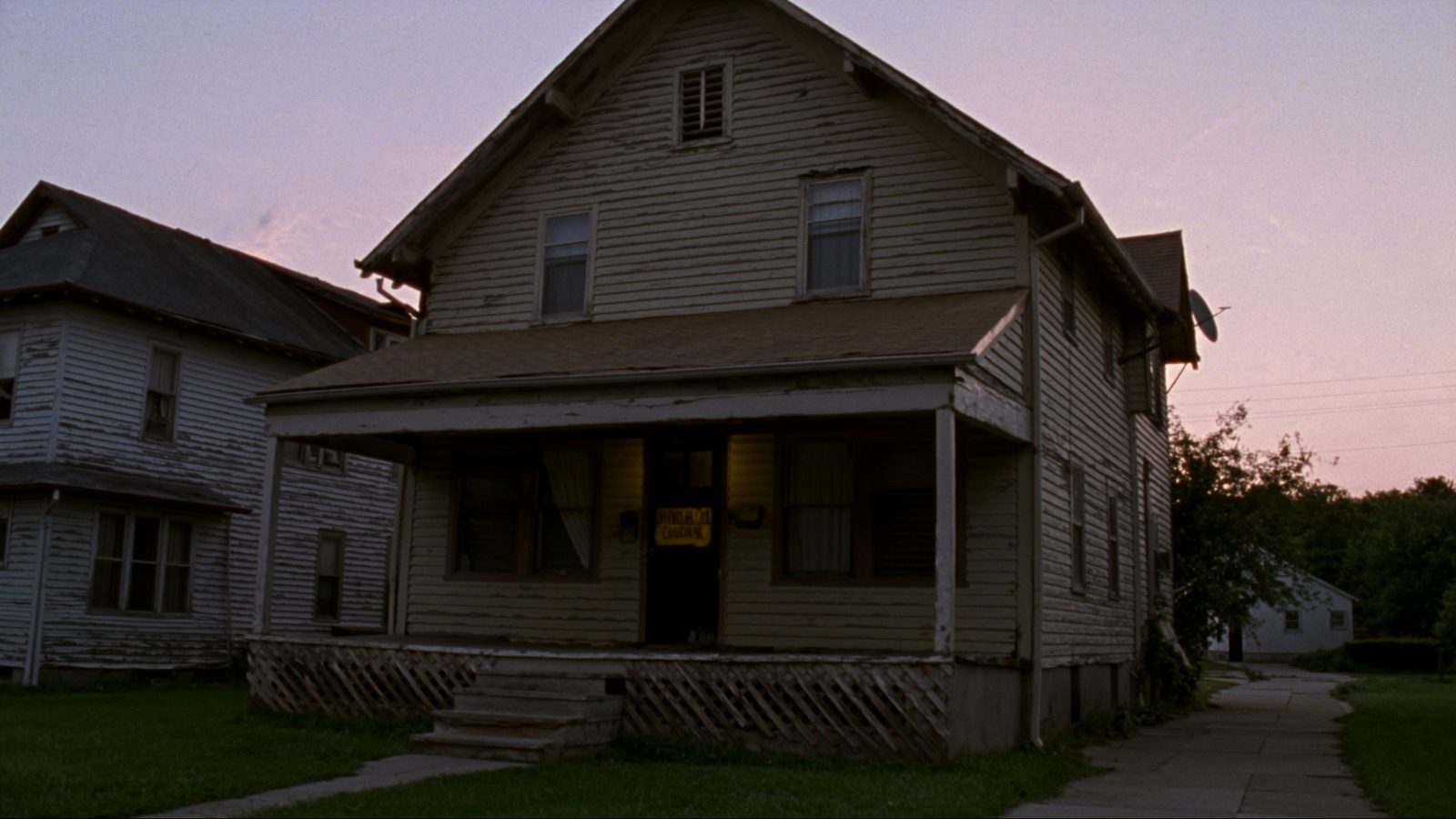
How to Sell a House With Lead Paint in Ohio: What Homeowners Need to Know (2026 Guide)
If you're trying to sell a house with lead paint in Ohio, you're not stuck. You have options. But you do need to understand the rules before you list, because getting this wrong can cost you a buyer, a deal, or in rare cases, a lawsuit.
Ohio's housing stock is old. Cleveland, Cincinnati, Dayton, Akron, Toledo, these cities have tens of thousands of homes built before 1978, which is the cutoff year for residential lead-based paint use. If your house is older than that, there's a real chance lead paint is somewhere in or on it. Doors, window frames, baseboards, exterior siding, porches. That's normal for the region. What matters is how you handle the sale.
This guide walks through what Ohio homeowners need to know in 2026: the federal disclosure rule, Ohio's own disclosure law, Cleveland's lead-safe certification ordinance, what remediation actually costs, how lead paint affects your home value, and when selling as-is to a cash buyer makes more sense than fixing the problem yourself.
Why Ohio Homeowners Deal With Lead Paint More Than Most
Ohio's older urban cores were built out between 1880 and 1970. Cuyahoga County alone has roughly 70 percent of its housing stock predating 1978. Cincinnati and Dayton aren't far behind. That's why Ohio consistently ranks among the top five states for childhood lead exposure cases, and it's why many of the Cleveland neighborhoods with legacy lead issues are also the same ones where Cleveland Clinic, Cincinnati Children's, and Cuyahoga County's Board of Health have pushed hard on testing and remediation over the last decade.
For a homeowner, this context matters for one reason: enforcement in Ohio is aggressive compared to most states. Cuyahoga County in particular has been proactive about citing landlords, requiring testing, and flagging homes that change hands. If you sell a house with lead paint in Ohio and skip a required disclosure, the paper trail can follow you.
The Federal Rule: What Every Pre-1978 Seller Must Do
The federal Residential Lead-Based Paint Hazard Reduction Act of 1992, usually called Title X, applies to every residential property built before 1978, in every state. As a seller, you have four obligations:
- Provide the EPA pamphlet titled Protect Your Family From Lead in Your Home to the buyer before they sign the purchase contract.
- Disclose known lead hazards, any lead paint you're aware of, any prior inspection reports, any prior remediation work.
- Include a lead paint disclosure form as an attachment to the purchase contract, signed by buyer, seller, and agent.
- Offer a 10-day inspection window during which the buyer may conduct a lead-based paint inspection or risk assessment. The buyer can waive this, but you have to offer it.
You can read the full requirements at HUD's lead paint disclosure page. Violating the federal rule carries civil penalties up to $19,507 per violation as of 2025 adjustments, plus potential triple damages if a buyer sues.
Here's the important nuance: federal law does not require you to remediate. It only requires you to disclose. You can sell a house with lead paint in Ohio without fixing it, you just can't hide it.
Ohio State Law: Revised Code 5302.30 and What It Adds
On top of the federal rule, Ohio Revised Code 5302.30 requires most residential sellers to complete the Ohio Residential Property Disclosure Form. This is a multi-page document covering everything from roof condition to structural defects to hazardous materials, lead paint included.
If you know lead paint is present, you mark it on the form. If you've never tested and don't know, you can answer truthfully, "no knowledge of." What you cannot do is answer "no" when you actually know there's a problem. Ohio courts have held sellers liable for failing to disclose known material defects, and lead paint qualifies if you've been informed by a prior inspector, landlord, or child's pediatrician.
A few exemptions apply, transfers between spouses, probate transfers, foreclosure sales, but they're narrow. Most owner-occupied sales require the form. Always confirm your specific situation with an Ohio real estate attorney.
Cleveland's Lead Safe Certification Ordinance
If your house is inside the City of Cleveland limits, there's an extra layer. Cleveland's 2019 Lead Safe Certification ordinance requires every pre-1978 rental property to be certified lead-safe by a licensed assessor. The certification has to be on file with the city and renewed periodically.
Here's the key: the ordinance applies to rentals, not owner-occupied sales. If you're selling your primary residence to another owner-occupant, you do not need a Lead Safe Certificate to close. But if your buyer is an investor who plans to rent the home, and in Cleveland that's a big share of buyers, they'll need to get the home certified before they can legally rent it.
That has two practical effects on your sale:
- Investor buyers factor the certification cost (roughly $1,500 to $8,000 including any interim controls needed) into their offer, see how Cuyahoga investors source these properties off-market.
- A cash buyer who already owns a lead-safe certification process in-house closes faster and with fewer contingencies than a retail buyer using financing.
You can review the current ordinance on the City of Cleveland's Lead Safe Initiative page.
What Lead Paint Remediation Actually Costs in Ohio
Interim Controls: $3,000 to $8,000
Encapsulation, paint stabilization, friction point repairs. Fast, certified by a lead-safe contractor, addresses immediate hazards. Lasts years but not permanent.
Partial Abatement: $8,000 to $18,000
Replacement of friction components, windows, doors, thresholds. Combined with encapsulation on intact surfaces. Longer-lasting solution that often satisfies Cleveland's certification requirements.
Full Abatement: $18,000 to $30,000+
Complete removal of all lead-painted surfaces. Typically required when exterior lead paint is extensive or interior surfaces are badly deteriorated. Homes with original wood siding and dozens of windows hit the top of this range.
Cuyahoga County offers grants and zero-interest loans through the Lead Safe Cleveland Coalition for income-qualified homeowners, but funding is limited and timelines can be slow. If you need to sell quickly, grant programs rarely help.
How Lead Paint Affects Your Home Value
In Ohio, homes with known lead paint hazards typically sell at a 5 to 15 percent discount compared to remediated or newer homes in the same neighborhood. The discount widens for a few reasons:
- FHA and VA financing won't close on homes with chipping or peeling lead paint. That eliminates a large share of first-time buyers and veterans from your buyer pool.
- Conventional lenders may require an appraisal addendum noting the hazard, which can trigger lender conditions or reduced loan-to-value ratios.
- Homeowners with young children, a major buyer segment, often walk away once lead is disclosed, per CDC guidance on childhood lead exposure.
The net result: your buyer pool shrinks and offers come in lower. That's not a reason to panic. It's a reason to pick the right sale strategy.
Your Decision Tree: Remediate, List As-Is, or Sell to a Cash Buyer
Path 1: Remediate, Then List Retail
Best if you have time (6+ months), capital ($10K-$30K), and a home in a neighborhood where retail comps are $275K+. You'll recover most of the remediation cost through a higher sale price, and you'll expand your buyer pool to include FHA and VA borrowers.
Not a fit if: you're inheriting the house, facing foreclosure, relocating on a short timeline, or don't have the cash to float remediation for months.
Path 2: List As-Is on the MLS
You disclose, price below comps to reflect the hazard, and accept that financing contingencies will narrow your buyer pool. Works best for homes in desirable neighborhoods where cash and conventional buyers are active.
Not a fit if: the property is in rough condition overall, you can't hold the carrying costs for 60-120 days, or multiple inspection failures are likely.
Path 3: Sell As-Is to a Cash Buyer
You skip the retail process entirely. A cash buyer, often an investor or wholesale platform, takes the house in current condition, handles the lead remediation and Cleveland certification themselves, and closes in 7 to 21 days. You still complete the federal lead disclosure and the Ohio Residential Property Disclosure Form. Offer prices come in below retail, but you avoid remediation costs, holding costs, and financing risk.
Best fit for: inherited homes, tired landlord exits, pre-foreclosure situations, out-of-state owners, or anyone who needs speed and certainty over top dollar.
Step-By-Step: How to Sell a House With Lead Paint in Ohio
- Confirm the home's build date. Pull the Auditor record for your county (Cuyahoga, Hamilton, Montgomery, etc.). If it's pre-1978, federal disclosure applies.
- Gather any existing lead documentation. Old inspection reports, repair receipts, remediation certificates. Organize them.
- Decide your sale path. Remediate, list as-is, or sell to a cash buyer. Match the path to your timeline and budget.
- Complete the federal lead disclosure form. Use EPA Form 10-F. Attach to every offer.
- Complete the Ohio Residential Property Disclosure Form. Answer truthfully. When in doubt, check "unknown" rather than "no."
- Provide the EPA pamphlet. Deliver it before contract signing. Have the buyer sign receipt.
- Offer the 10-day inspection window. Buyers can waive it, but you must offer it in writing.
- Close. Use a title company familiar with pre-1978 Ohio properties.
The Cash Buyer Route: Why It Works for Distressed Situations
When we talk with Ohio homeowners at Home Pros, the lead paint conversation usually isn't about lead paint at all. It's about a bigger situation, a house inherited from a parent, a rental that's gone sideways, a home someone needs to sell before a job move. Lead paint is one more thing on top of everything else, and it's the thing that makes the retail path feel impossible.
A cash buyer solves for that. Because we don't use FHA or VA financing, chipping paint doesn't kill the deal. Because we already work with licensed Ohio remediation contractors, certification is something we handle after closing. Because we close in 7 to 21 days, you're not carrying the property through months of showings.
If you're in this situation, especially if you're navigating the Ohio probate process or deciding whether to invest in the Cleveland market for investors, a no-obligation cash offer is a cheap way to find out what your house is worth as-is. You're not locked in. You just get a number.
Final Thoughts on How to Sell a House With Lead Paint in Ohio
Selling a house with lead paint in Ohio isn't complicated once you understand the rules. Disclose what you know. Follow federal and state forms. Pick a sale path that matches your timeline and budget. If remediation isn't realistic, a cash buyer absorbs the risk and closes fast.
Your house has real value. Lead paint doesn't erase it. The wrong sale strategy might. Pick the right path for your situation and move forward.
Want to know what your Ohio house is worth as-is? Get a no-obligation cash offer from Home Pros. We buy pre-1978 homes across Cleveland, Cincinnati, Dayton, Akron, and Toledo, lead paint, foundation issues, deferred maintenance, all of it. Close in 7 to 21 days. See if Home Pros can buy your house as-is.
Frequently Asked Questions
Can you sell a house with lead paint in Ohio without remediation?
Yes. Ohio does not require sellers to remediate lead paint before selling an owner-occupied home. You must still disclose known lead hazards under federal law and complete the EPA/HUD lead disclosure form. Selling as-is to a cash buyer is a common route when remediation is too expensive.
What are the disclosure requirements for lead paint in Ohio?
Ohio sellers of pre-1978 homes must comply with the federal Residential Lead-Based Paint Hazard Reduction Act of 1992. You must give buyers the EPA pamphlet Protect Your Family From Lead in Your Home, disclose any known lead hazards, and provide a 10-day window for buyers to conduct a lead inspection. Ohio Revised Code 5302.30 also requires completion of the state Residential Property Disclosure Form. See EPA lead resources for background.
How much does lead paint remediation cost in Cleveland?
Lead paint remediation in Cleveland typically costs $8,000 to $30,000 depending on scope. Interim controls like encapsulation run lower. Full abatement with window and door replacement runs higher. Homes with exterior lead paint, many windows, or deteriorated surfaces sit at the top of that range. Cuyahoga County offers some grant programs for income-qualified owners, but funding is limited.
Does lead paint affect home value in Ohio?
Yes. Homes with known lead paint hazards typically sell at a 5 to 15 percent discount. The discount widens when FHA or VA financing is expected because those programs won't close on properties with chipping or peeling lead-based paint. See Investopedia's overview of lead paint and home value for more on how disclosure affects pricing.
Does Cleveland require lead-safe certification before selling?
Cleveland requires lead-safe certification for pre-1978 rental properties, not owner-occupied sales. If your buyer plans to rent the home, they will need certification before renting. Many Cuyahoga County investors price this into their offers. An experienced cash buyer familiar with the ordinance closes cleaner and faster.
Can you sell a lead-paint house to a cash buyer?
Yes, and this is often the cleanest path. Cash buyers don't rely on FHA or VA financing, so lead paint hazards don't kill the deal. They take the property as-is, absorb the remediation cost, and close in 7 to 21 days. You still complete the federal lead disclosure, but you skip inspections, repairs, and financing contingencies. Home Pros buys pre-1978 Ohio homes in this exact situation every week.
Related Reading
This article is for informational purposes only. Consult an Ohio real estate attorney for legal advice. For additional background on legal obligations when selling property, see the American Bar Association's Real Property section.