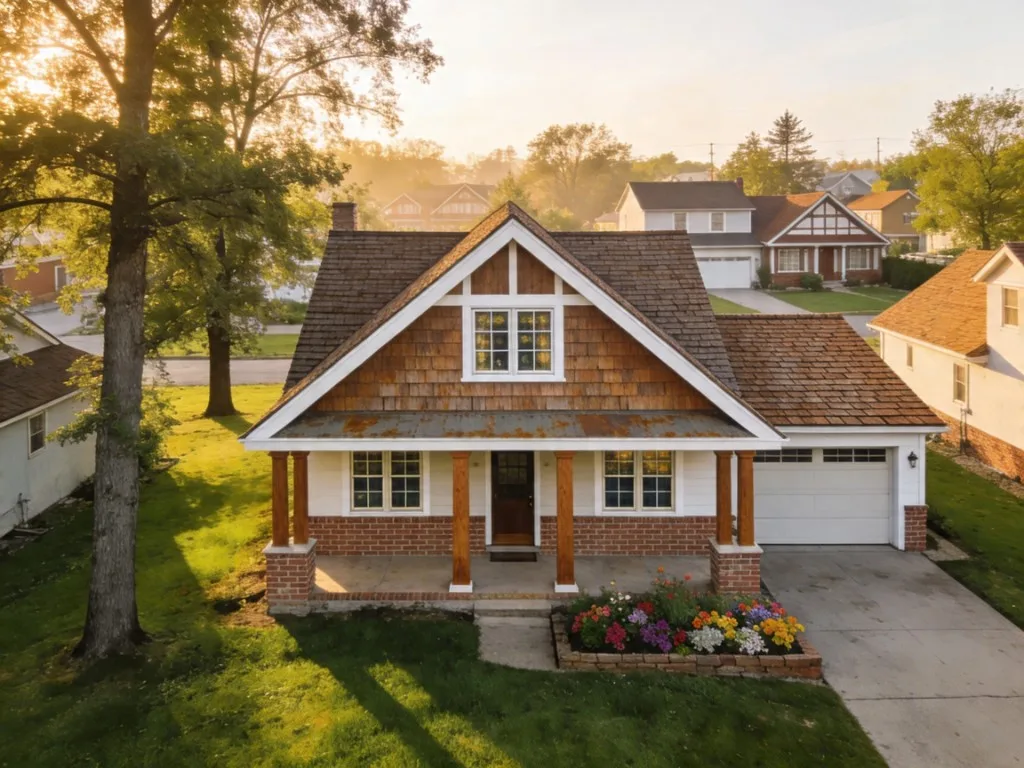
An off-market investment property in Charleston, SC is a house that sells, or is about to sell, without ever being listed on the Charleston Trident MLS. Investors reach it through the Charleston County delinquent tax sale, the twice-monthly Master-in-Equity foreclosure calendar, direct heir inheritance, and relationships with cash buyers such as Home Pros.
This guide is maintained by Home Pros (Balint Holdings, LLC), a veteran-owned cash home buyer that purchases houses directly from Charleston-area sellers and can place qualifying inventory with investors through its deal marketplace. Every public-record figure below (foreclosure sale schedule, tax sale dates, statute citations, recording fees, and county pricing data) was pulled from the South Carolina Code of Laws, Charleston County Government, and the Federal Reserve's FRED database on September 19, 2026.
What counts as an off-market property in Charleston, SC?
An off-market property is any house that changes hands, or is about to, without going through the Charleston Trident Multiple Listing Service, the MLS covering the tri-county Charleston area. That covers a wide range of situations: a homeowner who sells directly to a cash buyer, an heir who takes title to a house automatically at a relative's death, an investor who buys a delinquent parcel at the Charleston County tax sale, and a lender who wins a foreclosure sale ordered by the county's Master-in-Equity court. In every case, the price is negotiated privately or set by an auction process, not by competing offers on an open listing.
The appeal for investors is straightforward: less competition and, often, a motivated counterparty. The tradeoff is that off-market deals usually require more legwork to find, more diligence before closing (clear title is not guaranteed the way it is on an MLS sale with title insurance already lined up), and, on tax sale purchases, a full twelve-month redemption period during which the prior owner or a lienholder can reclaim the property. The sections below walk through each channel with the current South Carolina and Charleston County rules.
How does Home Pros source off-market deals in Charleston?
Home Pros buys houses directly from Charleston-area sellers who need speed and certainty over the highest possible price: an inherited house nobody wants to manage, a pre-foreclosure situation, a tax-delinquent parcel, or a property that needs more repair work than the owner can take on. Offers go out within 24 hours of a walkthrough or virtual assessment, and closings can happen in as little as 7 days, with most landing between 14 and 30 days. Home Pros is veteran-owned and currently buys in 15 states, including South Carolina.
Because these houses are bought directly from sellers rather than sourced from a public list, they never touch the Charleston Trident MLS. Qualifying inventory can be made available to vetted investors through the Home Pros marketplace before it is marketed anywhere else. Register on the buyers page to see Charleston-area deals as they come in, or use deal submit to bring us a contract if you already have inventory to place.
Where do off-market Charleston leads actually come from?
Beyond direct relationships with cash buyers, the recurring sources of off-market inventory in Charleston are all tied to a public record somewhere in Charleston County government or the city's code enforcement office. The table below lays out the main channels, what triggers each one, and where to find it.
| Channel | What triggers it | Where to find it | Typical hold before a clean sale |
|---|---|---|---|
| County tax sale | Property taxes delinquent and referred to the Delinquent Tax Division for the annual December sale | Charleston County Delinquent Tax Division sale list | 12-month redemption period under S.C. Code Section 12-51-90 |
| Master-in-Equity foreclosure | Default on a mortgage; lender files suit and obtains a court order | Sales held 1st and 3rd Tuesday monthly, Public Services Building, North Charleston | Case filing to sale varies by docket, plus a 30-day upset bid period |
| Inheritance and estate transfers | An owner's death; real property vests in heirs or devisees immediately | Charleston County Probate Court estate filings (for personal property and debts) | Immediate for the real estate itself; 9 to 18 months if formal administration is opened |
| Code enforcement | Open violations on an occupied or vacant structure | City of Charleston or Charleston County code enforcement case records | Varies; owner has a cure period before further action |
| Direct-to-seller (cash buyers) | An owner wants speed and certainty over listing | Direct outreach; companies like Home Pros | As little as 7 days once a deal is agreed |
Every channel above except the last one runs on a public government record, which means the leads are freely available to anyone willing to track them, but they also reach every other local investor at the same time. Direct-to-seller relationships are the one channel where a buyer can see a deal before the rest of the market does, which is the reason wholesalers and companies like Home Pros invest in direct marketing rather than relying only on courthouse lists.
What do Charleston off-market buyers pay compared to the MLS?
Off-market pricing is negotiated case by case, so there is no public comp the way there is for an MLS sale, but two hard numbers shape every Charleston deal regardless of channel: the broader market price level and the actual dollar cost of closing. On market price, the Federal Reserve's FRED database put the median listing price for Charleston County, South Carolina at $718,750 as of July 2026, using Realtor.com's housing inventory data, well above the $499,000 median for the wider Charleston-North Charleston metro area, a gap that reflects how much of Charleston County's inventory sits on the peninsula and its higher-priced suburbs. Off-market purchase prices, by contrast, are typically negotiated well below the county figure to compensate the buyer for condition, speed, and the added diligence off-market deals require.
On closing costs, South Carolina charges a deed recording fee under S.C. Code Sections 12-24-10 and 12-24-40: $1.85 for every $500 of value, split between a $1.30 state portion and a $0.55 county portion, customarily paid by the seller (grantor) rather than the buyer. On a $400,000 sale, roughly in line with Charleston County's median, that works out to $1,480. A deed distributing a house out of an estate to an heir is exempt from the fee, so that step costs nothing extra; the fee applies at the next step, when the heir or the estate sells to an outside buyer. When you sell to Home Pros, that cost comes out of our side of the closing statement, not yours.
How does the Charleston County tax sale work, and can investors buy there?
Charleston County collects delinquent property taxes through an annual public auction rather than a rolling process. The Delinquent Tax Division holds one sale a year in December; the 2025 sale ran Monday, December 8, 2025 at the North Charleston Coliseum, 5001 Coliseum Drive, in the Montague Room above the ticket office. Bidder registration was open online or in person from Monday, October 6, 2025 through Wednesday, November 26, 2025 at 5 p.m., for a $15 fee. As of this writing the county had not yet posted its official 2026 sale date, but the process follows the same December pattern each year, so investors tracking Charleston County should check the Delinquent Tax Division's page directly as fall approaches.
The catch, as with any South Carolina tax sale, is redemption. Under S.C. Code Section 12-51-90, the defaulting taxpayer, a grantee from the owner, or a mortgage or judgment creditor can redeem the property within twelve months of the sale by paying the delinquent taxes, assessments, penalties, and costs plus interest, which steps up the longer the owner waits: 3% in the first three months, 6% in months four through six, 9% in months seven through nine, and 12% in the final three months, calculated on the winning bid amount. A buyer does not get a clean, insurable tax deed until that twelve-month window closes without redemption, so investors sourcing deals from the Charleston County tax sale list should budget for the redemption period rather than plan to rehab and resell immediately.
How does South Carolina judicial foreclosure work in Charleston County, and is there a redemption period?
South Carolina is a judicial foreclosure state, meaning a lender cannot foreclose out of court the way lenders can in a power-of-sale state. The lender has to file a foreclosure lawsuit and get a court order before the property can be sold, and Charleston County's Master-in-Equity, currently the Honorable Mikell R. Scarborough, hears the county's foreclosure docket. Unlike counties that hold an occasional or once-a-month sale, Charleston County runs foreclosure sales twice a month, on the first and third Tuesday, in the County Council Chambers at the Public Services Building, 4045 Bridge View Drive in North Charleston. Bidders and spectators must submit a completed registration form and a valid government-issued photo ID by noon the Monday before the sale, and the winning bidder has until 4 p.m. sale day to pay 5% of the bid in cash or certified funds. Under S.C. Code Section 15-39-630, notice of the sale must be advertised once a week for three consecutive weeks before the sale date.
South Carolina does not give the borrower a post-sale statutory redemption right the way some states do; instead, every foreclosure sale is subject to a 30-day upset bid period, during which any other bidder can top the winning bid at the Charleston County courthouse, resetting the clock for another 30 days each time a higher bid comes in. That means a Charleston County foreclosure purchase is not fully final until the upset bid window closes without a higher offer, which investors bidding at a Master-in-Equity sale need to factor into their holding-cost math before they start any rehab work.
What happens to an inherited off-market house in South Carolina?
South Carolina handles inherited real estate on an immediate-vesting model. Under S.C. Code Section 62-3-101, real property vests immediately in the heirs at death if the owner died without a will, or in the devisees named in the will if there was one, subject to the personal representative's power to reach the property to pay debts and administration costs. Probate may still be opened to appoint a personal representative and handle the estate's other assets, and under S.C. Code Section 62-3-715 that personal representative can sell real property when the will or the court authorizes it, but the default rule is that title to the house passes automatically the moment the owner dies.
South Carolina's small estate affidavit, available under S.C. Code Section 62-3-1201 for estates worth $45,000 or less after a 30-day wait from the date of death (raised from $25,000 by Act No. 26 of 2025, effective May 8, 2025), does not reach real property at all; it only lets heirs collect personal property like bank accounts and vehicles without a full probate case. A related summary administration procedure under S.C. Code Section 62-3-1203 uses the same $45,000 threshold for a faster, simplified probate. For investors, this means an heir selling an inherited Charleston house often does not need to wait on a full probate process for the real estate itself, though a title company will still want to confirm the chain of heirship and clear any liens before closing, and creditors generally have 8 months from the first notice publication (or up to 12 months from the date of death) to file a claim under S.C. Code Sections 62-3-801 and 62-3-803.
Which Charleston-area submarkets see the most off-market inventory?
Off-market volume tends to concentrate where housing stock is older and turnover is driven more by life events (death, job change, financial distress) than by move-up buyers competing for new construction. West Ashley, west of the Ashley River and closer to downtown than most of the county's newer suburbs, sits mostly in the mid-$300,000s to mid-$400,000s and carries a large stock of 1960s and 1970s ranch homes that regularly change hands through inheritance or as a seller's repair backlog outpaces their budget. James Island, tucked between downtown and Folly Beach, has a similar mix of older brick ranches alongside newer infill. North Charleston, including the Park Circle neighborhood, tends to have the county's most affordable off-market inventory and the highest concentration of code-enforcement and tax-delinquency activity. Mount Pleasant skews toward higher-priced, longer-hold inventory rather than distressed turnover. Treat any specific neighborhood list as a starting point, not a substitute for pulling current comps and code enforcement records for the parcel in front of you.
How does Home Pros help investors get first look at Charleston deals?
Public-record channels like the tax sale and the Master-in-Equity foreclosure calendar reach every investor in Charleston County at the same time, which limits the edge any one buyer can get from them alone. Home Pros closes that gap by buying directly from sellers who never intended to list, then can route qualifying Charleston inventory to vetted investors before it is marketed anywhere else. If you're an investor, register on the buyers page to see South Carolina deals as they come in. If you have inventory you want in front of our investor network, use deal submit.
If you're a Charleston homeowner reading this because an investor made you an offer, or because you're weighing a sale against listing, our South Carolina seller page, our Charleston seller page, and cash offer versus listing calculator lay out the numbers side by side, and every page on this site ends in the same address-first form that reaches our acquisitions team directly.
Frequently Asked Questions
What counts as an off-market property in Charleston, SC?
An off-market property is a house that changes hands, or is about to, without ever being listed on the Charleston Trident MLS. That includes direct sales to cash buyers, real estate that vests in heirs or devisees at death, Charleston County delinquent tax sale purchases, foreclosure sales ordered by the Charleston County Master-in-Equity, and deals sourced through wholesaler and investor networks such as Home Pros. Because there is no public listing, pricing is negotiated directly between the parties instead of being set by competing offers.
How do investors find off-market deals in Charleston, SC?
The recurring public-record channels are the Charleston County delinquent tax sale list, the Master-in-Equity foreclosure roster published ahead of each biweekly sale, probate and estate filings at the Charleston County Probate Court, and code enforcement cases from the City of Charleston or the county. Investors also build direct relationships with cash-buying companies like Home Pros, which sources houses from motivated sellers and can make qualifying inventory available to vetted investors before it reaches the open market.
When is the Charleston County delinquent tax sale, and can investors bid?
Charleston County holds one delinquent tax sale a year, in December, at the North Charleston Coliseum's Montague Room. The 2025 sale ran Monday, December 8, 2025, with bidder registration open online or in person from October 6 through November 26 for a $15 fee. Under S.C. Code Section 12-51-90 the defaulting owner, a grantee, or a lienholder can still redeem the property for twelve months after the sale, so a buyer does not get a clean, insurable deed until that window closes.
How often does Charleston County hold foreclosure sales, and is South Carolina foreclosure judicial?
Yes, South Carolina requires judicial foreclosure, and Charleston County runs its Master-in-Equity foreclosure sales twice a month, on the first and third Tuesday, in the County Council Chambers at the Public Services Building, 4045 Bridge View Drive in North Charleston. Bidder registration and photo ID are due by noon the Monday before each sale, and the winning bidder pays 5% of the bid in cash or certified funds by 4 p.m. sale day. Under S.C. Code Section 15-39-630, notice of sale must be advertised once a week for three consecutive weeks, and every sale carries a 30-day upset bid period.
Does a South Carolina small estate affidavit cover an inherited house?
No. South Carolina real property vests immediately in the heirs or devisees at the owner's death under S.C. Code Section 62-3-101, so the house itself does not sit in the estate waiting on paperwork. The state's small estate affidavit, available for estates of $45,000 or less after a 30-day wait under S.C. Code Section 62-3-1201, only reaches personal property such as bank accounts and vehicles, not real estate.
How does Home Pros source off-market deals in Charleston?
Home Pros buys houses directly from Charleston-area sellers who need a fast, certain close: inherited properties, pre-foreclosure situations, tax-delinquent parcels, and houses that need more repair work than an owner wants to take on. Offers go out within 24 hours and closings can happen in as little as 7 days, with most landing between 14 and 30 days, and qualifying inventory can be made available to vetted investors before it is marketed anywhere else.
Sources
- S.C. Code Section 15-39-630: judicial foreclosure notice of sale, advertised once a week for three consecutive weeks. (Reused from content/state-rules.json, already fetched for prior South Carolina pages; direct fetch of law.justia.com blocked by network egress this run.)
- Charleston County Master-in-Equity, Bidding on Foreclosures: sales held the 1st and 3rd Tuesday of each month at the Public Services Building, 4045 Bridge View Drive, North Charleston; registration and photo ID due noon the Monday before sale; 5% deposit due 4 p.m. sale day. (WebSearch retrieval; direct fetch blocked by network egress this run.)
- Charleston County Delinquent Tax Division, Tax Sale Bidder Information: 2025 sale held Monday, December 8, 2025 at the North Charleston Coliseum's Montague Room; registration October 6 to November 26, 2025, $15 fee. (WebSearch retrieval; direct fetch blocked by network egress this run.)
- S.C. Code Section 12-51-90: twelve-month tax sale redemption period and the 3%/6%/9%/12% stepped interest schedule. (Reused from content/state-rules.json; direct fetch of law.justia.com blocked by network egress this run.)
- S.C. Code Sections 12-24-10 and 12-24-40: deed recording fee of $1.85 per $500 of value, split $1.30 state and $0.55 county; reused from content/state-rules.json.
- S.C. Code Section 62-3-101: immediate vesting of real property in heirs or devisees at death; reused from content/state-rules.json.
- S.C. Code Section 62-3-1201: small estate affidavit, $45,000 threshold as amended by Act No. 26 of 2025 (H.3472), 30-day wait, personal property only; reused from content/state-rules.json.
- S.C. Code Section 62-3-715: personal representative's authority to sell estate real property; reused from content/state-rules.json.
- FRED, Housing Inventory: Median Listing Price in Charleston County, SC (MEDLISPRI45019): $718,750 as of July 2026, sourced from Realtor.com. (WebSearch retrieval; direct fetch of fred.stlouisfed.org blocked by network egress this run.)
- FRED, Housing Inventory: Median Listing Price in Charleston-North Charleston, SC (CBSA) (MEDLISPRI16700): $499,000 as of July 2026, sourced from Realtor.com. (WebSearch retrieval; direct fetch blocked by network egress this run.)
Foreclosure, tax sale, and probate rules change; confirm current dates, deadlines, and redemption periods with the Charleston County Delinquent Tax Division, the Charleston County Master-in-Equity, or a South Carolina real estate attorney, before you rely on them. This article is educational and not legal, tax, or investment advice.

Co-founder and COO of Home Pros (Balint Holdings, LLC) and a licensed Texas real estate agent. Trevor runs the acquisitions and dispositions side of the business, buying houses directly from sellers and placing them with investors. More about Trevor →