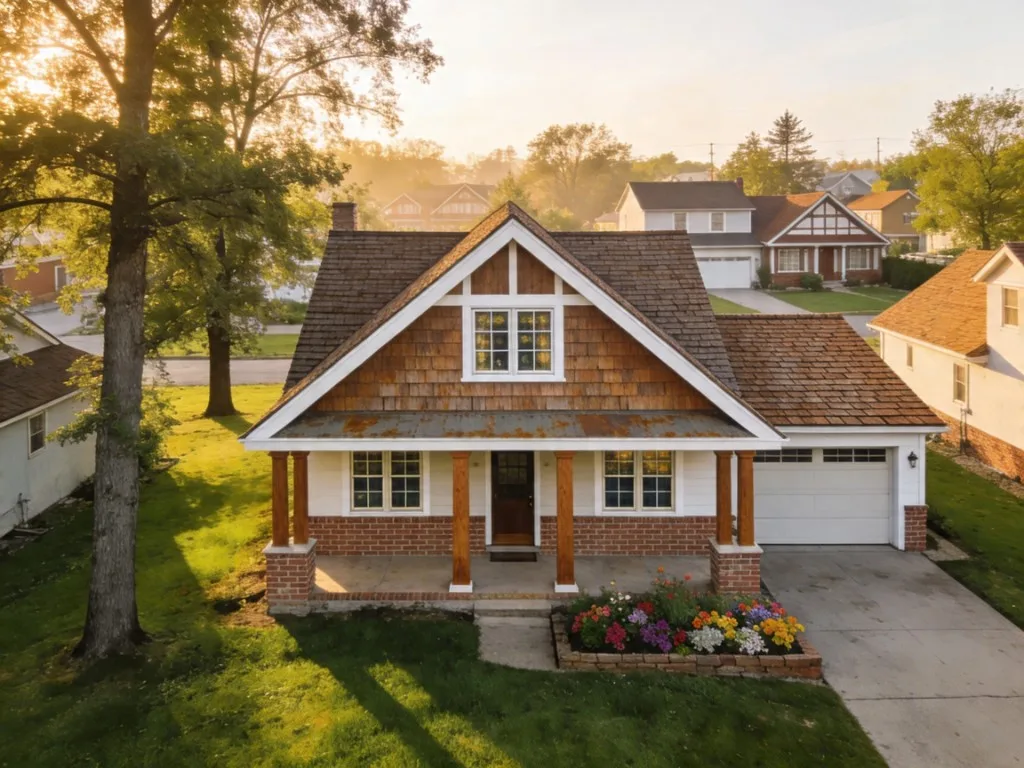
An off-market investment property in Rochester, NY is a house that sells, or is about to sell, without ever appearing in GENRIS, the multiple listing service covering the Greater Rochester area. Investors reach it through the city's own tax foreclosure auction, Monroe County's separate process for the towns outside the city, judicial foreclosure, Surrogate's Court, and direct relationships with cash buyers such as Home Pros.
This guide is maintained by Home Pros (Balint Holdings, LLC), a veteran-owned cash home buyer that purchases houses directly from Rochester-area sellers and can place qualifying inventory with investors through its deal marketplace. Every public-record figure below (city and county tax foreclosure rules, foreclosure notice periods, probate thresholds, recording fees, and 2026 pricing data) was retrieved this session from New York's Real Property Tax Law and Real Property Actions and Proceedings Law, the Surrogate's Court Procedure Act, Monroe County Code Chapter 635, the Monroe County Clerk, the City of Rochester Finance Department, National Association of Realtors data reported by the Rochester Business Journal, and the Federal Reserve's FRED database.
What counts as an off-market property in Rochester?
A property is off-market when it changes ownership, or is close to changing ownership, without ever being entered into GENRIS, the Genesee Region's multiple listing service that the Greater Rochester Association of Realtors and its members use. That distinction matters because GENRIS-reported figures, the ones agents and appraisers quote, only describe the slice of the market that gets marketed publicly. Everything else, including tax foreclosures, judicial foreclosure sales, probate transfers, and direct sales to cash buyers, happens outside that data set entirely.
Rochester is unusual among New York cities in exactly the way that matters here: the city assesses and collects its own property taxes rather than routing that work through Monroe County, so it also runs its own tax foreclosure process, separate from the county's. An investor working the Rochester metro is really working two parallel public-record systems, one for city parcels and one for the towns around them, not a single county pipeline.
How does Home Pros source off-market deals in the Rochester metro?
Home Pros builds its Rochester-area pipeline by talking to sellers first, not by waiting on a courthouse list. An acquisitions specialist walks through the numbers with the seller, and when a property fits the buy box, a written offer goes out within 24 hours of that evaluation. From an accepted offer, a Rochester closing can happen in as little as 7 days, and most land between 14 and 30 days depending on title work and the seller's own timeline.
Inventory that suits an investor's criteria, rather than Home Pros' own hold or rehab plans, can move to the marketplace before it is ever entered into GENRIS or reaches a courthouse docket. That is also why the public-record channels described below, the city's own tax foreclosure auction, Monroe County's separate process, and Surrogate's Court, remain a secondary path to the same kind of inventory: they are what is left once a motivated seller has not already made a direct call.
What do off-market buyers pay compared to GENRIS-listed homes?
Two public benchmarks frame what an on-market Rochester-area home costs today. FRED's Realtor.com-sourced housing inventory series puts the Rochester, NY metro's median listing price at $298,950 as of March 2026. Separately, National Association of Realtors data reported by the Rochester Business Journal on May 7, 2026 showed the Rochester metro's median sale price climbing to $252,800 in the first quarter of 2026, up 7.2 percent year over year, one of the 10 largest increases among the metros NAR tracks that quarter.
Off-market properties typically transact below both figures. The seller is not accepting a lower number for a worse house; they are trading a discount for speed and certainty: no agent commission, no repair punch list, no showings, no financing contingency risk on the buyer's side. The table below lines up the two public benchmarks against the foreclosure timelines that shape a Rochester-area distressed sale.
| Metric | Value | Source |
|---|---|---|
| Median listing price, Rochester, NY CBSA | $298,950 (March 2026) | FRED, MEDLISPRI40380 |
| Median sale price, Rochester metro | $252,800, up 7.2% YoY (Q1 2026) | NAR data via Rochester Business Journal |
| City of Rochester tax foreclosure auction | Typically held each November | City of Rochester Finance Department |
| Monroe County tax lien redemption period (standard) | 2 years from lien date | RPTL Article 11 |
How does the City of Rochester's own tax foreclosure process work?
Because Rochester assesses and collects its own property taxes, the city also runs its own in rem tax foreclosure process for delinquent city parcels, separate from Monroe County's. The city typically holds its tax foreclosure auction each November, and the starting bid is set at the total receivables balance the owner owes the city, delinquent taxes, water charges, and other municipal fees rolled together into one number.
Parcels the city forecloses but does not sell at auction, or chooses to retain, can feed the Rochester Land Bank Corporation, a nonprofit the city created in 2013 specifically to return vacant and abandoned houses to productive use. Land Bank activity concentrates in neighborhoods such as JOSANA (the Jay-Orchard Street Area, near the city-owned soccer stadium west of downtown), Beechwood, and EMMA (the East Main, Mustard, and Atlantic Avenue corridor), all part of the 35 neighborhoods in the city's Celebrate City Living program. A 15-home infill project the Land Bank and Cornerstone Group are building on vacant JOSANA parcels is one current example of that inventory finding a buyer.
How does Monroe County's tax foreclosure process work outside the city?
Once a property sits outside Rochester's city limits, in Greece, Irondequoit, Gates, Chili, Henrietta, or any of Monroe County's other towns, RPTL Article 11 and County Code Chapter 635 (the county's In Rem Tax Foreclosure Act) govern instead. An unpaid tax becomes a lien on the lien date, and the standard redemption period runs two years, though a tax district can extend that to three or four years specifically for residential or farm parcels.
Monroe County sends a year-end reminder notice in December of the delinquent year, follows with another notice around May or June of the following year, and publishes its list of properties carrying unpaid taxes by August 15. The county's foreclosure attorney then sends a further notice, and because the auction itself is not scheduled until September of the year after that two-year delinquency period runs out, an investor negotiating with a distressed owner in one of Monroe County's towns has a longer practical window than the bare two-year statute suggests. Owners can redeem at any point before that window closes by paying what is owed.
In January 2025, Monroe County Executive Adam Bello announced the creation of a Monroe County Land Bank Corporation to take on the county-side version of this work. The county's land bank has no authority to operate inside Rochester's city limits, where the older Rochester Land Bank Corporation, described above, already handles that role, so an investor tracking land-bank inventory across the metro is really tracking two separate organizations.
| Process | Key Timing | Statute / Source |
|---|---|---|
| Tax lien redemption period (standard) | 2 years from lien date | RPTL Article 11 |
| Tax lien redemption period (residential/farm, if extended) | 3 or 4 years from lien date | RPTL Article 11 |
| Monroe County foreclosure auction eligibility | ~September of the year after 2-year delinquency | County Code Ch. 635; RPTL Article 11 |
| City of Rochester in rem tax foreclosure auction | Typically each November | City of Rochester Finance Department |
| Pre-foreclosure notice (most owner-occupied loans) | 90 days before filing suit | RPAPL 1304 |
| Judicial foreclosure, filing to auction (uncontested) | ~12 to 24 months | Bank of America, N.A. v. Kessler (2023); practice guides |
How does New York's judicial foreclosure process create off-market inventory?
Mortgage foreclosure works the same way whether a house sits inside Rochester or out in a Monroe County town: New York has no nonjudicial, power-of-sale option, so every case runs through the courts. Before a lender can file suit on most owner-occupied one-to-four family loans, RPAPL 1304 requires a 90-day pre-foreclosure notice sent by both certified and first-class mail, in its own envelope, and the New York Court of Appeals held in Bank of America, N.A. v. Kessler (2023) that strict compliance with that notice is a condition precedent to the case, while also clarifying that including some additional, relevant information does not by itself void an otherwise proper notice. A lender that mishandles the notice altogether still faces dismissal.
Once a case clears that hurdle, motion practice, mandatory settlement conferences, and a crowded court calendar mean an uncontested judicial foreclosure typically runs about 12 to 24 months from filing to auction, longer than the fixed statutory timelines used in nonjudicial states. That length is exactly why New York generates such a long pre-foreclosure window: Rochester-area homeowners and investors both have far more time to negotiate a direct sale than they would in a state with a fast power-of-sale process.
What happens to an inherited off-market house in New York?
Heirs to a Rochester-area house often want to move fast, and New York law gives them less of a shortcut than they expect. SCPA 1301's Voluntary Administration process, New York's version of a small-estate affidavit, was amended in 2019 to raise its threshold to $50,000, but that cap only applies to personal property, exempt property set aside for a surviving spouse or minor children does not even count against it, and it excludes real property entirely.
In practice, that means no dollar figure lets an heir skip Surrogate's Court for a house: whether it is worth $60,000 or $600,000, the estate needs a will admitted to probate (letters testamentary) or, without a will, letters of administration before title can pass to a buyer. That requirement, not a value cutoff, is what usually sets the timeline for an inherited off-market Rochester house, and it is exactly the kind of delay that pushes heirs toward a cash buyer willing to work alongside the estate's attorney rather than insist on a fully closed probate first.
What does it cost to record and transfer a Monroe County property?
Monroe County closing costs are driven by a state transfer tax, a set of clerk recording fees, and two mandatory filings, not a single flat number. New York's real estate transfer tax is $2 per $500 of consideration, $4 per $1,000, with consideration rounded up to the next $500, and New York law puts responsibility for that tax on the seller. Unlike Erie County, which layers its own $2.50-per-$500 county tax on top of the state rate, Monroe County adds no local transfer tax of its own; it collects the state rate only, though every residential deed filed since March 11, 2020 also carries a flat $10 fee.
On top of the transfer tax, the Monroe County Clerk charges $50 to record a deed's first page and $5 for each additional page, $5 for the required TP-584 real estate transfer tax affidavit, and either $125 or $250 for the RP-5217 Real Property Transfer Report, the lower figure applies to most one- and two-family residential parcels, depending on the property classification code entered on the form.
Tax due dates split along the same city-versus-county line as foreclosure. Outside the city, Monroe County's combined town and county tax is due in full by February 10 or in four installments running through April 30, and school taxes are due in full by October 1 or in three installments running through November 15. Inside Rochester, the city bills its own property tax separately: bills go out each July, split into four installment deadlines, and a missed installment accrues interest at 1 percent per month. An investor closing near any of those dates should confirm the current installment schedule with the county treasurer or the city finance department.
What if the property still has tenants?
A sale alone does not end a New York tenancy, inside Rochester or out in Monroe County. Title transfers with the lease attached, and the buyer simply becomes the new landlord on the existing terms. If either party wants to end a month-to-month tenancy in connection with the sale, Real Property Law 226-c sets the notice at 30 days if the tenant has lived there under a year, 60 days for one to two years, and 90 days for two years or more.
Security deposits follow the property in a more particular way than many investors expect. General Obligations Law 7-105 makes a buyer with actual knowledge of a tenant's deposit, for example one acknowledged in a lease still in effect at closing, documented some other way, or paid within the six months before closing, responsible for returning it, whether or not the seller ever formally handed it over. An investor evaluating an occupied off-market Rochester property should treat that knowledge standard, not just whether a check changed hands at closing, as part of the deal.
Which Rochester-area neighborhoods see the most off-market inventory?
Off-market volume inside Rochester concentrates in the neighborhoods the city and its land bank have targeted for years: JOSANA, Beechwood, and EMMA are three of the 35 neighborhoods in the city's Celebrate City Living program, all built around older housing stock, longer-tenured owners, and a meaningful share of vacant or tax-delinquent parcels that the Rochester Land Bank Corporation has been working through since 2013.
Outside the city, the pattern shifts to Monroe County's older, inner-ring towns, sections of Irondequoit, Gates, and Chili in particular, where housing stock skews older and the county's own tax foreclosure list, rather than the city's in rem auction, is the relevant public record. None of this guarantees distressed inventory on any specific block in a given month; it simply describes where the underlying conditions, age of housing stock, ownership tenure, and delinquency rates, show up most consistently across city and county records.
How does Home Pros fit into Rochester off-market investing?
Home Pros buys directly from Rochester-area sellers who want to skip GENRIS and a courthouse process entirely, whether the house is sitting in the city's in rem tax foreclosure pipeline, working through Monroe County's separate process in one of the towns, tied up in an estate that has not cleared Surrogate's Court, occupied by a tenant on a fixed timeline, or simply a property the owner wants gone without repairs or showings. Home Pros is veteran-owned and currently buys across 15 states, including New York, evaluating properties directly and sending offers within 24 hours when a house fits.
If you are an investor, register on the buyers page to see qualifying Rochester-area deals as they come in, or use deal submit to bring a contract you already have under agreement. Our cash offer calculator and our guide on how to calculate ARV walk through the math behind an offer, and our guide on how to verify a cash home buyer lays out what to check before wiring funds or signing with anyone in this space, Home Pros included. Sellers facing the situations above can also start directly from our stop foreclosure, sell a probate house, or tired landlord pages, or compare notes with our companion guide to off-market investing in Buffalo, NY, the other major upstate New York market Home Pros serves.
Frequently Asked Questions
What counts as an off-market property in Rochester, NY?
An off-market property in Rochester is a house that changes hands, or is about to, without ever appearing in GENRIS, the multiple listing service used by the Greater Rochester Association of Realtors. Investors typically find these deals through the City of Rochester's own in rem tax foreclosure auction, Monroe County's separate tax foreclosure process for the towns outside the city, the state's judicial foreclosure docket, Surrogate's Court estate filings, or a direct relationship with a cash buyer such as Home Pros.
How is Rochester's tax foreclosure process different from Monroe County's?
Rochester assesses and collects its own property taxes, so the city runs a separate in rem tax foreclosure process from Monroe County. The city typically holds its own tax foreclosure auction each November, with parcels starting bid at the total receivables balance owed to the city, while Monroe County follows Real Property Tax Law Article 11 for the towns outside the city and does not schedule its foreclosure auction until September of the year after a parcel has been delinquent for a full two years.
How long does foreclosure take in New York?
New York forecloses judicially only. RPAPL 1304 requires lenders to mail a 90-day pre-foreclosure notice, in its own envelope, before filing suit on most owner-occupied loans, and the New York Court of Appeals held in Bank of America, N.A. v. Kessler (2023) that strict compliance with that notice is a condition precedent to the case. Once filed, an uncontested judicial foreclosure commonly runs about 12 to 24 months from filing to auction because it moves through a court calendar.
Can an heir skip probate to sell an inherited Rochester house?
No. New York's Voluntary Administration process under SCPA 1301, amended in 2019 to a $50,000 cap, only covers personal property, and real estate is excluded regardless of value. An heir who wants to sell a Rochester or Monroe County house needs Surrogate's Court to issue letters testamentary or letters of administration first, no matter how modest the property's value.
What does it cost to record and transfer a Monroe County property?
New York's real estate transfer tax is $2 per $500 of consideration, $4 per $1,000, and unlike Erie County, Monroe County adds no local transfer tax of its own on top of the state rate. The Monroe County Clerk charges $50 to record a deed's first page plus $5 per additional page, a $10 fee on every residential deed filed since March 2020, $5 for the TP-584 filing, and $125 or $250 for the RP-5217 transfer report depending on the property's classification. New York law makes the seller responsible for the transfer tax.
When are Monroe County and City of Rochester property taxes due?
Outside the city, Monroe County's combined town and county tax is due in full by February 10 or in four installments through April 30, and school taxes are due in full by October 1 or in three installments through November 15. Inside the city, the City of Rochester bills its own property tax separately, mailing bills each July in four installments with a 1 percent per month penalty on any installment paid late.
What happens to a tenant when a landlord sells a house in Rochester?
A sale does not end a New York tenancy; the buyer simply becomes the new landlord under the existing lease. To end a month-to-month tenancy, Real Property Law 226-c requires 30, 60, or 90 days of written notice depending on how long the tenant has lived there, and General Obligations Law 7-105 makes a buyer with actual knowledge of a security deposit responsible for returning it.
How does Home Pros source off-market deals in the Rochester metro?
Home Pros' acquisitions team works directly with sellers across the Rochester metro, evaluates each property, and sends a written offer within 24 hours when it fits. Closings can happen in as little as 7 days, with most landing between 14 and 30 days, and qualifying inventory can be routed to vetted investors through the Home Pros marketplace before it reaches GENRIS or a courthouse auction.
Sources
- NY Real Property Tax Law, Article 11: procedures for enforcement of collection of delinquent taxes and redemption periods. (WebSearch retrieval this run.)
- Monroe County Code, Chapter 635, In Rem Tax Foreclosure Act: county-level tax foreclosure procedure for the towns outside Rochester. (WebSearch retrieval this run.)
- Henrietta, NY, Monroe County Foreclosure Auction notice: December and May/June notice timing, August 15 delinquent-lands publication, September auction scheduling. (WebSearch retrieval this run.)
- City of Rochester Finance Department, Tax Foreclosure Auctions: city's own November in rem auction and starting-bid rule. (WebSearch retrieval this run.)
- Rochester Land Bank Corporation: 2013 founding, mission, and JOSANA infill project. (WebSearch retrieval this run.)
- Monroe County Land Bank Corporation: county land bank scope and exclusion from operating inside city limits. (WebSearch retrieval this run.)
- Greater Rochester Chamber, Monroe County Land Bank announcement: January 2025 creation date. (WebSearch retrieval this run.)
- Bank of America, N.A. v. Kessler case summary: RPAPL 1304 strict-compliance standard, 2023. (WebSearch retrieval this run.)
- SCPA 1301 and Nixon Peabody, 2019 small-estate threshold increase: $50,000 personal-property cap, real property excluded. (WebSearch retrieval this run.)
- Monroe County Clerk, Land Records: deed recording, TP-584, and RP-5217 fee schedule and transfer tax rate. (WebSearch retrieval this run.)
- Town of Webster, NY, Town and County Taxes and School Taxes: representative Monroe County town/county and school tax due dates. (WebSearch retrieval this run; confirm with the specific town, as schedules vary.)
- City of Rochester, Property Tax Billing: July billing, four installments, 1 percent monthly penalty. (WebSearch retrieval this run.)
- Real Property Law 226-c: 30/60/90-day termination notice tiers. (WebSearch retrieval this run.)
- General Obligations Law 7-105: security deposit transfer and actual-knowledge standard on sale. (WebSearch retrieval this run.)
- FRED, Housing Inventory: Median Listing Price in Rochester, NY (CBSA) (MEDLISPRI40380): $298,950 as of March 2026, sourced from Realtor.com. (WebSearch retrieval this run.)
- Rochester Business Journal, "Rochester sees 10th-highest jump in home prices in 1st quarter": $252,800 median sale price, Q1 2026, NAR data. (WebSearch retrieval this run.)
Tax foreclosure, judicial foreclosure, probate, and landlord-tenant rules change, and fee and penalty schedules vary by city and town; confirm current deadlines and thresholds with the Monroe County Clerk, the City of Rochester Finance Department, Surrogate's Court, or a New York real estate attorney before you rely on them. This article is educational and not legal, tax, or investment advice.

Co-founder and COO of Home Pros (Balint Holdings, LLC) and a licensed Texas real estate agent. Trevor runs the acquisitions and dispositions side of the business, buying houses directly from sellers and placing them with investors. More about Trevor →