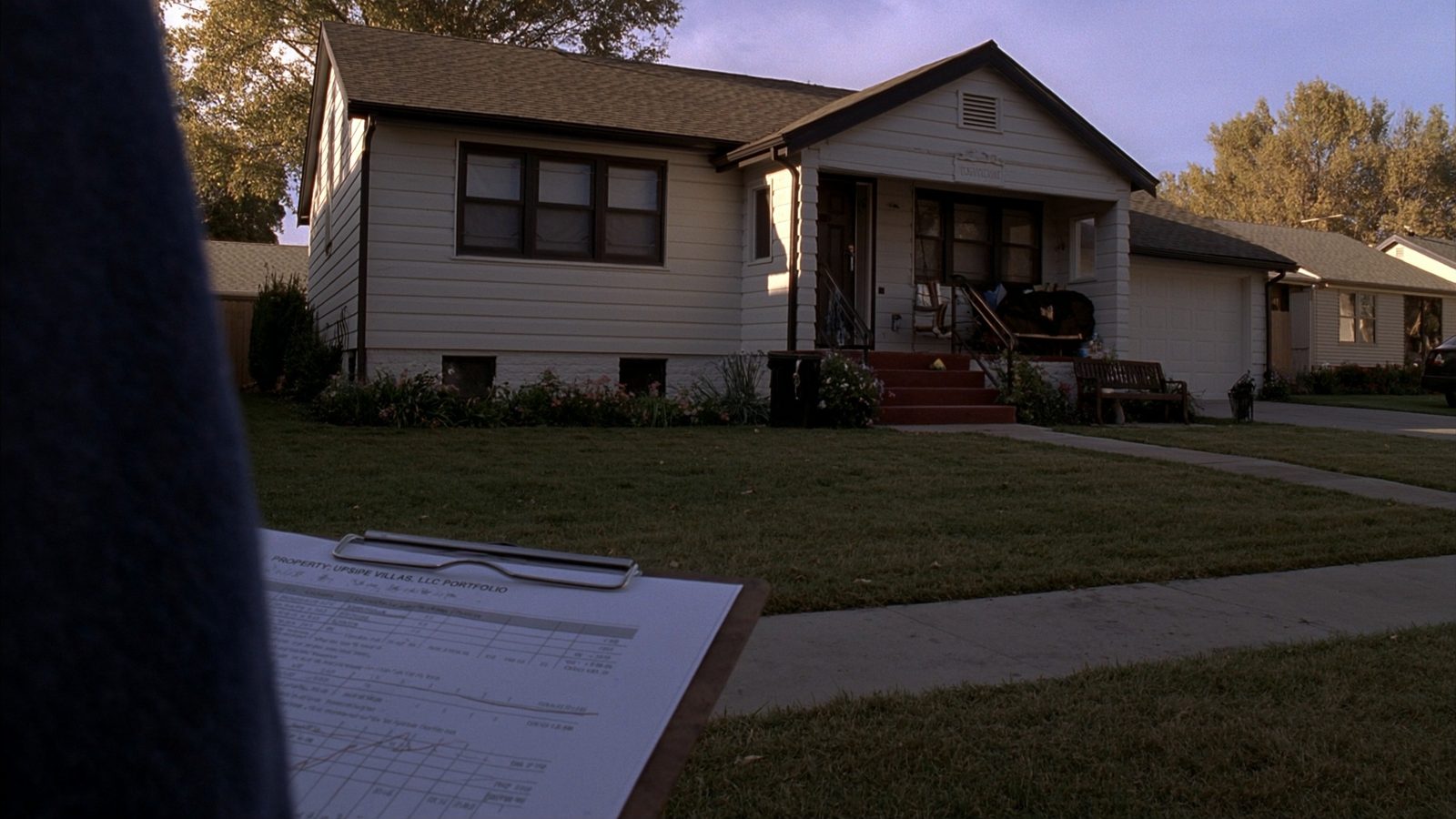
The rent-to-price ratio is monthly rent divided by purchase price, used to screen rental investment viability. The 1% rule says monthly rent should equal at least 1% of purchase price; the 2% rule applies to high-cash-flow markets. In 2026, the 1% rule is achievable in Cleveland, Memphis, and Birmingham (0.85–1.05% RTP), but nearly impossible in Denver, Austin, or Phoenix (0.35–0.45% RTP). National median RTP stands at 0.55% per Federal Reserve Economic Data (FRED), making the traditional 1% rule a high bar.
What is a good rent-to-price ratio?
A good rent-to-price ratio is 1.0% or higher. At the 1% threshold, monthly rent equals 1% of the purchase price. Example: a property that costs $150,000 and rents for $1,500/month meets the 1% rule (1,500 ÷ 150,000 = 0.01 = 1%).
Historically, investors have used the 1% rule as a floor for cashflow viability. A property that falls short of 1% RTP typically requires appreciation or a significant expense reduction to justify the purchase. In 2026, the 1% rule remains a gold standard for screening, but it's increasingly rare. Institutional investors and large portfolio operators have shifted the baseline to 0.65–0.80% RTP, acknowledging that higher purchase prices and lower rents are the new market reality.
Does the 1% rule still work in 2026?
The 1% rule works selectively. It is still achievable in high-cashflow markets, Cleveland, Memphis, Birmingham, where median purchase prices remain under $200,000 and rents are $1,300–$1,600/month. Outside these Midwest and Deep South pockets, the 1% rule is increasingly rare.
National median rent-to-price ratio has declined from 1.2% in 2015 to 0.55% in 2026, per Federal Reserve Economic Data. This decline reflects the combined effect of home-price appreciation (up ~52% nationally, 2019–2025) and rent growth (up ~38%, 2019–2025). Price growth has outpaced rent growth, compressing yields across the board. Investors pursuing the 1% rule should focus geographically on undervalued markets with strong rent-to-price dynamics. For most Sun Belt and coastal metros, the 1% rule has become a red herring, focus on cap rate and cash-on-cash return instead.
How do you calculate rent-to-price ratio?
The formula is simple: Rent-to-Price Ratio = (Monthly Rent ÷ Purchase Price) × 100.
Step-by-step example:
- Identify the purchase price: $200,000
- Identify the monthly rental income: $1,600
- Divide: 1,600 ÷ 200,000 = 0.008
- Multiply by 100: 0.008 × 100 = 0.8%
- Result: 0.8% RTP (falls short of the 1% rule)
Alternatively, use this shortcut: if monthly rent is less than 1% of the purchase price, the property fails the 1% rule. For a $200,000 property, rent must exceed $2,000/month to meet 1% RTP. For a $150,000 property, rent must exceed $1,500/month.
Is the 2% rule realistic anymore?
No. The 2% rule (monthly rent equals 2% of purchase price) is nearly extinct in 2026. It would require a $150,000 property to rent for $3,000/month, 2.5x the market rate in any major metro. Only distressed, foreclosure, or rural properties occasionally hit 1.5%+ RTP, and even then, typically only after negotiating significant price reductions or inheriting repairs.
The 2% rule was viable in 2008–2012 when home prices collapsed but rents remained stable. Today, with case-shiller index up 52% over 2019–2025 and rents up 38%, the math no longer works. Professional investors have abandoned the 2% rule as a realistic target. Instead, focus on cap rate (net operating income ÷ purchase price) and cash-on-cash return to evaluate true profitability.
What's better, cap rate or rent-to-price ratio?
Cap rate is a more sophisticated metric than rent-to-price ratio. Here is the distinction:
Rent-to-Price Ratio = monthly rent ÷ purchase price. It measures gross yield only, ignoring expenses. A 1% RTP property might have a 3% cap rate after accounting for property taxes, insurance, maintenance, vacancy, and property management fees.
Cap Rate = net operating income (NOI) ÷ purchase price. NOI = gross rental income − operating expenses (taxes, insurance, repairs, vacancies, management). Cap rate reflects true profitability and is the metric institutional investors use to compare deals.
Use rent-to-price ratio as a quick screening tool to eliminate properties that are too expensive relative to rent. Then use cap rate and cash-on-cash return for serious underwriting. A property with 0.8% RTP but 5.5% cap rate (after accounting for low expenses in a well-maintained neighborhood) can outperform a 1.0% RTP property with 3% cap rate and high maintenance costs.
Which metros still meet the 1% rule in 2026?
Only a handful of metros consistently achieve 1% rent-to-price ratio in 2026. Here is the breakdown by market, using Redfin Data Center and Census ACS median rent data as of April 2026:
| Metro / City | Median SFH Price | Median 3BR Rent | RTP Ratio | Meets 1% Rule? |
|---|---|---|---|---|
| Cleveland, OH | $148,000 | $1,350 | 0.91% | Nearly |
| Memphis, TN | $172,000 | $1,525 | 0.89% | Nearly |
| Birmingham, AL | $195,000 | $1,475 | 0.76% | No |
| Charlotte, NC | $395,000 | $1,850 | 0.47% | No |
| Dallas, TX | $395,000 | $2,050 | 0.52% | No |
| Denver, CO | $595,000 | $2,150 | 0.36% | No |
| Austin, TX | $525,000 | $2,050 | 0.39% | No |
| Phoenix, AZ | $485,000 | $2,200 | 0.45% | No |
Cleveland and Memphis come closest to the 1% threshold (0.89–0.91%). No major metro actually exceeds 1% RTP in 2026. Smaller distressed markets in the Ohio Valley and Mississippi Delta may hit or exceed 1%, but they typically lack rent growth trajectory and tenant demand.
Why has the 1% rule become harder to achieve?
Two structural shifts have compressed rent-to-price ratios nationally:
1. Home prices have outpaced rent growth. From 2019 to 2025, case-shiller index increased 52% while median rent increased 38%. This asymmetry reflects strong investor demand for real estate and limited new rental construction. Prices rose faster than rents, mechanically lowering the RTP ratio across all metros.
2. Institutional capital has flooded the market. Funds like Zillow, Fundrise, and Roofstock have raised billions to acquire single-family rental portfolios. They purchase properties at scale, accepting lower cap rates (4–5%) in exchange for long-term appreciation and inflation hedging. Their willingness to buy at lower yields has driven up purchase prices relative to rent, compressing RTP for everyone.
In 2008–2012, after the financial crisis, homes were deeply discounted and rents were stable, making 1%+ RTP achievable in many markets. Today, the inverse is true: homes are expensive relative to rents, and the 1% rule is a high-water mark achieved only in select, less-desirable metros.
How do institutional buyers use rent-to-price ratio?
Institutional investors (Roofstock, Fundrise, Zillow-owned rentals, large REITs) view rent-to-price ratio as one input among many, not as a standalone gating criterion. They typically target 0.65–0.80% RTP with geographic and demographic diversification across multiple metros. Their underwriting focuses on:
- Cap rate: Typically 4.5–6.0% depending on market and property condition.
- Cash-on-cash return: 6–12% depending on leverage and financing.
- Long-term appreciation: Expected home-price growth of 2–4% annually over 10+ year hold.
- Inflation hedging: Rents typically grow with inflation; institutional buyers accept lower current yields for long-term real-return stability.
Institutional buyers can accept 0.65–0.80% RTP because they operate at scale, negotiate lower acquisition prices, manage properties efficiently, and hold long-term (10+ years). Smaller retail investors should use RTP as a screening tool to identify markets with rent-growth potential but should not rely on it as a final go/no-go decision. Always underwrite to cap rate and cash-on-cash return.
Frequently Asked Questions
What is a good rent-to-price ratio?
A good rent-to-price ratio is 1.0% or higher. This means monthly rent equals 1% or more of the purchase price. Example: a $150,000 property renting for $1,500/month hits the 1% threshold. In 2026, the 1% rule is achievable in Cleveland, Memphis, and Birmingham but nearly impossible in Denver, Austin, and Phoenix.
Does the 1% rule still work in 2026?
The 1% rule works in select high-cashflow markets but is no longer a universal standard. National average RTP sits at 0.55% per FRED data (2026). Institutional buyers now target 0.65–0.80% as the new 1% rule. In Cleveland and Memphis, the 1% rule is still achievable; in coastal and Sun Belt markets, it's a rare find.
How do you calculate rent-to-price ratio?
Rent-to-price ratio = (monthly rent ÷ purchase price) × 100. Example: property costs $200,000, rents for $1,600/month. RTP = (1,600 ÷ 200,000) × 100 = 0.8%. If RTP is 1.0% or higher, the property passes the 1% rule. The ratio is expressed as a percentage and used as a quick screening metric.
Is the 2% rule realistic anymore?
No. The 2% rule (monthly rent = 2% of purchase price) is almost extinct in 2026. Only distressed, rural, or foreclosure properties hit 1.5%+ without heavy negotiation or repair cost write-downs. Professional investors have abandoned the 2% rule as a target.
What's better, cap rate or rent-to-price ratio?
Cap rate is more sophisticated and accounts for operating expenses, vacancy, and maintenance costs. Rent-to-price ratio is a quick screen for gross yield only. Use RTP for initial filtering; use cap rate for serious underwriting. A 1% RTP property might have a 3% cap rate (after accounting for expenses).
What rent-to-price ratio do institutional buyers target?
Institutional buyers (Roofstock, Fundrise, Zillow-owned rentals) typically target 0.65–0.80% RTP with geographic diversification. They underwrite to net operating income (NOI) and cap rates, not gross RTP. Smaller investors and fix-and-flip buyers use the 1% rule as a screening tool but rarely rely on it as a final decision metric.

Founder of Home Pros, operator across 48 markets, closed 300+ investor transactions since 2021. Trevor writes for investors and sellers navigating cash-buyer transactions, distressed property deals, and wholesale fundamentals. More about Trevor →