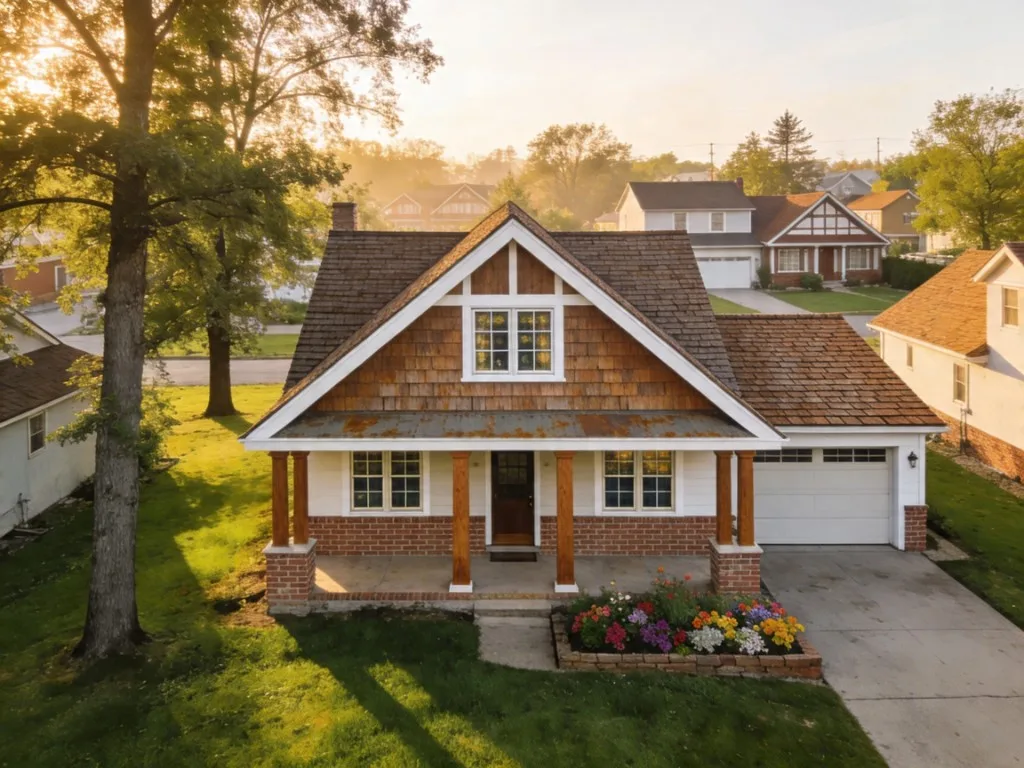
You can sell an inherited house in New York once a court-appointed executor or administrator, or a surviving co-owner, has legal authority to convey it. The small estate shortcut does not cover real property, so a house owned solely by the person who died usually needs letters from the Surrogate's Court. After that, the fiduciary can sell it at public or private sale, and your tax is figured from a stepped-up basis.
This article is published by Home Pros (Balint Holdings, LLC), a veteran-owned cash home buyer and investor marketplace based in San Antonio that buys inherited houses directly from heirs and fiduciaries, as is, without listing. Every statute below was read on the New York State Senate's open legislation site on October 4, 2026, and the federal tax points come from IRS publications fetched the same day.
Do I have to go through probate to sell an inherited house in New York?
Usually yes, when the person who died owned the house alone and it did not pass by trust, joint tenancy, or a beneficiary designation. The reason is practical. A buyer's title company wants to see a signature from someone the Surrogate's Court has authorized, and in New York that person is the executor named in a will or an administrator appointed when there is no will. Once appointed, the fiduciary holds the power given by EPTL 11-1.1(b)(5): for estate property that is not specifically left to someone, the fiduciary may take possession, collect rents, manage the house, and sell it at public or private sale on the terms the fiduciary believes are most advantageous to the people interested in the estate.
If the house was owned jointly with a right of survivorship, or sat in a living trust, the analysis changes because the survivor or trustee may already hold title. Ask a New York estate attorney or the title company to run the deed history before you assume probate is unavoidable. That check takes a few days and can save months.
Can New York's small estate procedure cover the house?
No, and this is the single most common misunderstanding among New York heirs. SCPA 1301 defines a small estate as one with personal property of $50,000 or less, not counting property set off under EPTL 5-3.1. SCPA 1302 then says the article is not applicable to any interest in real property in New York owned by the decedent, although owning real property does not stop the article from being used to administer the personal property. In plain terms, a voluntary administrator can close out a bank account and a car, but cannot sign a deed.
That means an estate that is mostly a house, which describes a large share of inherited homes, goes through full administration or probate even if it holds almost no cash. Budget for that before you decide whether to keep or sell.
Who inherits if there is no will?
EPTL 4-1.1 sets the order. After debts, administration expenses, and reasonable funeral costs are deducted, the estate is distributed to the closest surviving relatives. The first tiers look like this:
| Survivors | Who receives the estate | Statute |
|---|---|---|
| Spouse and children | $50,000 plus half of the remainder to the spouse, the balance to the children | EPTL 4-1.1(a)(1) |
| Spouse, no children | The whole estate to the spouse | EPTL 4-1.1(a)(2) |
| Children, no spouse | The whole estate to the children | EPTL 4-1.1(a)(3) |
| Parents only | The whole estate to the surviving parent or parents | EPTL 4-1.1(a)(4) |
The statute continues through siblings and their children, grandparents, and more remote relatives. When several children inherit, each one holds a share of the sale proceeds, so every distributee has a stake in the price and the timing. SCPA 1002 allows any person interested in the estate to petition the court for letters of administration, so the family does not have to wait on one relative to act.
Does the executor need court approval to sell?
Often not. EPTL 11-1.1(b)(5)(B) gives a fiduciary the power to sell estate real property at public or private sale, and that power applies unless the property is specifically disposed of by the will. When the will or the statute prohibits a sale, the same subparagraph lets the Surrogate approve the sale if it is needed for one of the purposes listed in SCPA 1902.
Those purposes are broad: paying administration expenses, funeral expenses, the decedent's debts, death taxes, any debt or legacy charged on the property, and making distribution to the people entitled to their shares, along with any other purpose the court deems necessary. In practice, a house left outright to one named child can usually be conveyed by that child once the estate is settled, while a house in an estate with several heirs and no specific gift is the one a fiduciary sells and divides. Getting every heir's written agreement on price before listing, or before accepting a cash offer, prevents the delays that come from a disputed sale.
How long do creditors have to make a claim?
New York does not bar creditors outright at a fixed date. Instead, SCPA 1802 protects the fiduciary: if a claim is not presented within 7 months from the date letters were issued, the fiduciary is not chargeable for assets paid in good faith to satisfy lawful claims, or distributed to legatees or distributees, before the claim was presented. The seven months start when letters were first issued to any fiduciary, including a temporary administrator or a preliminary executor, and are not interrupted by later letters. Time with no fiduciary in office does not count.
The practical lesson is to hold back distributions until that window closes, particularly when the decedent had medical bills, credit cards, or a mortgage. A sale of the house can close earlier, but the proceeds should stay in the estate account until the fiduciary is comfortable the claims are known.
Will I owe estate tax or capital gains tax when I sell?
Two different taxes can touch the house, and they fall on different people. Tax Law 952 imposes New York's estate tax on the transfer of the New York estate of every resident decedent, at graduated rates that start at 3.06 percent and reach 16 percent on taxable estates over $10,100,000. Under Tax Law 952(c), the tax is offset by a credit when the estate is at or below a basic exclusion amount that is adjusted each year for inflation, but that credit phases out completely once the estate exceeds 105 percent of the exclusion, so a modest overage can be costly. The estate pays this tax, not the heir who later sells the house.
Your own gain is a federal income tax question. IRS Publication 551 explains that the basis of inherited property is generally its fair market value on the date of death, or on the alternate valuation date if the executor chose it for estate tax purposes. If you sell shortly after inheriting at close to that value, there is little or no gain to report. If the estate filed a federal estate tax return, you may receive a Schedule A (Form 8971) showing the value you must use. Heirs who did not live in the house cannot rely on the home sale exclusion in IRS Publication 523, which requires you to have owned and lived in the home for at least 2 of the 5 years before the sale, so the stepped-up basis is the tax break that matters.
Who pays the New York transfer tax?
The seller does. Tax Law 1404(a) says the real estate transfer tax is paid by the grantor, and Tax Law 1402 sets the rate at $2 for each $500 of consideration or fraction of it, which works out to $4 per $1,000. On a $400,000 sale, the state transfer tax is $1,600. Inside a city with a population of one million or more, an additional $1.25 per $500 applies when the consideration for residential real property is $3,000,000 or more, which is rare for an inherited family home but worth knowing for high value properties.
The tax is a line item on the closing statement, and it comes out of the estate's proceeds. If the buyer pays cash and closes in two weeks, the amount is the same as it would be after a three month listing, so it is not a reason to choose one path over the other. It is, however, one of several closing costs that should be on a net proceeds sheet before you accept any offer. Our cash offer versus listing calculator puts those costs side by side.
New York inherited house rules at a glance
| Question | Answer | Statute |
|---|---|---|
| Small estate ceiling (personal property only) | $50,000, and it excludes real property | SCPA 1301, 1302 |
| Who can sell estate real property? | The court-appointed fiduciary, at public or private sale | EPTL 11-1.1(b)(5) |
| When can a sale be blocked or need approval? | If the will or statute prohibits it, the Surrogate may approve it for SCPA 1902 purposes | EPTL 11-1.1(b)(5)(E) |
| Creditor protection window | 7 months from the first letters | SCPA 1802 |
| Spouse and children, no will | $50,000 plus half the residue to the spouse, the rest to the children | EPTL 4-1.1(a)(1) |
| Spouse only, no will | Everything to the spouse | EPTL 4-1.1(a)(2) |
| State estate tax rate range | 3.06% to 16% of the New York taxable estate | Tax Law 952(b) |
| State transfer tax | $2 per $500 ($4 per $1,000), paid by the seller | Tax Law 1402, 1404 |
What does this mean if I sell to a cash buyer instead of listing?
Every step above still happens before a cash sale closes. A cash buyer does not let you skip letters from the Surrogate's Court, the creditor window, or the transfer tax, because a title company insures a cash purchase exactly as it insures a financed one. What changes is the work after the fiduciary has authority. Home Pros (Balint Holdings, LLC) buys New York houses as is, so there are no repairs, no cleanout, no showings, and no waiting on a buyer's mortgage approval. We give a written offer within 24 hours of getting the address and details. Our fastest close is 7 days, and a typical one runs 14 to 30 days, set by when the estate is ready rather than by a lender's calendar.
A cash offer is usually lower than a fully prepared retail listing, and an honest comparison should say so. It makes sense when the house needs work, when heirs live in different states, when carrying costs such as taxes, insurance, and utilities are piling up, or when the family wants the estate closed. Read how we calculate your offer and try the cash offer calculator before you decide. If you are still sorting out the first steps, our complete guide to selling an inherited house and our piece on selling when there is no will cover the basics for every state.
Frequently Asked Questions
Do I have to go through probate to sell an inherited house in New York?
If the decedent owned the house alone and it did not pass through a trust, a joint tenancy, or a beneficiary deed, someone needs court-issued letters before a title company will insure a sale. Under EPTL 11-1.1(b)(5), a fiduciary such as an executor or administrator can sell estate real property at public or private sale, but only once the Surrogate's Court has appointed that fiduciary.
Can I use New York's small estate procedure to sell the house?
No. SCPA 1301 limits voluntary administration to estates with $50,000 or less of personal property, and SCPA 1302 states that the article does not apply to any interest in New York real property owned by the decedent. A house owned solely by the person who died needs full letters of administration or letters testamentary.
Does the executor need court approval to sell an inherited house in New York?
Not when the will does not prohibit a sale and the house is not specifically left to someone. EPTL 11-1.1(b)(5)(B) gives a fiduciary the power to sell estate real property at public or private sale. If the will or the statute prohibits a sale, the Surrogate can still approve it where the sale is needed for a purpose listed in SCPA 1902.
How long do creditors have to make a claim against a New York estate?
Under SCPA 1802, a fiduciary is protected for distributions made in good faith if a claim is not presented within 7 months from the date letters were first issued. The seven months run from the first letters, including temporary or preliminary letters, and are not restarted by later letters.
Will I owe New York estate tax or capital gains tax when I sell?
New York's estate tax under Tax Law 952 is paid by the estate, at rates from 3.06 percent to 16 percent on the New York taxable estate, and only above a basic exclusion amount that is indexed to inflation. Your own capital gain is figured from a stepped-up basis, which is generally the house's fair market value on the date of death, according to IRS Publication 551.
Who pays the New York real estate transfer tax on an inherited house sale?
The seller. Tax Law 1404 makes the grantor responsible for the state transfer tax, and Tax Law 1402 sets it at $2 for each $500 of consideration, which is $4 per $1,000. On a $400,000 sale that is $1,600, and the estate pays it out of the proceeds.
Sources
- SCPA 1301, Definitions (Small Estates): the $50,000 personal property limit.
- SCPA 1302, Kinds of Property: the small estate article does not apply to New York real property.
- EPTL 11-1.1, Powers of Fiduciaries: the power to sell estate real property at public or private sale.
- SCPA 1902, Purposes for Which Real Property Is Subject to Disposition: the purposes that support a court-approved sale.
- SCPA 1802, Effect of Failure to Present Claim: the 7 month creditor window.
- EPTL 4-1.1, Descent and Distribution: who inherits without a will.
- Tax Law 952, Estate Tax Imposed: the 3.06 to 16 percent rate table and indexed exclusion.
- Tax Law 1402, Imposition of Real Estate Transfer Tax and Tax Law 1404, Liability for Tax: the $2 per $500 rate and the grantor's liability.
- IRS Publication 551, Basis of Assets: basis of inherited property at fair market value on the date of death.
- IRS Publication 523, Selling Your Home: the 2 of 5 year ownership and use test.
Probate procedure, thresholds, and tax rates can change by legislative session, and the Surrogate's Court of each county has its own local practices. Confirm current requirements with a New York estate attorney or CPA before relying on this guide for a specific estate. This article is educational and not legal or tax advice.

Co-founder and COO of Home Pros (Balint Holdings, LLC) and a licensed Texas real estate agent. Trevor runs the acquisitions side of the business, pricing and closing offers directly with sellers. More about Trevor →