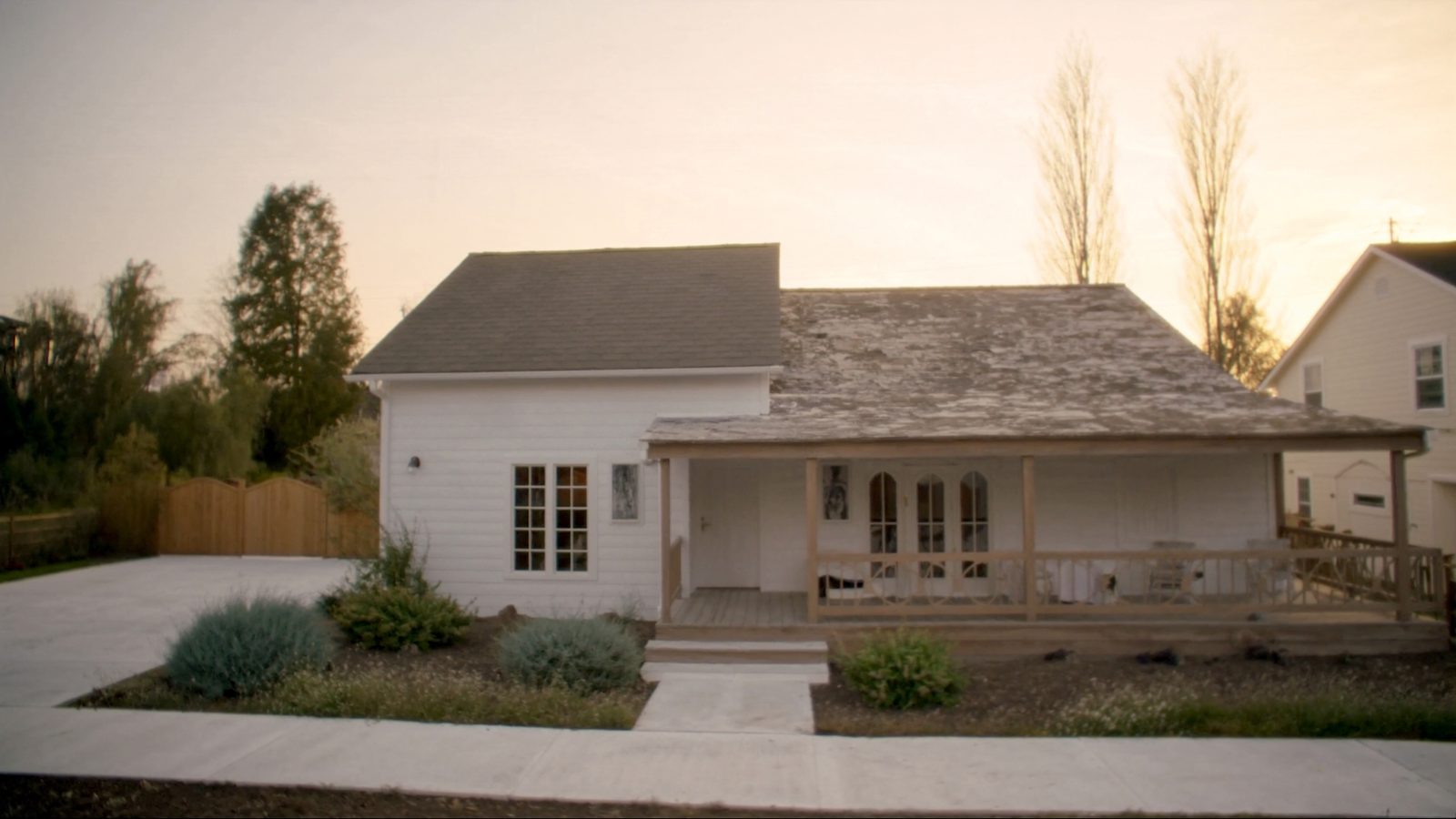
Every homeowner facing the decision to sell a house that needs work asks the same question: should I fix it up first, or sell it as-is?
The instinct says fix it. A higher listing price means more money. That makes sense until you actually do the math.
The reality is that a higher sale price does not always mean higher net proceeds. Repairs cost money. Real estate commissions take a percentage of that higher price. Carrying costs - mortgage, taxes, insurance, utilities - accumulate for every additional month the house sits on the market. And the risk of renovation going over budget or taking longer than planned is real.
This guide runs the actual numbers comparing both options. Not theory. Not opinion. Math.
The Real Cost of Making Repairs Before Selling
When a homeowner decides to repair a property before listing, here is what the true cost looks like:
Direct repair costs. The obvious one. According to the National Association of Realtors' 2026 Remodeling Impact Report, the average homeowner spends $15,000 to $40,000 on pre-sale renovations. Common projects and their typical costs:
| Repair | Average Cost |
|---|---|
| Kitchen update (mid-range) | $18,000 - $35,000 |
| Bathroom renovation | $8,000 - $15,000 |
| Roof replacement | $8,000 - $15,000 |
| Exterior paint | $3,000 - $6,000 |
| Flooring (whole house) | $5,000 - $12,000 |
| HVAC replacement | $5,000 - $10,000 |
| Foundation repair | $4,000 - $15,000 |
Time cost. Renovations take time. A mid-range whole-house refresh takes 4-8 weeks. A kitchen and bathroom remodel takes 6-12 weeks. During that time, you are paying carrying costs on a house you are not living in (if you have already moved) or dealing with construction disruption (if you have not).
Carrying costs during renovation and sale. For every month between starting renovations and closing with a buyer, you pay:
- Mortgage payment (principal + interest)
- Property taxes (prorated monthly)
- Homeowner's insurance
- Utilities
- HOA fees (if applicable)
For a typical home with a $1,400/month mortgage, $350/month in taxes, $150/month insurance, and $200/month utilities, carrying costs run $2,100 per month. Over 4 months of renovation plus 2 months on market, that is $12,600 in carrying costs.
Real estate agent commission. When you list with an agent, the standard commission in most Texas markets is 5-6% of the sale price. On a $250,000 sale, that is $12,500 to $15,000.
Closing costs. Seller closing costs typically run 1-2% of the sale price, covering title insurance, transfer fees, and administrative costs.
The total cost of the "fix it up" path is not just the renovation invoice. It is renovation + carrying costs + commission + closing costs. Those add up fast.
The Real Numbers: Side-by-Side Comparison
Let us use a concrete example that matches what we see regularly in the Texas markets where Home Pros operates.
The property: A 3-bedroom / 2-bathroom house in San Antonio with an ARV of $250,000. The house needs approximately $35,000 in work - updated kitchen, bathroom refresh, new flooring, paint, and minor electrical updates. In its current as-is condition, a cash buyer would offer approximately $200,000.
Option A: Make Repairs and List with an Agent
| Line Item | Amount |
|---|---|
| Expected sale price (after repairs) | $248,000 |
| Renovation costs | -$35,000 |
| Real estate commission (6%) | -$14,880 |
| Carrying costs (3 months renovation + 2 months on market) | -$10,500 |
| Seller closing costs (1.5%) | -$3,720 |
| Net proceeds | $183,900 |
Time to money: 5-7 months (renovation + listing + buyer closing)
Option B: Sell As-Is to a Cash Buyer
| Line Item | Amount |
|---|---|
| Cash offer | $200,000 |
| Renovation costs | $0 |
| Commission | $0 |
| Carrying costs | $0 (closes in 10-14 days) |
| Seller closing costs | -$800 |
| Net proceeds | $199,200 |
Time to money: 10-14 days
The difference: $15,300 more from the cash sale.
The gross sale price is $48,000 higher in Option A. But after subtracting repairs, commissions, carrying costs, and closing costs, the seller actually walks away with $15,300 less than the as-is cash sale.
The Consumer Financial Protection Bureau provides resources for understanding closing costs and transaction fees that affect both selling methods. Knowing these costs upfront prevents surprises at the closing table.
When Does Fixing Up Actually Make Sense?
The numbers above do not mean repairs are always a bad idea. Here are the scenarios where renovation before listing produces higher net proceeds:
When the property only needs cosmetic work. If the total repair cost is under $10,000 - fresh paint, deep clean, minor landscaping, light fixture updates - and those improvements can reasonably increase the sale price by $20,000+, the math pencils out. The Appraisal Institute research shows that cosmetic improvements typically return 80-120% of cost in sale price increase, while structural repairs return 50-80%.
When you can do the work yourself. A homeowner who can paint, install flooring, and handle basic repairs eliminates the labor cost, which is typically 40-60% of any contractor bid. Your effective ROI on materials-only renovation is much higher.
When you have no carrying costs. If you own the property free and clear, live in it, and have time to wait, the monthly carrying cost calculation changes dramatically. Without a mortgage payment, the cost of holding through renovation and listing drops by 60-70%.
When the market is strongly favoring sellers. In a market with under 2 months of inventory and bidding wars, renovated homes command premiums above ARV. The additional sale price can offset renovation and carrying costs with room to spare. But these conditions are market-specific and cyclical.
Which Repairs Have the Best Return?
Not all repairs produce equal value.High ROI (typically 80-120% return):
- Fresh interior and exterior paint ($3,000-$6,000 cost - ' $5,000-$10,000 value increase)
- Landscaping and curb appeal ($1,500-$3,000 cost - ' $3,000-$6,000 value increase)
- Deep cleaning and decluttering ($500-$1,500 cost - ' $3,000-$5,000 value increase)
- Light fixture and hardware updates ($500-$1,000 cost - ' $1,500-$3,000 value increase)
Moderate ROI (typically 50-80% return):
- Kitchen updates (new countertops, cabinet refinishing, appliances)
- Bathroom refresh (vanity, mirror, flooring - not full remodel)
- New flooring in main living areas
Low ROI (typically 30-60% return):
- Full kitchen remodel
- Full bathroom remodel
- Roof replacement (necessary but rarely adds equivalent value)
- Foundation repair (removes a deal-killer but does not add premium value)
- HVAC replacement (similar - buyers expect it to work, not pay extra for new)
The National Association of Home Builders tracks construction cost data that supports these ROI ranges. Material and labor costs have stabilized somewhat in 2026 compared to the post-pandemic surge, but renovation remains expensive relative to the incremental value it creates for most distressed properties.
The Break-Even Analysis
Here is how to calculate whether repairs make sense for your specific situation:
Step 1: Get a realistic repair estimate. Not a best-case number. Include a 15% contingency for surprises.
Step 2: Estimate the higher sale price after repairs. Use comparable sales of recently renovated homes in your neighborhood. Our ARV Calculation Guide walks through this process.
Step 3: Calculate total costs for the traditional path: repairs + commission (5-6%) + carrying costs (months of renovation + listing + buyer closing) + closing costs (1-2%).
Step 4: Calculate net proceeds for both paths and compare.
Break-even formula: Repairs make sense when:
(Higher sale price - ' repairs - ' commission - ' carrying costs - ' closing costs) > (Cash offer - ' minimal closing costs)
If the left side is not meaningfully larger than the right side, the extra months of work, stress, and risk are not worth it.
The Hidden Costs Most Sellers Forget
Renovation overruns. According to Investopedia's analysis of home renovation costs, the average renovation goes 10-20% over budget. On a $35,000 project, that is $3,500 to $7,000 in unexpected costs.
Opportunity cost. Every month spent on renovation and listing is a month you are not investing those proceeds elsewhere, not moving to your next home, or not resolving the financial situation that prompted the sale.
Stress and decision fatigue. Managing contractors, choosing finishes, dealing with inspections, and negotiating with buyers is a second job. For homeowners already dealing with a difficult situation - divorce, probate, job relocation, health issues - adding a renovation project compounds the burden.
Inspection surprises. Even after renovations, a buyer's inspection may reveal issues you did not address. Negotiation after inspection often reduces the sale price by $5,000 to $15,000. Cash buyers typically waive inspections or buy as-is regardless of findings.
For homeowners who have already decided to sell but are unsure about the process, our guide on What to Expect When Selling Your House to a Cash Buyer covers the timeline, fees, and experience from start to finish. And for sellers dealing with specific property issues, our guides on Selling a House with Code Violations in Dallas and Selling an Inherited House in San Antonio address those situations directly.
Frequently Asked Questions
Does fixing up a house before selling always increase net profit?
No. When you factor in repair costs, real estate commissions (5-6%), carrying costs during renovation and listing, and closing costs, the net proceeds from a traditional sale are often lower than an as-is cash sale. The key variable is the size of the repair bill relative to the incremental sale price increase.
How much does the average home seller spend on pre-sale repairs?
The average homeowner spends $15,000 to $40,000 on pre-sale renovations, depending on the property's condition and the scope of work. Cosmetic refreshes (paint, flooring, landscaping) run $8,000 to $15,000. Mid-range renovations (kitchen, bathrooms, systems) run $25,000 to $50,000.
What is a typical cash buyer discount on an as-is home?
Cash buyers typically offer 70-85% of a property's after-repair value, depending on the condition, location, and required renovation scope. On a home with a $250,000 ARV needing $35,000 in repairs, a cash offer in the $190,000 to $210,000 range is typical. But the net proceeds after eliminating commissions, repairs, and carrying costs often exceed the traditional listing path.
Which repairs actually increase sale price enough to be worth the cost?
Cosmetic improvements - paint, landscaping, light fixtures, deep cleaning - have the highest return (80-120% of cost). Kitchen and bathroom updates return moderately (50-80%). Major structural repairs (roof, foundation, HVAC) are often necessary but rarely return their full cost in higher sale price.
How do I calculate whether an as-is cash offer is better than a traditional listing?
Calculate net proceeds for both paths. For the traditional listing: expected sale price minus repair costs, agent commission, carrying costs, and closing costs. For the cash sale: cash offer minus minimal closing costs. Compare the two net proceeds amounts, and factor in the timeline difference (months vs. Days).
Want to see the math on your house? Home Pros provides a no-obligation cash offer so you can compare it to the traditional listing path yourself. No pressure. No commitment. Just a real number to make a real decision.
Get your no-obligation offer - '
Learn more about selling to a cash buyer - '