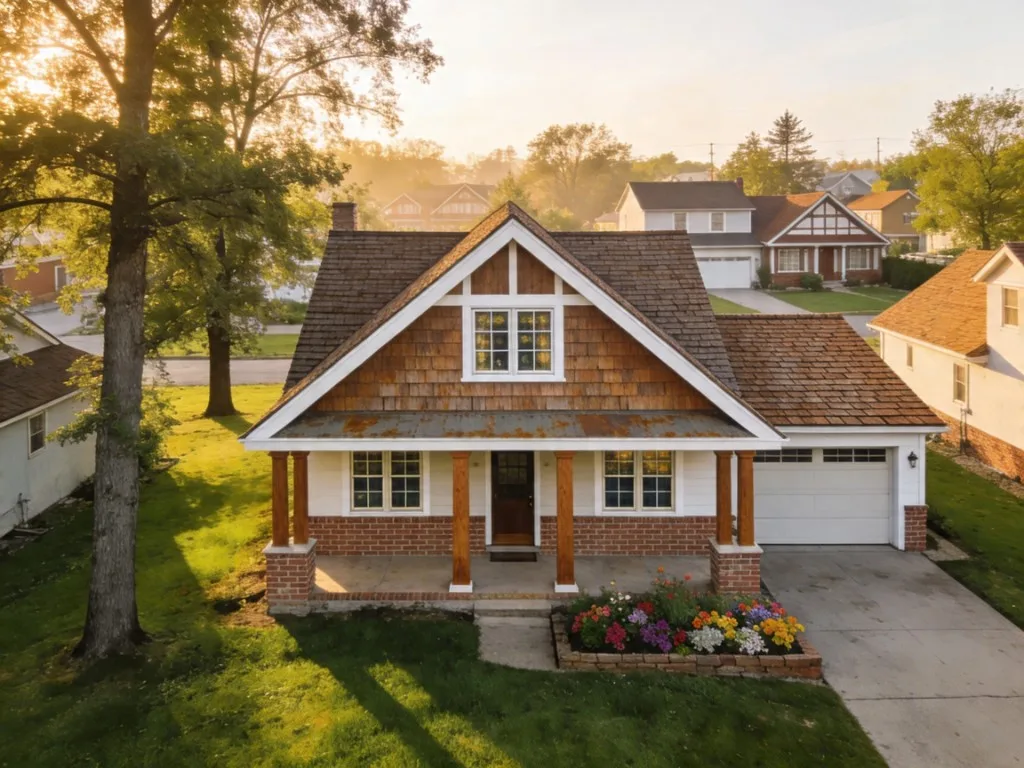
A Georgia senior can sell a paid-off house as-is for cash in as little as 7 days, with no repairs, no showings, and no commission. Georgia taxes the gain as ordinary income at a flat 4.99 percent rate, but the federal Section 121 exclusion and a state retirement income exclusion of up to $65,000 per person age 65 or older shelter most or all of it, a homestead's property tax growth is capped in some counties today and everywhere starting 2027, and a fair-value cash sale is the opposite of the kind of transfer Medicaid's look-back rule is built to catch.
This article is published by Home Pros (Balint Holdings, LLC), a veteran-owned cash home buyer based in San Antonio that buys houses directly from sellers, covers standard closing costs, and never charges a commission. The legal and tax figures below are drawn from the Official Code of Georgia Annotated, the IRS, CMS, Georgia's Department of Community Health asset limits, and Redfin's Georgia market data, gathered September 21, 2026. Every Home Pros figure traces back to content/proof.json, the company's single internal source for its own numbers.
How does a Georgia senior sell a paid-off house without repairs or showings?
The part of downsizing that stops most sellers cold is the physical work: sorting through a house full of decades of belongings, patching whatever an inspector will flag, and keeping the place presentable through weeks of showings. Selling to a cash buyer skips that entirely, because the offer is written against the house as it sits today, condition, contents, and all, with nothing to repair and nothing to stage first.
That difference carries more weight for an older seller, since the same to-do list, ladders, contractors, vacating for a showing, gets harder each year, and an older roof or dated electrical panel can slow a financed buyer's approval in ways a cash sale never touches. Home Pros sends a written cash offer within 24 hours of a walkthrough or virtual assessment, and the seller sets the closing date, anywhere from 7 days out to whatever timeline fits a move into a smaller home, a senior community, or a family member's spare room.
Will I owe capital gains tax when I sell my Georgia home?
Possibly, but less than the headline rate suggests. Georgia does not carve out a lower rate for capital gains; a home-sale gain is taxed the same as any other income, at a flat 4.99 percent state rate for 2026 under O.C.G.A. Section 48-7-20, the final step down from 5.39 percent in 2024 and 5.19 percent in 2025 as the state's multi-year rate cuts finished. Unlike a no-income-tax state, that rate applies to whatever gain is left after the federal exclusion.
Two shelters stack on top of that flat rate for most sellers. The federal Section 121 exclusion, under IRS Topic No. 701, shelters up to $250,000 of gain for a single filer and up to $500,000 for a married couple filing jointly, provided the home was owned and used as a primary residence for at least two of the five years before the sale. For a seller 62 or older, Georgia's own retirement income exclusion, O.C.G.A. Section 48-7-27, goes further: it defines retirement income to explicitly include capital gains income, and lets a taxpayer 65 or older exclude up to $65,000 of it per person, or up to $35,000 per person for ages 62 to 64 or those permanently and totally disabled. A married couple who both qualify each claim their own exclusion on a joint return, so a downsizing couple over 65 can potentially shelter an additional $130,000 of gain beyond whatever Section 121 already covers.
| Layer | Amount | Source |
|---|---|---|
| Georgia flat income tax rate on remaining gain | 4.99 percent | O.C.G.A. Section 48-7-20 |
| Federal Section 121 exclusion, single filer | Up to $250,000 | IRS Topic No. 701 |
| Federal Section 121 exclusion, married filing jointly | Up to $500,000 | IRS Topic No. 701 |
| Georgia retirement income exclusion, age 65 or older, per person | Up to $65,000 | O.C.G.A. Section 48-7-27 |
| Georgia retirement income exclusion, age 62 to 64 or disabled, per person | Up to $35,000 | O.C.G.A. Section 48-7-27 |
Will selling now protect me from a property tax jump on my next Georgia home?
The answer is a patchwork through the end of 2026 and then uniform after that. Georgia voters approved a statewide floating homestead exemption in 2024 (HB 581), which caps how much a homesteaded property's taxable value can grow each year at the rate of inflation instead of the full market increase. The catch is that counties, cities, and school districts were given the choice to opt out, and most of the largest metro Atlanta jurisdictions, including Fulton, Gwinnett, Cobb, and DeKalb counties and their school districts, did opt out, so a homestead there could still see its taxable value climb with the market through 2026.
That patchwork ends with Senate Bill 33, the Homeownership Opportunity and Market Equalization Act, which Governor Brian Kemp signed on May 11, 2026. The HOME Act removes the local opt-out and makes the inflation cap mandatory for every county, city, and school district starting with the 2027 tax year. A senior who downsizes into a new Georgia homestead in 2026 should check whether the new county has opted in yet; a senior who waits until 2027 gets the cap everywhere in the state without having to check at all.
| Period | Rule | Source |
|---|---|---|
| 2025 to 2026 | Inflation cap available, but each county, city, and school district may opt out; most metro Atlanta jurisdictions opted out | HB 581 (2024), approved by voters as Amendment 1 |
| Starting 2027 | Inflation cap mandatory statewide; local opt-out eliminated | Senate Bill 33, the HOME Act, signed May 11, 2026 |
Georgia seniors also have local school-tax exemptions at 62 or 65 that vary by county and require an April 1 application; confirm the new county's rules with its tax assessor rather than assume the old ones carry over.
How does selling my house affect Medicaid eligibility if I need long-term care later?
Georgia's Medicaid program follows the same federal look-back rule every state uses: the 60 months before a long-term care application are reviewed for transfers made as gifts or sold for less than fair market value (CMS, Transfer of Assets in the Medicaid Program). A sale priced at fair market value and documented with a closing statement is treated differently than a gift, because the seller receives full value in return even though a house turned into cash.
Georgia's nursing home Medicaid program caps countable assets at $2,000 for a single applicant, or a combined $3,000 when both spouses apply, and a home is not counted toward that limit at all while a qualifying spouse, minor child, or disabled child still lives there. For an applicant with no qualifying relative in the home, Georgia applies a 2026 home equity limit of $730,000; equity above that can disqualify an applicant for nursing-facility coverage. When only one spouse applies, the non-applicant spouse can retain up to $162,660 of countable assets in 2026 under the community spouse resource allowance. Selling before an application, at a documented fair price, moves an asset out of the excluded-home category and into cash that is easier to track than an illiquid house. None of this is legal or financial advice; a Georgia elder law attorney should review timing if Medicaid planning is part of why you are selling.
Can downsizing now make things simpler for my family's estate later?
Georgia's simplest probate shortcut works differently than in many states: instead of a dollar cap, it turns on whether there is a will and whether anyone disputes the debts. The Petition for No Administration Necessary, O.C.G.A. Section 53-2-40, is available to heirs of a person who died without a will (intestate) when all heirs agree on how to divide the property and there are no outstanding debts, or every creditor consents. There is no estate-value threshold at all; a modest house and a multi-million-dollar estate qualify on the same terms if those conditions are met.
Where a house is involved, the process still requires a title-clearing step: once the court approves the petition, it must record a certified copy of the order in every Georgia county where the deceased owned real property within 30 days before title is clear. Selling the house while you are still able to sign for yourself removes that recording step from your heirs' checklist, since cash divides among heirs without a deed to record. Anyone already dealing with an inherited Georgia house can read more about selling a probate or inherited property.
What does a cash sale actually look like for a downsizing senior?
The process starts with a walkthrough, in person or virtual, after which Home Pros sends a written cash offer within 24 hours. There is no obligation to sign, and sellers are encouraged to have a family member, financial advisor, or attorney look over the offer first. Once accepted, closing can happen in as little as 7 days, or later, commonly 14 to 30 days out, timed to a move into a smaller home, a senior living community, or a relative's property.
Home Pros covers standard closing costs, charges no commission, and does not require the house to be cleared out before closing, which removes one of the more physically demanding steps of a move for an older seller. Anyone who wants to see the math behind a number before making a call can start with the cash offer calculator, and sellers weighing a traditional listing against a direct sale can compare the two on our sell as-is and sell without a realtor pages.
| Downsizing Timeline | Cash Sale to Home Pros | Traditional Listing |
|---|---|---|
| Repairs required before an offer | None; sold as-is | Often needed for showings, inspection, or lender requirements |
| Showings or open houses | None | Multiple, typically over several weeks |
| Time to a signed offer | Within 24 hours of a walkthrough (content/proof.json) | Statewide median 59 days on market before contract, July 2026 (Redfin) |
| Time to close | As fast as 7 days, typically 14 to 30 (content/proof.json) | Additional weeks for a financed buyer's underwriting and appraisal after contract |
| Commission | None | Paid by the seller under most listing agreements |
Frequently Asked Questions
Does Georgia tax the capital gain when a senior sells a paid-off house?
Sometimes, but often less than the sticker rate suggests. Georgia taxes capital gains as ordinary income at a flat 4.99 percent rate for 2026 under O.C.G.A. Section 48-7-20, with no separate lower rate for long-term gains. Most sellers first clear the federal Section 121 exclusion, up to $250,000 of gain for a single filer and $500,000 for a married couple filing jointly who owned and used the home for two of the last five years, and a seller 65 or older can also exclude up to $65,000 of remaining capital gains per person under the state retirement income exclusion (O.C.G.A. Section 48-7-27), which explicitly counts capital gains income.
What is the Georgia retirement income exclusion and does it cover a home sale?
Yes, if you are 62 or older. O.C.G.A. Section 48-7-27 lets a taxpayer age 65 or older exclude up to $65,000 of retirement income per person from Georgia taxable income, or up to $35,000 per person for ages 62 to 64 or those permanently and totally disabled, and the statute's definition of retirement income explicitly includes capital gains income. A married couple who both qualify can each claim their own exclusion on a joint return.
Do I have to fix anything before Home Pros will buy my house?
No. Home Pros buys the house in its current condition, deferred maintenance, dated finishes, and all, so there is no punch list, no contractor bids, and no inspection renegotiation to manage before closing.
Can a Georgia estate skip formal probate court entirely after I downsize?
Only for an intestate estate with no dispute over debts. Georgia's Petition for No Administration Necessary, O.C.G.A. Section 53-2-40, has no dollar-value threshold; it is available for an estate of any size when the deceased left no will, all heirs agree on how to divide the property, and there are no outstanding debts or all creditors consent. Converting a house into cash before death does not change eligibility, but it does make it easier for heirs to divide and distribute without dealing with the extra title-clearing step real property requires.
How does selling my Georgia house interact with Medicaid nursing home eligibility?
Federal Medicaid rules apply a 60-month look-back on transfers before a long-term care application, and a penalty attaches to gifts or below-market sales, not to a documented arm's-length sale at fair market value. Georgia's nursing home Medicaid caps countable assets at $2,000 for a single applicant, and a home is excluded from that limit entirely while a spouse, minor child, or disabled child still lives there; an applicant with no qualifying relative in the home faces a 2026 home equity limit of $730,000. Selling at a documented fair price before an application converts an excluded home into countable cash, so the timing should be planned with an elder law attorney.
Will selling now protect me from a property tax jump if I buy a smaller Georgia home?
It depends on the county, at least through 2026. Georgia's floating homestead exemption under HB 581 caps how much a homestead's taxable value can grow each year, but through 2026 counties, cities, and school districts could opt out, and many metro Atlanta jurisdictions did. Senate Bill 33, the HOME Act, signed May 11, 2026, ends the opt-out and makes the inflation cap mandatory statewide starting with the 2027 tax year, so a downsizing move completed in 2026 lands in a patchwork that becomes uniform the following year.
How fast can I close compared to a traditional Georgia listing?
Home Pros gives a cash offer within 24 hours of a walkthrough and can close in as little as 7 days, with most sellers landing between 14 and 30 days on a date they pick. Georgia homes statewide spent a median of 59 days on the market in July 2026, per Redfin, before a financed buyer's underwriting and appraisal even start.
Sources
- O.C.G.A. Section 48-7-27, Computation of Taxable Net Income: retirement income exclusion amounts ($65,000 at 65+, $35,000 at 62-64) and inclusion of capital gains income. (WebSearch retrieval; dor.georgia.gov direct fetch blocked this run.)
- Georgia Department of Revenue, Retirement Income Exclusion: agency summary of the exclusion and eligibility ages. (WebSearch retrieval; direct fetch blocked this run.)
- IRS, Topic No. 701, Sale of Your Home: Section 121 exclusion amounts and the two-of-five-years test. (WebSearch retrieval; irs.gov direct fetch blocked this run.)
- Georgia House Budget and Research Office, HB 581 Property Tax Reform: the floating homestead exemption and the local opt-out. (WebSearch retrieval; legis.ga.gov direct fetch blocked this run.)
- WABE, Georgia governor signs income, property tax reduction laws: Kemp's May 11, 2026 signing of Senate Bill 33, the HOME Act, and its 2027 effective date. (WebSearch retrieval this run.)
- O.C.G.A. Section 53-2-40, Petition for No Administration Necessary: eligibility for intestate estates with no debts, and the deed-recording requirement. (WebSearch retrieval; legis.ga.gov direct fetch blocked this run.)
- CMS, Transfer of Assets in the Medicaid Program: the federal 60-month look-back and treatment of below-fair-market-value transfers. (WebSearch retrieval; cms.gov direct fetch blocked this run.)
- Georgia Medicaid Eligibility, 2026 Income and Asset Limits: the $2,000 asset limit, $730,000 home equity limit, and $162,660 spousal allowance, citing Georgia DCH guidance. (WebSearch retrieval this run.)
- Redfin, Georgia Housing Market: the statewide 59-day median days-on-market figure and $371,663 median sale price for July 2026. (WebSearch retrieval this run.)
Tax rates, exemption rules, and probate procedures can change by legislative session; confirm current figures with the Georgia Department of Revenue, your county tax assessor, or a Georgia attorney before relying on the illustrative figures above. This article is educational and not financial, tax, or legal advice.

Co-founder and COO of Home Pros (Balint Holdings, LLC) and a licensed Texas real estate agent. Trevor runs the acquisitions side of the business, pricing and closing offers directly with sellers. More about Trevor →