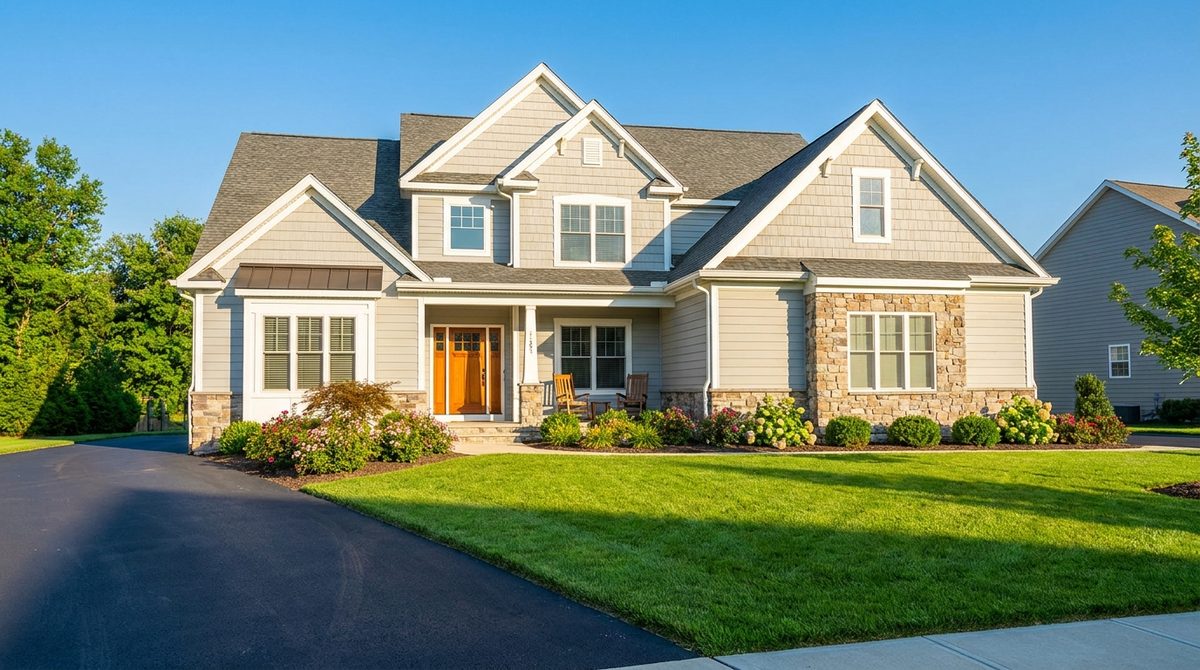
New Western Acquisitions is a Dallas, Texas-based wholesale real estate brokerage founded in 2008 by Stuart Denyer and Kurt Carlton, operating in roughly 50 U.S. markets. It contracts to buy houses at a discount from sellers, then assigns the purchase contract to a vetted investor-buyer for an assignment fee that typically runs $15,000 to $50,000 per deal. Seller-side offers typically land 30 to 50 percent below estimated market value. Sellers seeking higher offers and investors seeking pre-vetted deal flow have legitimate alternatives, including local independent cash buyers, regional marketplaces like Home Pros, and the comparable franchise model run by HomeVestors and We Buy Ugly Houses complaints.
Is New Western a Legitimate Company?
Yes, New Western Acquisitions is a legitimate Texas-licensed real estate brokerage. The firm was founded in 2008 in Dallas by Stuart Denyer and Kurt Carlton, holds an active brokerage license through the Texas Real Estate Commission license database under Texas Property Code Section 1101, and is registered in good standing with the Texas Secretary of State. New Western has appeared multiple years on the Inc. 5000 list of fast-growing private companies, with reported revenue scale in the hundreds of millions across roughly 17,000 transactions per year nationally.
Legitimacy and a fair offer are not the same thing, however. The legitimacy question matters because most "is New Western a scam" search traffic is sellers who received an offer they considered far below market value, not sellers alleging fraud in the legal sense. The offer is the consequence of a structural business model, not a scam. New Western operates a wholesale assignment model where the firm contracts to buy a property at a discounted cash price, then before closing it resells the contract to a vetted investor-buyer in its private network for an assignment fee. That fee, typically $15,000 to $50,000 per deal, comes out of what would otherwise be the seller's net proceeds.
The practical takeaway: treat any New Western seller offer as one bid in a competitive process. Pull at least one local independent cash-buyer bid and one marketplace bid before signing. The brokerage is licensed and the contract will close. The offer is almost never the highest available number on a given property because the assignment fee is built into the discount.
How Does New Western Acquisitions Make Money?
New Western makes money on the spread between the seller-side contract price and the investor-side assignment price. The mechanic is wholesale assignment, sometimes called a contract flip, governed in Texas by Texas Property Code Section 5.0205 and Texas Occupations Code Section 1101.351. The company contracts to purchase a property from the seller at a discounted cash price. Before closing, New Western assigns the purchase contract to an investor in its buyer network for a markup of $15,000 to $50,000 per property. The investor pays the assignment fee plus the original contract price, the seller receives only the original contract price, and New Western keeps the assignment fee.
The buyer-list side of the business is a parallel revenue stream. New Western requires investor-buyers to apply, get vetted, and in some markets pay an access fee or commit to a minimum purchase volume to remain on the active distribution list. The investor list is the demand-side asset that lets New Western turn a contract assignment in 5 to 10 days, which is faster than most independent wholesalers can move inventory. The trade-off for investor-buyers is that the assignment fee is layered on top of the underlying purchase price, which compresses the investor's deal margin compared to direct seller-acquired inventory.
For a deeper look at the assignment-fee mechanic and how it differs from a double-close structure, see our guide on how wholesale assignment fees work. The same mechanic underlies most independent wholesalers, the difference with New Western being the scale of the buyer list and the speed of the assignment turnaround.
Typical New Western Offer Amounts vs Market Value
Seller-side New Western offers typically land at 50 to 70 percent of after-repair value, which translates to roughly 30 to 50 percent below estimated fair market value once the property's deferred maintenance is factored in. The investor-side buyer in the New Western network pays 65 to 75 percent of ARV plus the assignment fee on top. The spread between the seller price and the investor price, less the assignment fee, is New Western's gross margin per deal.
The table below shows the typical math at four home values. Numbers assume a $25,000 average repair budget on a $300,000 ARV home, scaled proportionally at other price points, and a midpoint $25,000 assignment fee. The traditional MLS net column reflects roughly 91 percent of FMV after standard 5 percent commission, 1 percent in seller closing costs, and 3 percent in repair credits on a typical financed sale.
| Home ARV / FMV | Typical New Western Seller Offer | Investor Price (65-75% ARV + fee) | Traditional MLS Net (~91%) | Seller Equity Loss vs MLS |
|---|---|---|---|---|
| $200,000 | $110,000 to $130,000 | $155,000 | $182,000 | $52,000 to $72,000 |
| $300,000 | $165,000 to $195,000 | $232,500 | $273,000 | $78,000 to $108,000 |
| $450,000 | $247,500 to $292,500 | $348,750 | $409,500 | $117,000 to $162,000 |
| $600,000 | $330,000 to $390,000 | $465,000 | $546,000 | $156,000 to $216,000 |
The 25 to 35 percent equity loss column is the cost of the speed and certainty the wholesale model delivers. That trade is not automatically bad. A seller 30 days from foreclosure auction in Tarrant County, a probate heir 1,500 miles from the property in Fulton County, or an owner of a home needing $80,000 in repairs they cannot finance may rationally accept a 30 percent haircut for a 14-day cash close. The point is to know the math before signing. Most sellers who feel "lowballed" by a New Western offer are reacting to the gap between the seller price and what a traditional MLS sale would have netted, not to anything fraudulent. The assignment-fee discount is the math.
For metro-specific cash-buyer comparisons in the markets where New Western is most active, see vetted Dallas cash buyers in New Western's home metro, Houston cash-buyer alternatives ranked, Atlanta cash buyers ranked by BBB and response time, and Charlotte cash buyers in a state with active wholesale-licensing reform.
Who Founded New Western and Where Is It Based?
New Western Acquisitions was founded in 2008 by Stuart Denyer and Kurt Carlton in Dallas, Texas. The current headquarters is at 5310 Harvest Hill Road, Suite 100, Dallas TX 75230. The firm operates as a licensed Texas real estate brokerage under Texas Property Code Section 1101 and the Texas Occupations Code Section 1101.351 licensure regime, with regional offices in roughly 50 metro markets including Houston, San Antonio, Austin, Atlanta, Charlotte, Raleigh, Phoenix, Tampa, Orlando, Las Vegas, Kansas City, Oklahoma City, Nashville, Birmingham, and Charleston.
Kurt Carlton remains active as a company spokesperson and appears regularly at industry events such as the BiggerPockets investor conferences and the Inman Connect conferences. Stuart Denyer has a lower public profile but is named in most Texas Secretary of State entity filings for the company. The original parent entity was Denyer Investments Group LLC, with various regional subsidiary LLCs registered in each operating state. Investors looking up the firm's regulatory standing should search the Texas Secretary of State entity database at direct.sos.state.tx.us and the TREC license search portal at license.trec.texas.gov, both of which return active records for the brokerage as of May 2026.
The Inc. 5000 listings provide an additional reference point on company scale. New Western has appeared multiple years on the Inc. 5000 list of fast-growing private companies, indicating real revenue traction and continuity rather than a fly-by-night operation. That data point is the strongest single rebuttal to the "is New Western a scam" framing. The company is large, real, and venture-backed in spirit if not in form. The reason individual seller offers feel low is the assignment-fee math, not the company's existence.
What Complaints Have Been Filed Against New Western?
The Better Business Bureau Dallas profile for New Western Acquisitions LLC lists an active complaint history. The most common documented patterns in BBB filings, Texas Real Estate Commission complaint records, Reddit threads in r/realestateinvesting and r/RealEstate, and Google review aggregations include offer-below-market-value patterns where sellers learned post-sale that a local independent buyer would have paid more, high-pressure first-visit kitchen-table closing tactics, earnest money refund disputes when sellers attempted to cancel before closing, and on the investor side, disputes over deal quality and access to fresh inventory after paying buyer-list fees. Detailed methodology behind the bureau's rating system is published at the BBB official organization site.
The investor-side complaint pattern is uniquely New Western's. Buyer-list members in Reddit threads and on BiggerPockets forums report that the most attractive deals get distributed to top-volume buyers first, and that lower-tier list members frequently see deals that have already been passed over by stronger bidders. The structural reason is the buyer-list hierarchy: New Western's economic incentive is to move inventory through buyers with the highest closing probability, which means the largest and most consistent buyers receive first-look access. That is not unique to New Western and exists across most wholesale brokerages, but New Western's scale and centralized distribution amplify the dynamic.
The Texas Real Estate Commission complaint database is the formal regulator-of-record for license-level grievances against a Texas brokerage. As of May 2026, public TREC records show the brokerage license remains active and in good standing. Sellers and investors evaluating New Western should pull (a) the current BBB rating and complaint count, (b) the TREC license status and any open or closed complaint records, (c) recent Google reviews of the specific regional office (Dallas, Houston, Atlanta, and Phoenix tend to have the most reviews), and (d) anecdata from the r/realestateinvesting and r/RealEstate subreddits, weighted appropriately as forum content rather than authoritative reporting.
Is New Western Better Than HomeVestors?
Neither model consistently delivers the highest net to the seller. New Western and HomeVestors of America operate structurally different but economically similar business models. The table below compares the two against the direct-to-investor marketplace alternative that Home Pros represents.
| Dimension | New Western Acquisitions | HomeVestors (We Buy Ugly Houses) | Home Pros Marketplace |
|---|---|---|---|
| Business model | Wholesale assignment brokerage | Franchise cash-buyer network | Direct-to-investor marketplace |
| Founded | 2008 (Dallas TX) | 1996 (Dallas TX) | 2021 (48 markets) |
| Typical seller offer (% of FMV) | 50 to 70% of ARV (30 to 50% below FMV) | 50 to 70% of FMV | 70 to 82% of ARV (typically higher seller net) |
| Hidden fee layer | $15,000 to $50,000 assignment fee | 5 to 7% franchise royalty + corporate marketing assessment | None (direct-to-investor) |
| Speed to close | 5 to 21 days | 14 to 30 days | 7 to 21 days |
| Reach | ~50 metros | ~1,100 franchise offices across all 50 states | 48 metros across 10 priority states |
| Primary federal regulator | Texas Real Estate Commission state-level | FTC Franchise Rule (16 CFR Part 436) | State real estate commissions in each operating state |
| Recent regulatory exposure | Texas SB 1577 assignment-disclosure requirement (Sept 2023) | 2023 ProPublica investigation, March 2024 US Senate scrutiny letter | None material |
The structural difference is that New Western resells the contract to an investor while HomeVestors franchisees buy and rehab the property themselves. Both compress the seller's net by 30 to 40 percent compared to a traditional MLS listing. Both are legitimate, licensed operations. Neither is the highest-paying option for most sellers. For the parallel analysis of the HomeVestors model and the May 2025 Charles Carrier federal franchise fraud guilty plea, see our companion guide on HomeVestors and We Buy Ugly Houses complaints. Sellers reading both pieces typically end up evaluating local independent buyers and marketplace bids instead of either national brand.
Best Alternatives to New Western for Sellers
Most sellers comparing New Western assume the choice is the wholesale brokerage versus the open MLS. There are four distinct paths, and the right one depends on the property condition, the timeline pressure, and the seller's tolerance for negotiation.
- Local independent cash buyers. Independent investors operating in a single metro or county, with no assignment middleman. These buyers can typically pay 5 to 15 percent more than a New Western seller offer on the same property because there is no $15,000 to $50,000 assignment fee layered on top. The trade-off is brand recognition, which means a seller needs to verify the buyer's legitimacy independently through state licensing records and BBB profiles.
- Cash-buyer marketplaces. Platforms that route a single property to multiple competing investor bidders, producing a higher net to the seller through price competition. Home Pros operates as a 48-market investor marketplace covering Texas, Ohio, North Carolina, Georgia, Tennessee, Alabama, South Carolina, Missouri, Oklahoma, and several other priority states. Marketplace bids typically land in the 70 to 82 percent of after-repair value range, several percentage points above the typical New Western seller offer.
- Discount or flat-fee MLS listing. If the timeline allows 30 to 60 days, a discount broker or a flat-fee MLS listing service can net 88 to 93 percent of fair market value on a clean, occupied property. The trade-off is showings, inspection, appraisal, and financing contingencies, plus the carrying cost of the home during the listing period.
- Direct sale to a known investor. If the seller already knows a local investor through a personal or professional network, a direct off-market sale eliminates middlemen, assignment fees, and marketplace commissions. Pricing tends to land at the favorable end of the cash-buyer range. The constraint is that this option requires an existing investor relationship the seller can verify.
For Texas sellers specifically, the comparison stack also includes regional metro-level Opendoor alternatives. See Houston Opendoor defectors face the same lowball math, Dallas-area sellers also bump into Opendoor exclusion ZIPs, and San Antonio military families and Opendoor PCS-timing traps for the iBuyer-versus-wholesale framing in each city.
Do Investors Really Make Money Buying Through New Western?
Some do, but the math is tighter than the marketing pitch suggests. Investor-side buyers pay 65 to 75 percent of after-repair value plus an assignment fee of $15,000 to $50,000 per property. After acquisition cost, holding cost, rehab cost, closing costs on both ends, and the assignment markup, the typical net margin on a New Western flip lands in the 8 to 14 percent range. Most experienced investors target 20 to 25 percent net margin on a flip, which means a New Western deal is only attractive when the investor cannot source comparable inventory through direct-marketing channels at lower cost.
The deeper investor critique on BiggerPockets forum threads and Reddit r/realestateinvesting discussions centers on inventory tiering. New Western's largest and most consistent buyers receive first-look access to incoming contracts, while lower-tier list members see properties only after multiple stronger bidders have passed. The structural reason is rational from New Western's side: the firm needs to move inventory through high-probability closers to maintain seller-side trust in the 5 to 14 day close commitment. The consequence is that newer investors paying for buyer-list access frequently report a high ratio of picked-over deals to genuinely fresh inventory.
Investors with established direct-mail pipelines, relationships with local independent wholesalers, MLS-listed distressed inventory access, or off-market lead-generation systems frequently access better deals at lower cost than the New Western subscription model provides. For the buyer-side mechanics of building independent deal flow, see our guide on how wholesale buyer lists work, which covers the same demand-side dynamics from the wholesaler's perspective.
Wholesale Licensure Reform: SB 1577 and the State Wave
A wave of state-level wholesale licensure reform legislation is reshaping the assignment-flip model that New Western and most independent wholesalers operate. The first major reform was Oklahoma HB 3018, effective November 1, 2022, which made Oklahoma the first state to require wholesale licensure for assignment-flip transactions. Texas followed with Senate Bill 1577 from the 88th Legislature, effective September 1, 2023, which added Texas Property Code Section 5.0205 requiring written disclosure of equitable interest and assignment intent to the seller before signing a purchase contract that the buyer intends to assign. North Carolina HB 2070 and South Carolina HB 4754 are both under active legislative consideration in 2026 and follow the same disclosure-and-licensure framework.
The legal backdrop reaches into the broader commission-structure reform driven by the National Association of Realtors research and reform context following the Burnett v. National Association of Realtors $1.78 billion verdict from the US District Court for the Western District of Missouri on October 31, 2023, and the Sitzer-Burnett settlement effective August 17, 2024. While the antitrust litigation focused on buyer-broker compensation rather than wholesale assignment, the regulatory momentum across the residential real estate industry has accelerated state-level licensure reform for adjacent practices. Federal Reserve Economic Data on housing-market activity and US Department of Housing and Urban Development fair-housing reporting via HUD fair-housing context both provide macro context for why state legislatures are paying closer attention to the wholesale assignment market.
For New Western specifically, the SB 1577 disclosure requirement means Texas sellers should receive a written disclosure of assignment intent before signing. If a seller in Houston, Dallas, San Antonio, or Austin received a New Western contract without that disclosure, the contract may be voidable under Texas Property Code Section 5.0205. Sellers in Oklahoma, North Carolina, and South Carolina should check the current status of state-level reform legislation before signing, and verify that New Western (or any wholesaler) is operating under the current regulatory regime. The Federal Trade Commission's broader rulemaking on consumer real estate disclosure (separate from the FTC Cooling-Off Rule, which does not apply to real estate) is the federal-level backstop, though active rulemaking specific to wholesale assignment remains in the proposal phase as of May 2026. Macroeconomic context on regional housing market activity is published at the Federal Reserve Economic Data housing-market series, which tracks the demand pressure feeding the wholesale assignment market.
Why This Comparison Is Different
Most "New Western reviews" articles on the search results page are recycled aggregator listicles that treat the company as a recommended option without critical analysis, soft-pedal the assignment-fee disclosure question, and steer readers to the publisher's own affiliate marketplace. The reason is straightforward: many of those publishers either compete with New Western for the same defector traffic or source investor leads through the New Western buyer network. Critical analysis would cost them inventory or referral revenue.
This guide does the opposite. Every New Western data point cites a primary public source: the Texas Real Estate Commission license database, the Texas Secretary of State entity registry, the BBB Dallas profile, the Texas Property Code Section 1101 and Section 5.0205 statutory text, Senate Bill 1577 from the 88th Texas Legislature, Oklahoma HB 3018, the BiggerPockets investor-side forum aggregations, and the Inc. 5000 historical rankings. Sellers can verify every claim independently through the same sources.
Home Pros has zero affiliate relationship with New Western. We do not receive referral fees from New Western or any company in its buyer network. We are a direct competing marketplace (the Home Pros 48-market investor platform operating under Balint Holdings, LLC), and our financial interest is in delivering a higher net to the seller than the wholesale assignment model can deliver on the same property. That interest is disclosed up front. The data is the data, regardless.
Frequently Asked Questions
Is New Western Acquisitions a legitimate company?
Yes. New Western is a legitimate Texas-licensed real estate brokerage headquartered at 5310 Harvest Hill Road, Suite 100, Dallas TX 75230, founded in 2008 by Stuart Denyer and Kurt Carlton. The firm holds a TREC brokerage license, is registered in good standing with the Texas Secretary of State, and has appeared multiple years on the Inc. 5000 list. Legitimacy is not the same as a fair offer, however. Seller-side offers typically land 30 to 50 percent below estimated market value because New Western operates a wholesale assignment model with a $15,000 to $50,000 assignment fee built into the discount.
How does New Western Acquisitions make money?
New Western contracts to buy a property from the seller at a discounted cash price, then before closing it assigns the purchase contract to a vetted investor-buyer for an assignment fee of $15,000 to $50,000 per property. The investor pays the assignment fee plus the original contract price, and the seller receives only the original contract price. The firm reports more than 17,000 transactions per year nationally across roughly 50 metros, which at a typical $25,000 average assignment fee implies hundreds of millions in annual revenue.
What are typical New Western offer amounts compared to market value?
Seller-side offers typically land at 50 to 70 percent of after-repair value, which is roughly 30 to 50 percent below fair market value once repair costs are factored in. Investor-side buyers pay 65 to 75 percent of ARV plus the assignment fee. On a $300,000 ARV home with $25,000 in needed repairs, a New Western seller offer typically lands between $165,000 and $195,000, while a local independent cash buyer or a marketplace like Home Pros frequently pays $185,000 to $225,000 on the same property.
Who founded New Western and where is it headquartered?
New Western Acquisitions was founded in 2008 by Stuart Denyer and Kurt Carlton in Dallas, Texas. The current headquarters is at 5310 Harvest Hill Road, Suite 100, Dallas TX 75230. The firm operates as a licensed Texas real estate brokerage under Texas Property Code Section 1101 with regional offices in roughly 50 metro markets across the United States.
What complaints have been filed against New Western?
The Better Business Bureau Dallas profile lists an active complaint history covering offer-below-market-value patterns, high-pressure first-visit closing tactics, and earnest money refund disputes when sellers attempted to cancel. The Texas Real Estate Commission complaint database is the formal regulator-of-record for license-level grievances. Investor-side complaints aggregated on BiggerPockets and Reddit r/realestateinvesting center on deal quality and access to fresh inventory after paying buyer-list fees.
Is New Western better than HomeVestors?
Neither consistently delivers the highest net to the seller. New Western operates a wholesale assignment model while HomeVestors operates a franchise cash-buyer model. Both compress the seller's net by 30 to 40 percent compared to a traditional MLS listing. Local independent cash buyers and regional marketplaces like Home Pros typically pay 5 to 15 percent more than either national brand because there is no assignment fee or franchise royalty layered on top.
What are the best alternatives to New Western for selling my house?
The four strongest alternatives are local independent cash buyers without assignment middlemen, regional cash-buyer marketplaces routing properties to multiple competing investor bidders, a discount or flat-fee MLS listing when the timeline permits 30 to 60 days, and direct sale to a known investor in the seller's network. Home Pros operates a 48-market investor marketplace and typically delivers offers in the 70 to 82 percent of after-repair value range, several percentage points above the typical New Western seller offer.
Do investors really make money buying through New Western?
Some do, but the math is tighter than the marketing suggests. Typical net margin on a New Western flip lands in the 8 to 14 percent range after acquisition cost, holding cost, rehab cost, closing costs, and the assignment markup. Most experienced investors target 20 to 25 percent net margin, which means a New Western deal is only attractive when the investor cannot source comparable inventory through direct-marketing channels at lower cost. Buyer-list members frequently report inventory-tiering where top-volume buyers see fresh deals first.

Founder of Home Pros, operator across 48 markets, closed 300+ investor transactions since 2021. More about Trevor