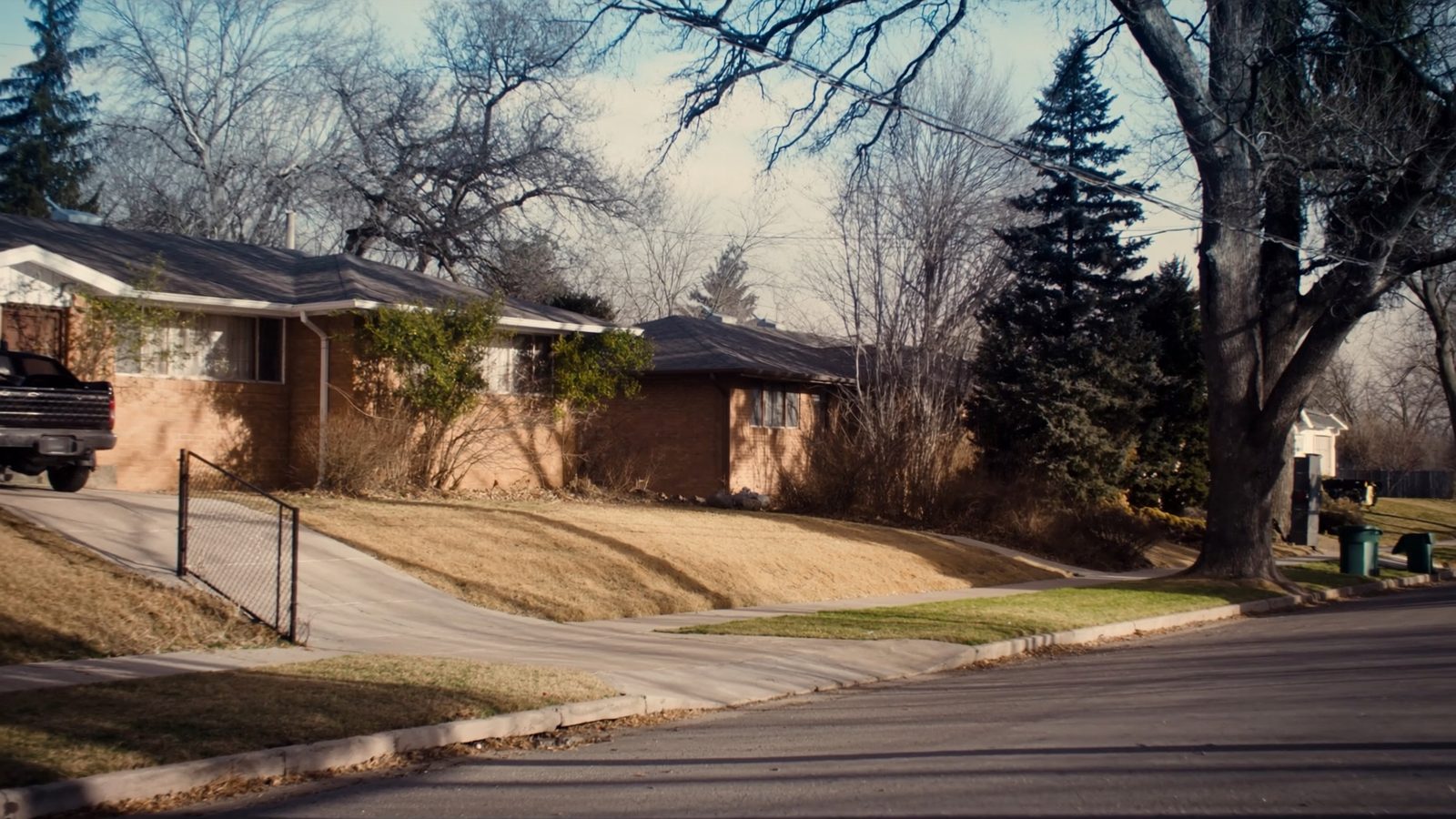
Inner Dallas gets all the attention. Uptown, Deep Ellum, Bishop Arts - the neighborhoods that show up in magazine articles and investor pitch decks. And the cap rates in those areas reflect that attention. At 4.8 to 6.5 percent for SFR rentals in 2026, inner Dallas is an appreciation play. Good for long-term equity growth. Not great if you need the property to actually cash flow from day one.
Drive 15 to 25 minutes east, south, or west and the math changes completely.
Suburban DFW markets like Garland, Mesquite, Irving, and Grand Prairie are producing SFR cap rates of 6.5 to 7.8 percent right now. The tenant pool is deep. The price points are accessible. And the institutional investors who have been squeezing yields in the core are only starting to look this direction.
This is a numbers breakdown for investors who focus on cash flow over Instagram-worthy renovation photos.
Why Suburban Dallas Outperforms the Core on Cash Flow
The yield advantage in suburban DFW comes down to the relationship between purchase price and rental income. Inner Dallas has seen significant price appreciation over the past five years, driven by population growth, corporate relocations, and institutional investment. Rental rates have risen too, but not at the same pace as prices.
According to data from the Federal Reserve Bank of Dallas, the DFW metroplex continues to be one of the strongest job-growth markets in the country. That employment base drives rental demand across the entire metro - not just in the trendy inner neighborhoods.
The result: purchase prices in suburbs like Garland and Mesquite are $100,000 to $150,000 lower than comparable properties in inner Dallas, while rents are only $150 to $300 per month less. That compression means more rent per dollar invested, which is the entire game for buy-and-hold SFR investors.
The Bureau of Labor Statistics shows DFW unemployment holding below 4% through early 2026. Tenant demand across the metro remains strong, with suburban submarkets benefiting from workers who commute to downtown, the airport corridor, or the Telecom Corridor along US-75.
Garland, TX (75040 / 75041 / 75042)
Garland sits northeast of Dallas with direct access to I-30 and the DART light rail system. For investors, the appeal is straightforward: a deep inventory of 1960s-1980s SFR housing stock at price points well below the DFW median.
Investment numbers:
| Metric | Range |
|---|---|
| Median purchase price (investor-grade) | $235,000 - $260,000 |
| Average monthly rent (3BR/2BA) | $1,650 - $1,780 |
| Estimated cap rate | 6.8% - 7.5% |
| Average days on market (investor resale) | 28 - 38 days |
| 5-year price appreciation | 22% |
Tenant profile: Working-class families, airport and warehouse workers, healthcare employees from nearby medical facilities. Low tenant turnover relative to inner Dallas. Garland's DART access makes it increasingly attractive for commuters priced out of closer-in neighborhoods.
Investor profile: Buy-and-hold cash flow investors. Garland is not a flip market (ARV spreads are too tight for high renovation costs). The play is stable cash flow with moderate appreciation over time.
The Dallas Central Appraisal District shows property tax rates in Garland ISD running around 2.1-2.3%, which is competitive with inner Dallas rates. Investors should factor this into their cash flow calculations - Texas has no state income tax, but property taxes are a meaningful operating expense.
For a broader view of the Dallas investment landscape that these suburban numbers build on, see our Dallas Real Estate Market Analysis for Investors.
Mesquite, TX (75149 / 75150)
Mesquite, directly east of Dallas on I-30, offers the lowest entry point in the DFW metro for investors seeking rental cash flow without sacrificing tenant quality.
Investment numbers:
| Metric | Range |
|---|---|
| Median purchase price (investor-grade) | $215,000 - $245,000 |
| Average monthly rent (3BR/2BA) | $1,580 - $1,700 |
| Estimated cap rate | 7.0% - 7.8% |
| Average days on market (investor resale) | 22 - 32 days |
| 5-year price appreciation | 26% |
Tenant profile: Blue-collar and service workers, families seeking affordable housing within a 20-minute commute to downtown Dallas. Mesquite's school system has been investing heavily in facilities, which supports family-tenant retention.
Investor profile: Yield-focused investors who want high cap rates with room for organic appreciation. Mesquite's price appreciation over five years (26%) actually outpaces several inner Dallas submarkets, making it a dual-benefit play: cash flow today plus meaningful equity growth.
Several properties in the 75150 zip code offer immediate rental income potential at price points under $230,000. At $1,650/month rent on a $225,000 purchase, the gross yield exceeds 8.8% before expenses. Even after taxes, insurance, and management, the net cap rate comfortably clears 7%.
According to Redfin market data, Mesquite continues to see strong demand with limited inventory - a signal that both purchase prices and rents have further room to run.
Irving, TX (75061 / 75062)
Irving occupies a unique position in the DFW landscape. It borders Dallas to the west, houses the DFW International Airport on its northern boundary, and includes the Las Colinas development - one of the largest mixed-use urban centers in the state.
Investment numbers:
| Metric | Range |
|---|---|
| Median purchase price (investor-grade) | $265,000 - $300,000 |
| Average monthly rent (3BR/2BA) | $1,800 - $1,950 |
| Estimated cap rate | 6.2% - 7.0% |
| Average days on market (investor resale) | 25 - 35 days |
| 5-year price appreciation | 19% |
Tenant profile: Corporate employees (Las Colinas corridor), airport workers, healthcare professionals from Baylor Scott & White Medical Center. Higher income tenants than Garland or Mesquite, which means lower delinquency risk and longer lease durations.
Investor profile: Investors who want suburban cash flow with a slightly more institutional-grade tenant base. Irving commands higher rents that justify its higher entry price, keeping cap rates competitive. The corporate employment base provides recession resistance that purely residential markets lack.
The Texas Real Estate Commission regulates all property transactions in the state, and Irving's proximity to major employment centers means consistent demand across economic cycles.
Irving's cap rates are the tightest of the four suburban markets covered here, but the tenant quality and rent stability make it the lower-risk play. For investors comparing yield vs. Risk, Irving is the conservative allocation within a suburban DFW portfolio.
Grand Prairie, TX (75051 / 75052)
Grand Prairie sits in the geographic center of the DFW metroplex, south of I-30 between Dallas and Arlington. It has a balanced profile: affordable price points, solid rents, and proximity to major employers in both Dallas and Fort Worth.
Investment numbers:
| Metric | Range |
|---|---|
| Median purchase price (investor-grade) | $240,000 - $270,000 |
| Average monthly rent (3BR/2BA) | $1,680 - $1,810 |
| Estimated cap rate | 6.5% - 7.2% |
| Average days on market (investor resale) | 24 - 34 days |
| 5-year price appreciation | 24% |
Tenant profile: Mixed working and middle class. Grand Prairie has significant employment from distribution, manufacturing, and retail (The Parks at Arlington mall corridor draws retail employment). The bilingual workforce is large, and tenant demand for family-sized SFR rentals consistently outpaces supply.
Investor profile: Value investors looking for renovation upside combined with cash flow. Grand Prairie has more distressed inventory per capita than the other three markets, creating opportunities for light renovations that push rents from the $1,680 range to $1,900+ with $15,000-$25,000 in targeted improvements.
For investors interested in deal sourcing across these suburban markets, our Wholesale Real Estate Guide for Dallas covers how off-market properties move through the DFW pipeline.
How to Compare These Submarkets
For investors evaluating multiple suburban DFW options, here is the side-by-side:
| Market | Entry Price | Cap Rate | Appreciation | Risk Profile | Best For |
|---|---|---|---|---|---|
| Garland | $235-260K | 6.8-7.5% | Moderate | Low-Med | Stable cash flow |
| Mesquite | $215-245K | 7.0-7.8% | Strong | Medium | Yield + growth |
| Irving | $265-300K | 6.2-7.0% | Moderate | Low | Institutional-grade tenant |
| Grand Prairie | $240-270K | 6.5-7.2% | Strong | Medium | Value-add renovation |
The right market depends on your investment criteria. Pure cash flow seekers should start in Mesquite. Risk-adjusted return chasers belong in Irving. Value-add investors who want renovation margin should look at Grand Prairie. Garland is the reliable workhorse - not the highest yield, not the most exciting appreciation, just consistent returns year after year.
What Institutional Investors Are Doing in Suburban DFW
Large-scale SFR operators like Invitation Homes and American Homes 4 Rent were early movers in inner Dallas. Their presence compressed cap rates in Uptown, East Dallas, and Lakewood. But their acquisition criteria - minimum 3-bed, post-2000 construction, HOA-free - increasingly points them toward suburban markets where inventory meets those filters at scale.
According to CoStar Group market data, institutional SFR acquisition activity in Dallas suburbs increased 15% year-over-year in 2025. Garland and Grand Prairie saw the highest volume growth. This is both validation and warning: institutional demand supports price appreciation, but it also compresses yields over time.
Individual investors who enter these markets now, before institutional acquisition fully saturates inventory, capture the yield arbitrage that exists between today's suburban prices and tomorrow's institutional-driven appreciation.
The Tax Reality
Texas has no state income tax. That is good for landlords. Texas also has property taxes that average 1.8 to 2.3 percent of assessed value. That is a significant operating expense that must be factored into every deal.
All four suburban markets covered here fall within Dallas County or Tarrant County appraisal districts. Annual reassessment is standard. Investors should underwrite property taxes at the current rate and budget for potential 5-10% annual increases as assessed values rise with market appreciation.
For a step-by-step approach to factoring these costs into deal analysis, see our guide on How to Underwrite a Rental Property in 10 Minutes.
Frequently Asked Questions
Which Dallas suburbs have the highest SFR cap rates in 2026?
Mesquite currently offers the highest cap rates in suburban DFW, ranging from 7.0 to 7.8 percent for investor-grade SFR properties. Garland follows at 6.8 to 7.5 percent. Both outperform inner Dallas by 1.5 to 2.5 percentage points on average.
Is Garland TX a good city for rental property investment?
Garland is a strong market for buy-and-hold SFR investors seeking stable cash flow. With median purchase prices of $235,000 to $260,000 and average rents of $1,650 to $1,780, cap rates consistently land in the 6.8 to 7.5 percent range. The DART light rail access and proximity to the airport corridor drive strong tenant demand.
How do cap rates in Mesquite compare to inner Dallas?
Mesquite SFR cap rates range from 7.0 to 7.8 percent versus 4.8 to 6.5 percent in most inner Dallas neighborhoods. The difference comes from Mesquite's lower purchase prices while maintaining competitive rental rates. A $225,000 Mesquite property renting at $1,650/month generates meaningfully more cash flow than a $350,000 inner Dallas property renting at $2,100/month.
Is Irving TX a strong rental market for buy-and-hold investors?
Irving offers cap rates of 6.2 to 7.0 percent with higher average rents ($1,800-$1,950) driven by the Las Colinas employment corridor and airport proximity. The tenant quality in Irving skews toward corporate and healthcare professionals, meaning lower delinquency and longer lease terms. It is the lower-risk play among suburban DFW options.
What is the average home price for an investment property in suburban Dallas?
Across Garland, Mesquite, Irving, and Grand Prairie, investor-grade SFR properties range from $215,000 to $300,000 depending on the submarket. The metro median is approximately $255,000 for a 3-bed/2-bath property in rentable condition with moderate cosmetic updates needed.
Looking for off-market SFR deals in suburban Dallas? Home Pros sources below-market properties across Garland, Irving, Mesquite, Grand Prairie, and the entire DFW metro. We do the driving, negotiating, and due diligence so you get deal flow delivered to your inbox.
Join the Home Pros Marketplace - '
See our full Dallas Market Analysis - '