
Net operating income (NOI) is a property's annual income after operating expenses but before debt service, capital expenditures, depreciation, and income tax. You calculate it as effective gross income minus operating expenses. NOI drives both cap rate (NOI divided by price) and value (NOI divided by cap rate), which makes it the single most-cited number in real estate underwriting.
Key Takeaways
- NOI equals effective gross income minus operating expenses, before financing.
- NOI excludes four things: debt service, capital expenditures, depreciation, and income taxes.
- Value equals NOI divided by the cap rate, so NOI directly sets price.
- Cash flow equals NOI minus annual debt service, so it varies by buyer.
- A single-family rental's operating expense ratio typically runs 35 to 45 percent.
- Adding $1,000 of NOI adds about $16,700 of value at a 6 percent cap rate.
- Lenders divide NOI by debt service to get the DSCR that sizes a loan.
What is net operating income in real estate?
Net operating income is the profit a property throws off from its own operations, measured after the costs of running it but before the costs of owning it a particular way. It answers a narrow, powerful question: if you stripped away financing and taxes, how much money does this building actually make in a year?
That narrowness is the point. Two investors can buy the same fourplex, and one pays all cash while the other borrows 75 percent from a lender using a DSCR loan. Their mortgage payments, tax brackets, and depreciation schedules differ wildly, but the property's NOI is identical, because NOI ignores all of that. Investopedia and BiggerPockets both define it the same way, and the government-sponsored enterprises Fannie Mae and Freddie Mac underwrite multifamily loans off it. Commercial brokerages such as CBRE and appraisers guided by NAR standards use NOI as the common denominator that lets a $250,000 rental in Tulsa and a $25,000,000 apartment tower be compared on the same footing. Understand NOI and you understand the number that sits underneath cap rate, value, loan sizing, and nearly every other metric an investor touches.
How do you calculate NOI?
NOI equals effective gross income minus operating expenses. The work is in getting each side of that subtraction right, and it flows through two intermediate figures most beginners skip.
Start with gross potential rent, the income if every unit were leased at market rent for all twelve months. Add other income such as parking, laundry, pet rent, or storage. That total is gross operating income. Now subtract a vacancy and credit loss allowance; the U.S. rental vacancy rate has hovered near 6.5 percent in recent quarters per the Federal Reserve's FRED rental vacancy series, and prudent underwriters use a market-specific figure rather than assuming full occupancy. What remains is effective gross income, the money you can realistically expect to collect. From effective gross income, subtract every operating expense: property taxes, insurance, management, repairs and maintenance, owner-paid utilities, landscaping, and reserves for routine costs. The result is net operating income. Keeping the vacancy step honest is what separates a real pro forma from a broker's optimistic one, the same discipline you apply when you underwrite a rental property line by line.
What expenses are included in NOI, and what is excluded?
Operating expenses belong in NOI; ownership and accounting costs do not. The cleanest way to remember the boundary is the "excluded four": debt service, capital expenditures, depreciation, and income taxes.
Included operating expenses are the recurring costs of keeping the property running, whoever owns it: property taxes, insurance, property management (typically 8 to 10 percent of collected rent on single-family), repairs and maintenance, owner-paid utilities, HOA dues, landscaping, pest control, and marketing to fill vacancies. Excluded are the four items that change based on the owner rather than the property. Debt service is excluded because a cash buyer and a leveraged buyer would otherwise report different NOI on the same asset. Capital expenditures (capex) such as a roof, HVAC system, or full unit turn are large and irregular, so they sit below the NOI line, though many investors subtract a capex reserve to reach an adjusted NOI. Depreciation is a non-cash deduction reported on IRS Schedule E that never touches the bank account. Income taxes depend on the owner's personal situation. Excluding these four is precisely what keeps NOI comparable, and it is why entity-level context, such as whether the buyer is an individual or a fund like Balint Holdings LLC, has no effect on the NOI figure itself.
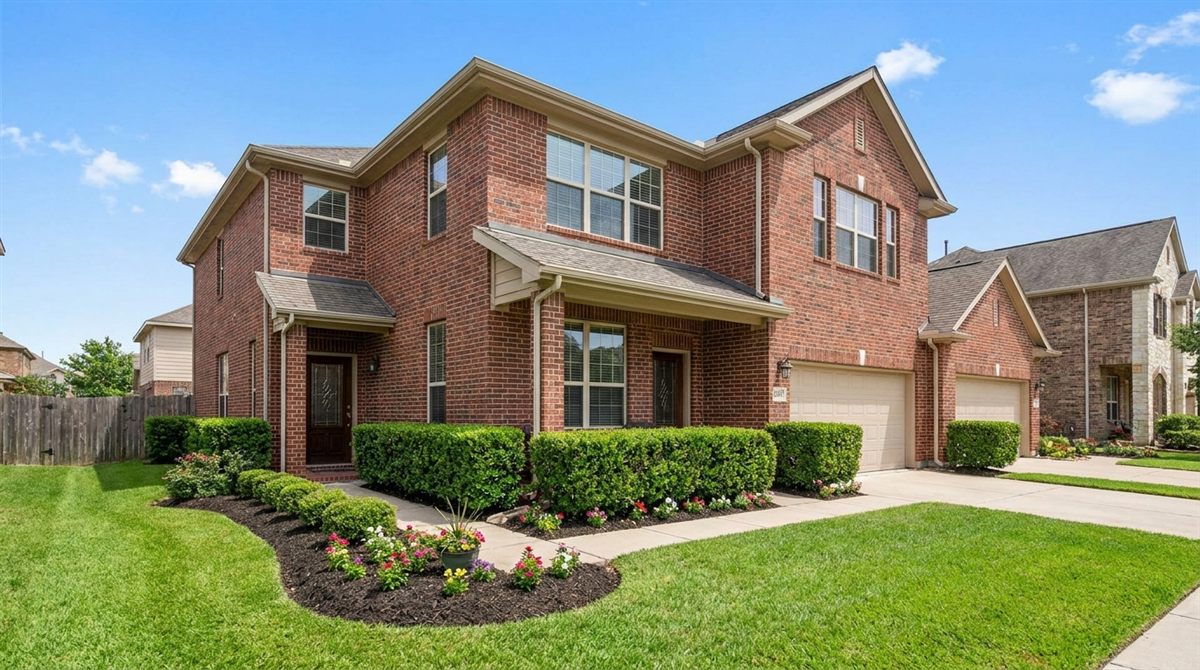
A worked single-family rental NOI example
Numbers make NOI concrete. Assume a single-family rental leased at $2,400 per month, a 5 percent vacancy and credit loss allowance, and operating expenses running about 40 percent of effective gross income, a typical figure for a well-kept single-family home. The table walks the full stack from gross rent down to NOI, and then bridges NOI to value.
| Line item | Rule | Annual amount |
|---|---|---|
| Gross potential rent | $2,400/mo × 12 | $28,800 |
| Less: vacancy & credit loss (5%) | Realistic non-collection | -$1,440 |
| Effective gross income | Rent you actually collect | $27,360 |
| Property taxes | Operating expense | -$3,800 |
| Insurance | Operating expense | -$1,300 |
| Property management (9%) | Operating expense | -$2,462 |
| Repairs & maintenance | Operating expense | -$2,200 |
| Reserves & other (taxes, misc.) | Operating expense | -$1,182 |
| Total operating expenses (~40%) | Sum of the above | -$10,944 |
| Net operating income (NOI) | EGI minus operating expenses | $16,416 |
| Indicated value at 6.5% cap rate | NOI ÷ cap rate | ~$252,554 |
Read the bottom two rows. This rental produces $16,416 of NOI, and at a market cap rate of 6.5 percent it supports a value near $252,554. Notice what is missing: no mortgage, no depreciation, no owner tax. Those come after NOI. If the owner financed 75 percent of the purchase, subtracting annual debt service from that $16,416 would give pre-tax cash flow, and the ratio of the two would be the DSCR. These figures are illustrative; every property's real NOI depends on its actual rents, taxes, and expense load, which is why disciplined buyers rebuild the stack for each deal the same way our step-by-step underwriting framework does. Getting expenses wrong, especially by lowballing rehab and maintenance costs, is the fastest way to overpay.
Is NOI before or after debt service?
NOI is calculated before debt service, always. This is the rule investors most often get wrong, and it is the entire reason NOI is useful.
Mortgage principal and interest are excluded because they depend on how much a specific buyer borrows and at what rate, not on how the property performs. If debt service were baked into NOI, a cash buyer would show a higher NOI than a leveraged buyer for the identical building, and the number would no longer describe the asset. Instead, financing is applied after NOI. Subtract annual debt service from NOI and you get pre-tax cash flow. Divide NOI by annual debt service and you get the debt service coverage ratio, or DSCR: a lender wanting a 1.25x DSCR on a property with $16,416 of NOI would cap annual debt service at about $13,133. That relationship is why NOI, computed before debt, is the figure lenders start from when they size a loan and why it underpins metrics like cash-on-cash return.
NOI vs cash flow: what is the difference?
NOI is the property's income before financing; cash flow is what the investor keeps after paying the mortgage. Cash flow equals NOI minus annual debt service.
The distinction is not academic. Take the $16,416 NOI from the worked example. An investor who paid all cash keeps close to the full $16,416 as pre-tax cash flow (before capex reserves). An investor who financed the purchase with a loan carrying, say, $12,000 of annual debt service keeps only about $4,416. Same property, same NOI, radically different cash flow, entirely because of leverage. This is why NOI is the right tool for valuing and comparing properties, while cash flow is the right tool for judging your own return once financing is chosen. Mix them up and you will either overpay, by valuing off cash flow that reflects a cheap loan, or misjudge your yield, by expecting to pocket the whole NOI. Sophisticated buyers keep the two separate and layer financing on last, which is also how they read the rent-to-price ratio as a fast first filter before building the full pro forma.
How does NOI affect property value and cap rate?
NOI and cap rate are locked together by one equation: value equals NOI divided by the cap rate. Change NOI and value moves in lockstep, which is the mechanism behind every forced-appreciation strategy.
Direct capitalization is the appraiser's workhorse for income property. If a rental produces $24,000 of NOI and comparable assets in the submarket trade at a 6 percent cap rate, the indicated value is $400,000 ($24,000 divided by 0.06). The relationship runs both ways, and it is why operators obsess over NOI: because value is NOI divided by a small decimal, each additional dollar of NOI is multiplied. At a 6 percent cap rate, adding just $1,000 of annual NOI, by raising rent, adding a fee, or cutting an expense, adds roughly $16,700 of value ($1,000 divided by 0.06). That leverage is the whole thesis of value-add investing, and it is why a market's prevailing cap rate matters so much; you can compare local rates using data like our cap rate by market breakdown before you trust any valuation.
What is a good NOI for a rental property?
There is no single "good" NOI dollar amount, because NOI scales with the size and price of the asset. Investors judge NOI on two ratios instead: the operating expense ratio and the cap rate.
The operating expense ratio is total operating expenses divided by effective gross income. For a single-family rental, a healthy range is roughly 35 to 45 percent; climb above 50 percent and either the property is a maintenance sink or the rents are too low for the tax and insurance load. Older homes, high-tax counties, and self-managed portfolios that undercount their own labor can distort this, so compare against local comparables, not a national rule of thumb. The second test is the cap rate the NOI supports at the asking price. If NOI divided by price lands at or above the market cap rate for similar assets, the income justifies the price; if it lands well below, you are paying for appreciation hope rather than current yield. Run both checks and you will catch the two most common ways sellers dress up a listing: hiding expenses to inflate NOI, and quoting a market cap rate the actual income cannot support.
Frequently Asked Questions
What is net operating income in real estate?
Net operating income (NOI) is a property's annual income after operating expenses but before debt service, capital expenditures, depreciation, and income taxes. You calculate it by subtracting operating expenses from effective gross income. NOI measures how much cash the asset itself generates from operations, independent of how the buyer finances or is taxed on it, which is why lenders and appraisers rely on it to value income property.
How do you calculate NOI?
Start with gross potential rent, add other income such as parking or laundry, then subtract a vacancy and credit loss allowance to get effective gross income. From effective gross income, subtract all operating expenses: property taxes, insurance, management, repairs and maintenance, owner-paid utilities, and reserves for routine costs. The result is net operating income. The formula is NOI equals effective gross income minus operating expenses.
What expenses are included in NOI, and what is excluded?
Included operating expenses are property taxes, insurance, property management, repairs and maintenance, owner-paid utilities, landscaping, HOA dues, and marketing. Excluded are the four items that vary by owner rather than by the property: debt service (mortgage principal and interest), capital expenditures like a new roof, depreciation, and income taxes. Excluding these four keeps NOI comparable across buyers and is the reason NOI, not cash flow, sets a property's value.
Is NOI before or after debt service?
NOI is calculated before debt service. Mortgage principal and interest are deliberately excluded because they depend on how much a particular buyer borrows and at what rate, not on the property's operating performance. Subtracting annual debt service from NOI gives you pre-tax cash flow, and dividing NOI by annual debt service gives the debt service coverage ratio (DSCR) that lenders use to size a loan.
What is a good NOI for a rental property?
There is no universal NOI dollar figure, because NOI scales with property size and price. Investors instead judge it two ways: the operating expense ratio, which for a single-family rental typically runs 35 to 45 percent of effective gross income, and the cap rate, which is NOI divided by price. A healthy deal shows expenses inside that band and a cap rate at or above the local market average for comparable assets.
What is the difference between NOI and cash flow?
NOI is income after operating expenses but before financing, while cash flow is what remains after the mortgage is paid. Cash flow equals NOI minus annual debt service. Two investors can buy the identical property and report the same NOI but very different cash flow, because one paid cash and the other used a 75 percent loan. NOI describes the asset; cash flow describes the investor's position in it.
Does NOI include mortgage payments, capex, or depreciation?
No. NOI excludes all three. Mortgage payments are debt service and depend on financing, not operations. Capital expenditures such as a roof or HVAC replacement are large, irregular costs and are excluded from NOI, though many investors deduct a reserve to reach an adjusted figure. Depreciation is a non-cash accounting deduction reported on IRS Schedule E and has no effect on operating cash, so it is also excluded from NOI.
The Bottom Line
Net operating income is the number every other real estate metric leans on. Compute it as effective gross income minus operating expenses, remember the excluded four (debt service, capex, depreciation, and income taxes), and you can move fluidly from NOI to cap rate, to value, to DSCR, to cash flow without getting lost. The discipline that matters is honesty on the inputs: a realistic vacancy allowance and a full expense load, because every dollar of overstated NOI is roughly sixteen dollars of overstated value at a 6 percent cap rate. Build the stack the way our worked example does, test it against the local operating expense ratio and cap rate, and you will price income property the way institutions do. This is educational information, not investment, tax, or legal advice; confirm any deal's numbers with your own CPA and underwriting.
Want deal flow with the NOI already modeled cleanly? Join the Home Pros Marketplace for off-market inventory across 48 markets with verified comps and expense data ready to drop into your own pro forma. Questions on underwriting a specific property? Email contact@selltohomepros.com or call (830) 510-1597.

Founder of Home Pros, operator across 48 markets, with 300+ investor transactions closed since 2021. Trevor writes on institutional real estate underwriting, capital placement, and market analysis. More about Trevor →