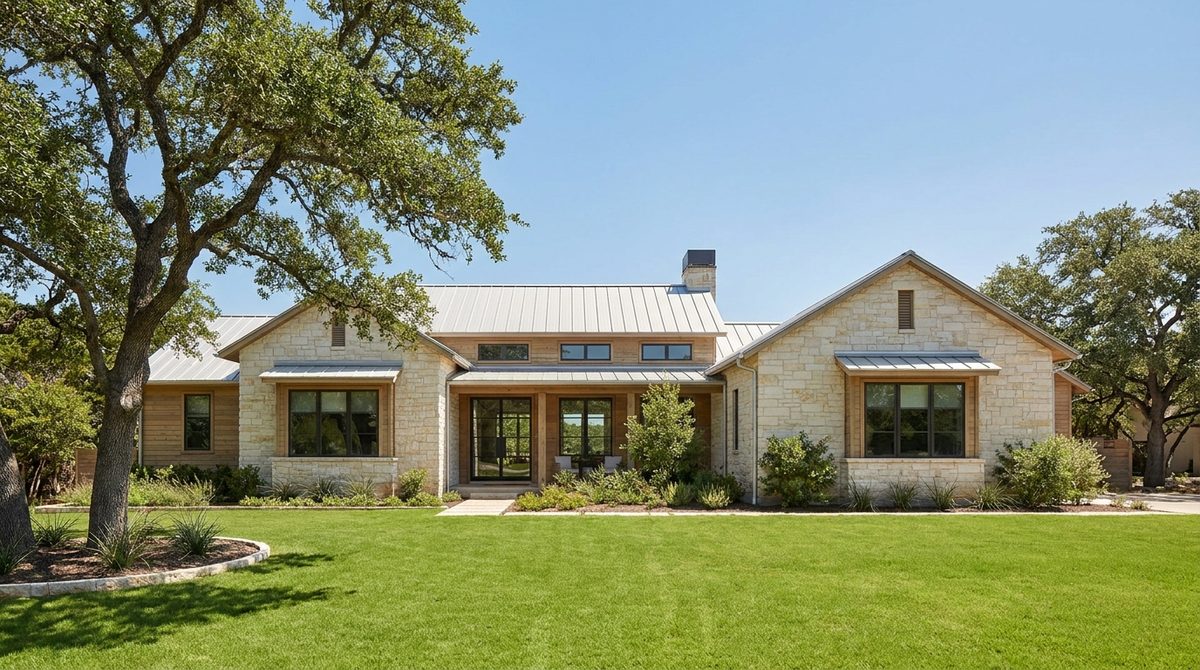
The best Opendoor alternatives in Austin are local cash home buyers who skip the 5 percent service fee and repair deductions that shrink Opendoor's net offer. Opendoor paid a $62 million Federal Trade Commission settlement to 54,689 sellers it underpaid, and its Q1 2026 revenue fell to $720 million. A local buyer often nets Travis County sellers more, faster. This guide compares both paths, the fee math on a median Austin sale, and the vetted local cash buyers who close in 7 to 14 days without the iBuyer fee stack.
Does Opendoor Operate in Austin, TX?
Yes. As of June 2026, Opendoor Technologies (NASDAQ: OPEN, headquartered in San Francisco CA, founded 2014) makes automated cash offers across the Austin-Round Rock-Georgetown metro, including Austin proper and the higher-velocity suburbs of Round Rock, Pflugerville, Cedar Park, Kyle, and Buda spanning Travis, Williamson, and Hays counties. Opendoor treats Austin as a core operating market, maintains dedicated Austin sell pages, and launched its Opendoor Exclusives marketplace in the Austin and DFW metros. Austin therefore has genuine Opendoor demand, which is what makes the alternatives question commercially real here rather than theoretical.
Opendoor's automated flow does not cover every parcel in Travis County. The algorithm tends to return no offer in sub-markets with older housing stock or higher typical repair scope, including the historic Hyde Park, French Place, and East Austin districts, pockets of Montopolis and Del Valle, and parts of the Govalle and St. Johns corridors. The exclusion is an underwriting decision tied to the company's resale model, not a judgment about the home's market value. Sellers in those neighborhoods frequently receive competitive bids from local independent cash buyers and from the Home Pros marketplace, which underwrite each property as a rental hold or fix-and-flip on a per-property basis rather than against a fleet resale target. This is the key distinction from the Texas triangle metros, which we cover separately in our guide to Opendoor alternatives in San Antonio: Austin sits in Travis County with a higher price ceiling than San Antonio's Bexar County, which changes the absolute dollar spread on every fee.
Opendoor's financial position also shapes how aggressive its Austin offers are. The company reported Q1 2026 revenue of $720 million on 1,921 homes sold, a 10.0 percent gross margin, a net loss of $173 million, and roughly $999 million in cash against $1.14 billion of real estate inventory across 3,420 homes, per its most recent quarterly filing with the U.S. Securities and Exchange Commission (CIK 0001801169). A company under margin pressure tightens its automated valuations, which widens the gap between an Opendoor offer and a competing local cash offer on the same Travis County home, and Austin's cooling 2026 market amplifies that caution.
How Much Does Opendoor Pay for Houses in Austin?
Opendoor's net to an Austin seller sits below an open-market sale because the company removes a 5 percent service fee plus 1 to 3 percent in repair credits before closing, per the most recent Opendoor Technologies filings on SEC EDGAR. On the roughly $450,000 Austin median sale price in mid 2026, tracked across the Austin-Round Rock-Georgetown MSA in Federal Reserve Economic Data, that fee stack removes approximately $27,000 to $36,000 from the seller's net before Texas closing costs. Independent aggregator estimates put typical iBuyer offers in the 70 to 80 percent of market value range before fees, a number Austin sellers should test against a competing local cash offer.
The size of the gap to a local cash buyer depends on three property-specific variables. Property condition matters because Opendoor's repair credit scales with the post-inspection scope, and homes with deferred maintenance frequently see the full 3 percent credit applied. Timeline pressure matters because Opendoor's 14 to 60 day close is faster than a list-and-wait sale but slower than a 7 to 14 day institutional cash close. Negotiation tolerance matters because the 5 percent service fee is fixed, while local independent buyers across South Austin (ZIP 78745), Travis Heights and Bouldin (ZIP 78704), Mueller and the eastside (ZIP 78723), Del Valle (ZIP 78617), and Pflugerville (ZIP 78660) frequently negotiate repair holdbacks and offer structure. As a Home Pros estimate, the median net advantage of a competing local cash buyer over Opendoor on the same $450,000 home lands between $15,000 and $30,000, before adjusting for speed and closing-date flexibility.
What Are the Best Opendoor Alternatives in Austin?
The strongest alternatives are local independent cash buyers vetted through the Texas Real Estate Commission and the Austin Better Business Bureau, regional cash-buyer marketplaces that route one property to multiple competing investor bidders, and a flat-fee MLS listing through a licensed broker when the seller can wait 48 to 74 days. Home Pros operates a 48-market investor marketplace covering the Austin metro across Travis, Williamson, Hays, and Bastrop counties.
- Local independent cash buyers. Investors operating in one or two Austin-area counties, with no corporate fee structure and no algorithmic discount. These buyers typically pay 70 to 80 percent of after-repair value on the same property where Opendoor would net roughly 65 to 70 percent of ARV after the service fee, a meaningful swing on the median sale. The trade-off is brand recognition, so a seller should verify each buyer through the Texas Real Estate Commission license search, the Austin BBB profile, and recent independent reviews before signing any contract.
- Cash-buyer marketplaces. Platforms that route a single property to multiple competing investor bidders, producing a higher net to the seller through price competition. Home Pros runs the bidding pool across Travis County and the wider Austin metro. Marketplace bids typically land in the 70 to 82 percent of after-repair value range, several percentage points above the typical Opendoor seller net after the 5 percent service fee. For the broader Texas defector picture, compare our guide to Opendoor alternatives in Houston.
- Discount or flat-fee MLS listing. If the timeline allows 48 to 74 days on market, a flat-fee MLS listing through a Texas-licensed broker can net 88 to 93 percent of fair market value on a clean, occupied home in Crestview, Allandale, or Tarrytown. The trade-off is showings, inspection, appraisal, and financing contingencies, plus carrying costs during the listing period, which run longer in Austin's softer 2026 market.
- Direct sale to a known investor. If the seller already knows a local investor through a personal or professional network, a direct off-market sale eliminates middlemen and marketplace commissions. Pricing tends to land at the favorable end of the cash-buyer range, but this option requires an existing verified investor relationship.
For sellers comparing the Texas metros, the same dynamics play out in our breakdown of Opendoor alternatives across the Dallas market and Opendoor alternatives in Fort Worth. The same after-repair-value mechanic underlies Opendoor's algorithmic offer, the local cash buyer's manual offer, and the marketplace bidding pool. The only difference is where the corporate margin lands.
Is Opendoor Legit, or Is It a Ripoff?
Opendoor is a legitimate, publicly traded company, but its Austin offers are algorithmic valuations reduced by a fixed fee structure rather than random lowballs, and the public record on the fairness question is the Federal Trade Commission's FTC Docket C-4761. The Commission found that between 2017 and 2019 Opendoor had misrepresented the value of its offers versus traditional sales, in violation of Section 5 of the FTC Act, and required the company to refund $62 million to 54,689 affected sellers nationwide, a median refund of $1,024 per seller, distributed in April 2024.
In practical Austin terms, the issue is not deception in the 2026 offer flow but the structural math. Once the 5 percent service fee and 1 to 3 percent repair credits are applied, the net offer falls below market and frequently below what a competing local cash buyer will pay on the same property. The fix for a seller is simple: request the itemized offer math in writing, compare the Opendoor net against at least one local cash offer, and treat the service fee as the non-negotiable line item it is. Texas iBuyer sellers who run this comparison routinely find a higher net outside the corporate channel.
What Fees Does Opendoor Charge Austin Sellers?
Opendoor charges a 5 percent service fee on the agreed purchase price plus 1 to 3 percent in repair credits deducted at closing, per its SEC filings. Texas has no state real estate transfer tax, so seller closing costs are lower than in most states, running roughly 0.9 to 1 percent through the title company for the owner's title policy and recording fees with the Travis County Clerk. The table below breaks down the dollar impact at four representative Austin price points.
| Austin Sale Price | Opendoor Service Fee (5%) | Repair Credit (1-3%) | TX Closing Costs (~0.95%) | Total Deduction From Gross |
|---|---|---|---|---|
| $350,000 (Pflugerville / Del Valle entry typical) | $17,500 | $3,500 to $10,500 | $3,325 | $24,325 to $31,325 |
| $450,000 (Austin median 2026) | $22,500 | $4,500 to $13,500 | $4,275 | $31,275 to $40,275 |
| $600,000 (Crestview / Allandale typical) | $30,000 | $6,000 to $18,000 | $5,700 | $41,700 to $53,700 |
| $850,000 (Tarrytown / Travis Heights typical) | $42,500 | $8,500 to $25,500 | $8,075 | $59,075 to $76,075 |
The total deduction column is what sellers should compare against alternative paths. A local independent cash buyer or the Home Pros marketplace typically deducts zero service fee and zero corporate repair credit, replacing both with a single negotiated cash price that already reflects property condition. The traditional MLS path nets roughly 91 percent of fair market value after a standard agent commission, seller closing costs, and typical buyer concessions, which produces a higher absolute net but requires the roughly 48 to 74 day Austin listing timeline plus showings, appraisal, and financing-contingency risk. Note that Texas requires a seller's disclosure notice under Texas Property Code Section 5.008 on most resales, a step the cash-buyer path streamlines for as-is condition.
Why Did Opendoor Pay $62 Million to Home Sellers?
Opendoor paid $62 million in refunds under a 2022 Federal Trade Commission settlement after the Commission found the company violated Section 5 of the FTC Act by representing that sellers would make more money selling to Opendoor than on the open market when, in the Commission's findings, many made less. The FTC Opendoor Refunds program covered 54,689 sellers with a median refund of $1,024 and required Opendoor to substantiate its offer comparisons and disclose its math going forward. The Commission distributed those refunds in April 2024. A separate federal securities class action brought by Opendoor shareholders was settled for $39 million, with final approval in January 2026.
The settlement matters for Austin sellers in 2026 because it established the primary-source baseline for evaluating any iBuyer offer. The takeaway is not that Opendoor is uniquely predatory but that the iBuyer net is a fee-reduced number, and the regulatory record proves the gap to a market sale can be material. Every affiliate-funded listicle that ranks for Opendoor alternatives keywords has a structural incentive not to lead with this fact. Home Pros has no iBuyer affiliate relationship, so the FTC figures appear here with direct attribution. For the national picture across all iBuyer brands, see our full Opendoor reviews and alternatives breakdown.
Opendoor or a Local Cash Buyer in Austin?
For most Austin sellers optimizing for net proceeds, a local independent cash buyer or a competitive marketplace bid delivers a higher number than Opendoor, because there is no 5 percent service fee and no corporate repair credit layered on top. Opendoor may suit a seller who values a brand-name process and can wait the typical close window. The comparison table below frames the structural differences on the median Austin sale.
| Dimension | Opendoor Austin | Local Cash Buyer | Home Pros Marketplace |
|---|---|---|---|
| Service fee on $450K sale | $22,500 (5%) | $0 (no service fee) | $0 (no service fee) |
| Repair credit range | 1 to 3% of price | Negotiated into price | Negotiated into price |
| Typical close window | 30 to 45 days | 5 to 10 days | 7 to 14 days |
| Offer competition | Single algorithmic offer | Single investor offer | Multiple competing bidders |
| Sub-market exclusions | Excludes older / higher-repair parcels | Full Travis footprint | Full Austin metro footprint |
The structural advantage of a marketplace is competition. A single algorithmic Opendoor offer or a single local investor offer leaves the seller guessing whether the number is the best available. Routing one property to multiple competing bidders surfaces the ceiling of the cash market rather than the first acceptable bid. Sellers weighing the distressed-sale channels can also compare HomeVestors complaints and alternatives and how New Western compares, which cover the franchise and wholesale channels in detail.
How Fast Can You Sell for Cash in Austin?
A cash sale in Austin can close in as little as 7 to 14 days through Home Pros' institutional-cash process, and local independent buyers occasionally close in 5 to 10 days when they waive inspection contingency. Opendoor's disclosed close window runs 14 to 60 days, with typical Austin closes landing at 30 to 45 days. A traditional sale in Austin averaged roughly 48 to 74 days on market in mid 2026 before the additional escrow period, a window that lengthened as active inventory climbed and prices softened across the metro by roughly 2 percent year over year.
Speed matters most for three seller scenarios common across Travis County. Texas runs a non-judicial foreclosure process under Texas Property Code Section 51.002, with trustee sales held on the first Tuesday of each month on the Travis County courthouse steps, so a seller weeks from a foreclosure sale cannot wait a 30 to 45 day Opendoor close. Probate sales through the Travis County Probate Court frequently carry statutory deadlines that conflict with the longer iBuyer timeline. Job-relocation sellers, common in Austin's tech-heavy economy, often need funding within 14 days to align with a new lease or mortgage. In each case, the faster local cash close, paired with the higher net, is the rational choice. For the foreclosure path specifically, see our guide to how to stop foreclosure in Texas.
Why This Austin Comparison Is Different
Most Opendoor alternatives Austin articles on the search results page are recycled national listicles that serve Texas traffic with national data, mention Austin in one bullet point, and stop short of the metro-level fee math, the Travis County median and days-on-market figures, the Texas regulatory chain, and the comparison against same-metro local cash buyers. The reason is straightforward. Many aggregator publishers either compete with Opendoor for the same defector traffic or earn affiliate revenue from iBuyer referrals, which removes their incentive to state the FTC findings plainly.
This guide does the opposite. Every Opendoor data point cites a primary public source: the SEC EDGAR filings (CIK 0001801169) for the service fee, repair-credit structure, and Q1 2026 financials; the Federal Trade Commission Docket C-4761 settlement and the FTC Opendoor Refunds program for the $62 million figure; Federal Reserve Economic Data series MEDLISPRI12420 for the Austin-Round Rock MSA median listing price; the U.S. Census Bureau American Community Survey for Travis County household data; and the Texas Real Estate Commission license database for buyer verification. Austin sellers can verify every claim independently through the same sources, and investors sourcing comps can cross-check the Travis Central Appraisal District record on any parcel.
Home Pros has zero affiliate relationship with Opendoor or any iBuyer in the Austin metro and receives no referral fees from any aggregator. Home Pros is a direct competing marketplace operating under Balint Holdings, LLC across 48 markets, and its financial interest is in delivering a higher net to the seller than the iBuyer service-fee structure can produce on the same property. That interest is disclosed up front, and the primary-source data stands on its own regardless.
Frequently Asked Questions
Does Opendoor operate in Austin, TX?
Yes. As of June 2026, Opendoor Technologies (NASDAQ: OPEN) makes automated cash offers across the Austin-Round Rock-Georgetown metro, including Austin and the surrounding Travis, Williamson, and Hays county suburbs of Round Rock, Pflugerville, Cedar Park, Kyle, and Buda. Opendoor treats Austin as a core operating market and launched its Opendoor Exclusives marketplace there. Its automated flow still returns no offer on a meaningful share of older or higher-repair parcels in neighborhoods such as Hyde Park, East Austin, and parts of Del Valle, where the algorithm declines rather than issuing a manual valuation.
How much does Opendoor pay for houses in Austin?
Opendoor's net is structurally below an open-market sale because the company removes a 5 percent service fee plus 1 to 3 percent repair credits before closing, per its SEC filings. On the roughly $450,000 Austin median sale price in mid 2026, that fee stack removes approximately $27,000 to $36,000 before Texas closing costs. Independent estimates put typical iBuyer offers at 70 to 80 percent of market value. The gap to a local cash buyer that charges no service fee is a Home Pros estimate of $15,000 to $30,000 on the median Travis County home, varying with condition and timeline.
What are the best Opendoor alternatives in Austin?
The strongest alternatives are local independent cash buyers vetted through the Texas Real Estate Commission and the Austin BBB, regional cash-buyer marketplaces that route one property to multiple competing investor bidders, and a flat-fee MLS listing when the seller can wait 48 to 74 days. Home Pros runs a 48-market marketplace covering Travis, Williamson, Hays, and Bastrop counties. Marketplace bids typically land in the 70 to 82 percent of after-repair value range without the 5 percent Opendoor service fee.
Is Opendoor legit, or is it a ripoff?
Opendoor is a legitimate publicly traded company, but its offers are algorithmic valuations reduced by a fixed fee structure, not random lowballs. The FTC found under Docket C-4761 that Opendoor misrepresented the value of its offers versus traditional sales between 2017 and 2019 and required a $62 million refund to 54,689 sellers, median refund $1,024, paid April 2024. In Austin, the net offer falls below market once the 5 percent service fee and 1 to 3 percent repair credits are applied, which a competing local cash buyer can frequently beat on the same property.
What fees does Opendoor charge Austin sellers?
Opendoor charges a 5 percent service fee plus 1 to 3 percent repair credits at closing per its SEC filings. Texas has no state transfer tax, so seller closing costs are a lower 0.9 to 1 percent through the title company for the owner's title policy and Travis County Clerk recording fees. On a $450,000 sale, the combined fee stack runs $27,000 to $36,000, and total all-in cost including closing reaches roughly $31,000 to $40,000 before post-inspection adjustments. The 5 percent service fee is fixed and not negotiable; the repair credit is negotiable with documentation.
Why did Opendoor pay $62 million to home sellers?
Opendoor paid $62 million under a 2022 FTC settlement, Docket C-4761, after the Commission found it violated Section 5 of the FTC Act by misrepresenting that sellers would earn more selling to Opendoor than on the open market. The settlement covered 54,689 sellers with a median refund of $1,024, distributed in April 2024, and required transparent offer-math disclosure going forward. A separate securities class action was settled for $39 million, approved January 2026. The FTC Opendoor Refunds program is a primary public record any Austin seller can verify on ftc.gov.
Is it better to sell to Opendoor or a local cash buyer in Austin?
For most Austin sellers optimizing for net proceeds, a local independent cash buyer or competitive marketplace bid delivers a higher number than Opendoor because there is no 5 percent service fee and no corporate repair credit. Opendoor may suit a seller who values a brand-name process and can wait the 14 to 60 day close. A local buyer or the Home Pros marketplace usually closes in 7 to 14 days and replaces the fee stack with a single negotiated price, the better fit for foreclosure, probate, or relocation timelines under Texas deadlines.
How fast can you sell a house for cash in Austin?
A cash sale in Austin can close in 7 to 14 days through Home Pros' institutional-cash process, and local independent buyers occasionally close in 5 to 10 days when they waive inspection contingency. Opendoor's disclosed window runs 14 to 60 days, with typical Austin closes at 30 to 45 days, while a traditional Austin sale averaged roughly 48 to 74 days on market in mid 2026 before escrow. Speed trades against price, so sellers should pull at least one offer at each speed tier before signing.

Founder of Home Pros, operator across 48 markets, closed 300+ investor transactions since 2021. More about Trevor